

Selling a mobile home can be more challenging than selling a traditional house, but it’s not impossible. Many homeowners face slower sales, limited financing options, or fewer serious buyers, especially if the home is older or sits on leased land.
The truth is, mobile homes can be harder to sell, but not because they lack value. It’s often due to how they’re classified, financed, and perceived in the market.
In this blog, we will break down the real reasons mobile homes can be harder to sell and give you practical tips to boost your resale value, navigate buyer concerns, and close faster. If you’re feeling stuck, this guide is exactly what you need.
Why Are Mobile Homes Challenging to Sell in the United States?
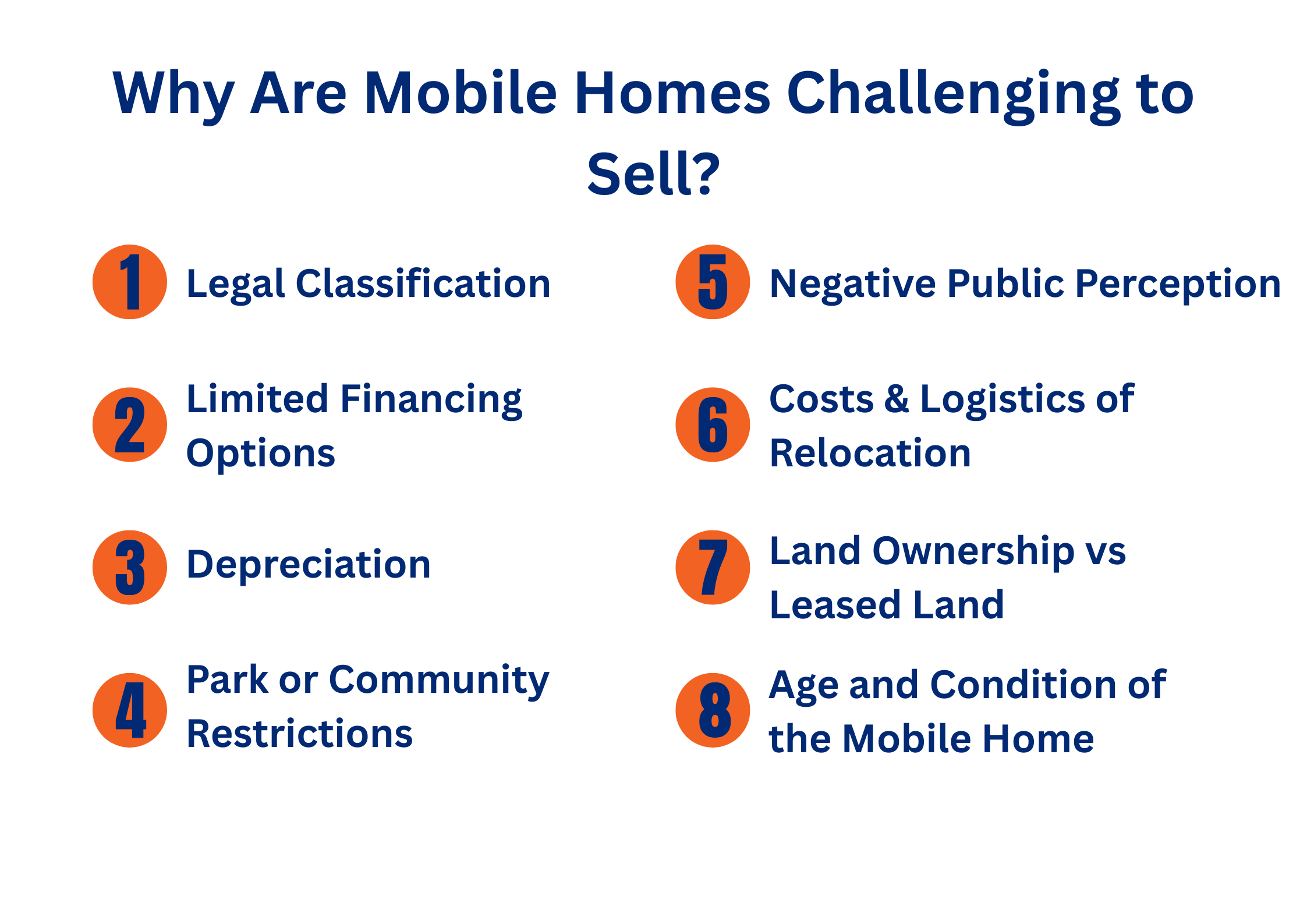
Selling a mobile home isn’t always as straightforward as selling a traditional house. Various factors, from legal issues to market perception, can make finding the right buyer more difficult. Here’s a closer look at why mobile homes can be challenging to sell in the U.S.
1. Legal Classification as Personal Property
Many mobile homes are not considered real estate unless they’re permanently attached to land. Instead, they’re treated as personal property, which impacts how they’re sold and financed. This classification leads to several key challenges, like:
- Requires a title transfer similar to selling a vehicle
- Often excluded from traditional real estate listings
- Not eligible for standard home mortgages
2. Limited Financing Options for Buyers
Financing a mobile home can be tricky, especially if it’s not classified as real property. This narrows the pool of potential buyers and creates additional hurdles in the sales process, such as:
- Fewer lenders offer loans for mobile homes
- Higher interest rates on chattel loans (used for personal property)
- Buyers may need to pay in cash or seek alternative financing
3. Depreciation Over Time
Unlike traditional homes that typically increase in value over the years due to land appreciation and structural permanence, mobile homes, especially those not attached to owned land, often lose value. This depreciation can create several challenges when it’s time to sell. Here are some of them:
- Lower resale value discourages investment
- Harder to justify asking prices to potential buyers
- Deterioration over time can impact buyer interest
4. Park or Community Restrictions
Mobile homes located in parks or on leased land often come with additional layers of regulation. These parks or communities may enforce strict rules, charge ongoing fees, or have approval processes that can delay or even block a sale. As a result, sellers may face challenges such as:
- Buyers must be approved by the park management
- Monthly lot rent can be a deterrent
- Parks may have age or condition requirements for homes
5. Negative Public Perception
Even with modern upgrades and higher construction standards, mobile homes still battle outdated stereotypes. This lingering stigma can make it harder to attract serious buyers and affect how the home is perceived in the market. Common challenges include:
- Viewed as less stable or of lower quality than site-built homes
- Some buyers associate mobile homes with lower-income housing
- May not be taken seriously as a long-term investment
6. Costs and Logistics of Relocation
When a mobile home needs to be moved rather than sold in place, the process becomes significantly more complicated. The logistics, legal requirements, and expenses involved can deter both buyers and sellers. Key challenges include:
- Expensive to transport, especially older units
- May require permits and professional movers
- Not all mobile homes are structurally sound enough to move
7. Land Ownership vs Leased Land
Whether a mobile home sits on owned land or leased land can significantly impact its resale potential. Homes on owned land are generally more appealing to buyers and easier to finance, while those on leased land often raise concerns about long-term stability and added costs. This difference creates several selling challenges:
- Homes on leased land are harder to finance with traditional mortgages
- Monthly lease payments can turn off potential buyers
- Buyers may worry about future rent increases or lease non-renewal
8. Age and Condition of the Mobile Home
The age and overall condition of a mobile home play a major role in how easy or difficult it is to sell. Older homes, especially those built before HUD standards were established in 1976, may raise red flags for both buyers and lenders. This can result in complications such as:
- Difficulties securing financing or insurance for pre-1976 homes
- Outdated interiors or systems that deter modern buyers
- Lower perceived value and reduced resale price
- More time on the market due to limited buyer interest
Together, these challenges explain why selling a mobile home can require extra effort, planning, and patience. Understanding the obstacles ahead of time can help you take smarter steps to make the process smoother
What Impacts Mobile Home Resale Value?
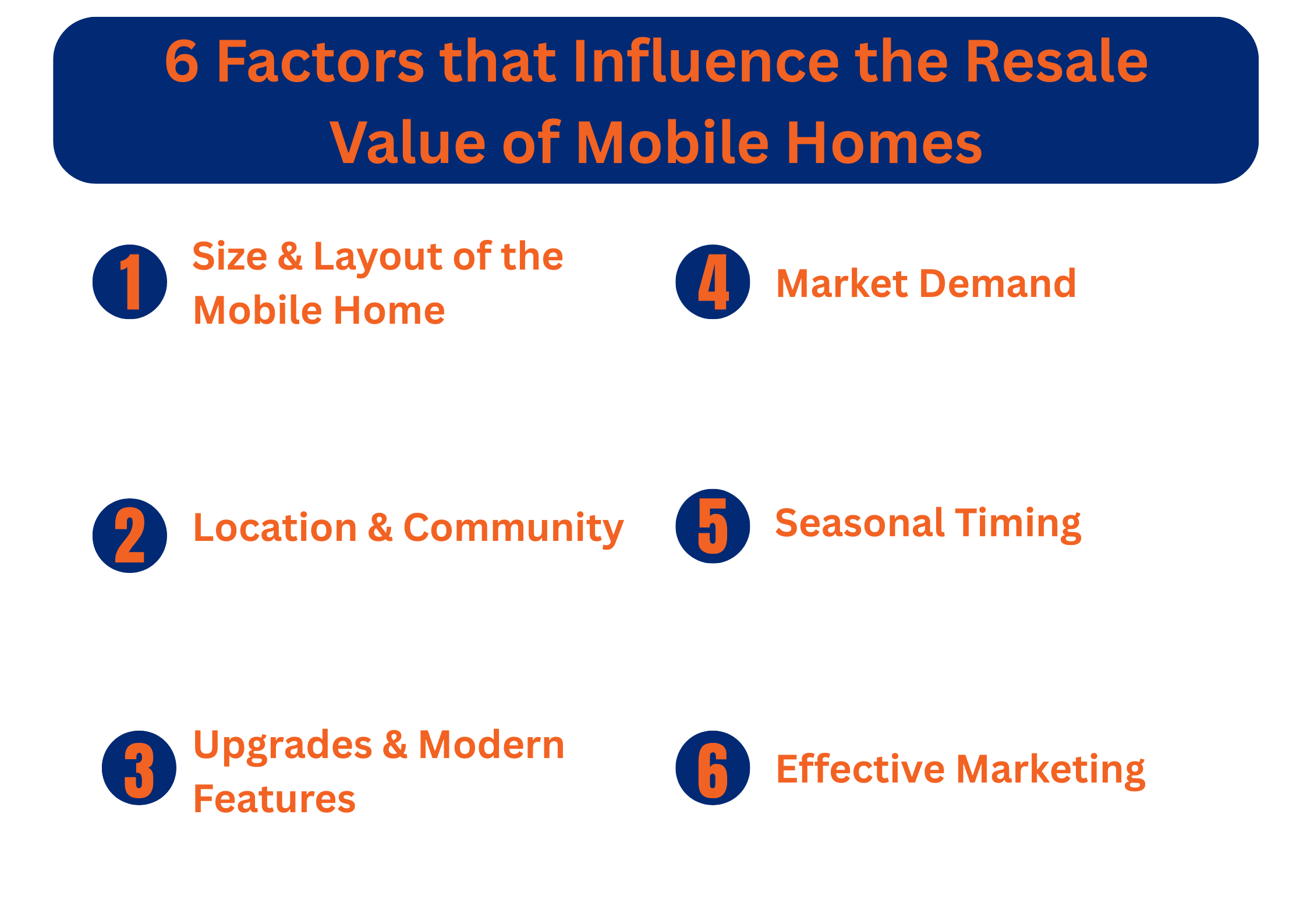
If you’re planning to sell your mobile home, understanding what affects its resale value is crucial to maximizing your return. Unlike traditional houses, mobile homes face unique market dynamics, some of which you can control, and some you can’t. Here’s a breakdown of the major factors that impact resale value:
1. Size & Layout of the Mobile Home
When it comes to resale value, bigger isn’t always better, but it often helps. The size and layout of a mobile home can significantly influence buyer interest and the final sale price. Buyers want comfort, space, and a layout that fits modern lifestyles.
Here’s how size and layout affect resale:
- Larger homes with 3+ bedrooms tend to attract families and command higher prices.
- Open-concept layouts are more appealing than cramped, segmented floor plans.
- Functional flow, like separated bedrooms or dedicated laundry areas, adds value.
- Limited square footage or awkward layouts can turn buyers away.
2. Location & Community
When it comes to selling a mobile home, location can be just as important as the home itself. A prime location not only attracts more buyers but also helps your property stand out in a competitive market. Buyers value convenience, safety, and lifestyle benefits.
Here’s how location and community impact resale:
- Homes near urban centers offer access to jobs, shopping, and entertainment, making them more desirable.
- Proximity to quality school districts is a big draw for families looking to settle long-term.
- Being close to major highways adds convenience for commuters and boosts appeal.
- Well-maintained communities with amenities and friendly environments create stronger buyer confidence.
3. Upgrades & Modern Features
Today’s buyers want more than just a roof over their heads; they want style, comfort, and efficiency. Modern upgrades can instantly boost your mobile home’s resale value and set it apart from outdated units on the market.
Here’s how upgrades influence resale:
- Energy-efficient appliances reduce utility costs and appeal to eco-conscious buyers.
- Updated kitchens and bathrooms are high-impact areas that buyers notice first.
- Stylish flooring, fixtures, and finishes create a move-in-ready feel.
- Smart home features like thermostats or security systems can add a modern edge.
4. Market Demand
No matter how great your mobile home is, timing matters. The level of buyer demand in your area can make a big difference in how quickly and profitably you sell.
Here’s how market demand affects resale value:
- High demand for affordable housing can lead to faster sales and competitive offers.
- In hot markets, well-priced mobile homes can sell within days.
- Low demand or oversupply may lead to longer listing times and price reductions.
- Regional trends, like population growth or housing shortages, can work in your favor.
5. Seasonal Timing
When you sell can be just as important as how you sell. The time of year can influence buyer activity, competition, and final sale price.
Here’s how seasonal timing impacts resale value:
- Spring and summer are peak seasons, and more buyers are actively looking.
- Fall and winter often bring slower traffic and longer time on the market.
- Holiday seasons can distract potential buyers and limit showings.
- Weather conditions in colder regions may delay inspections or moves.
6. Effective Marketing
Even the best mobile home won’t sell if no one sees it. Strategic marketing is key to attracting serious buyers and standing out in a crowded market.
Here’s how marketing impacts resale value:
- Professional photos highlight your home’s best features and create a strong first impression.
- Detailed listings with accurate specs and upgrades build buyer trust.
- Multi-platform exposure expands your reach.
- Targeted messaging that speaks to your ideal buyer makes your home more appealing.
If you want to maximize your mobile home’s resale value with minimal headache, get in touch with California Mobile Home Buyer now.
10 Tips to Maximize Your Sale Price of Your Mobile Home
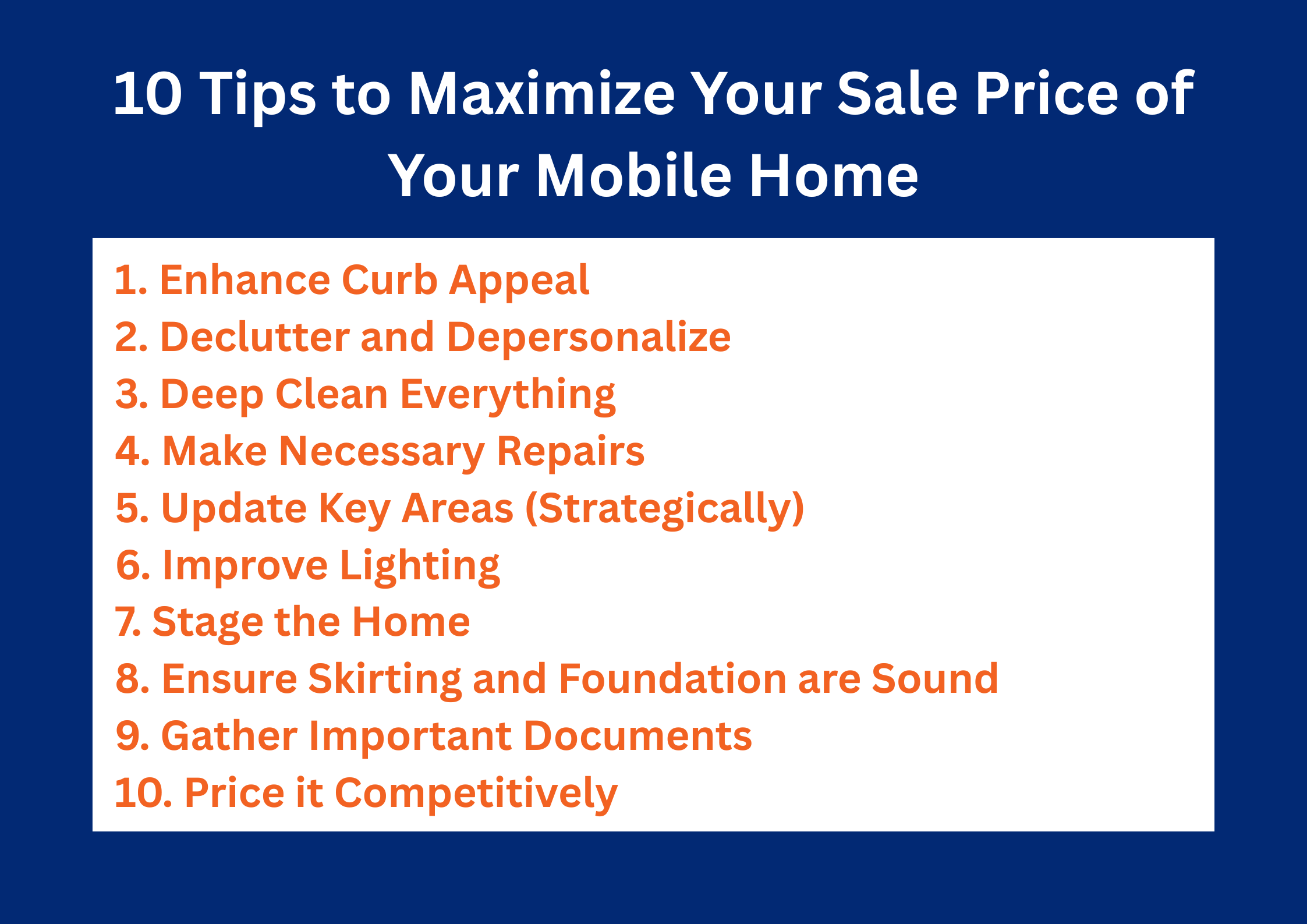
Want top dollar for your mobile home? A few smart moves can significantly boost your resale value and attract the right buyers. Here’s how to make your home stand out and sell faster.
1. Boost First Impressions with Curb Appeal
Make your exterior shine, trim the lawn, add fresh plants, and clean up the entryway. A tidy, welcoming exterior sets the tone and encourages buyers to step inside.
2. Create a Neutral, Spacious Feel
Remove personal items and clutter to let buyers picture themselves living there. Clean surfaces, open spaces, and neutral décor help your home feel larger and more inviting.
3. Make It Sparkle from Top to Bottom
A deep clean shows pride of ownership. Focus on kitchens, bathrooms, windows, and flooring; no one wants to buy someone else’s mess.
4. Fix What’s Broken (Even the Small Stuff)
Loose knobs, squeaky doors, or leaky faucets may seem minor but can raise red flags. Small fixes signal that the home is well cared for and move-in ready.
5. Refresh Key Spaces That Matter Most
Focus on impactful upgrades in kitchens and bathrooms. New hardware, a fresh coat of paint, or updated lighting can modernize these spaces without breaking the bank.
6. Brighten Every Room Naturally and Artificially
Let in natural light, swap outdated fixtures, and use warm bulbs to create a welcoming vibe. Bright spaces look cleaner, bigger, and more cheerful.
7. Show Off the Potential with Smart Staging
Use simple furniture and décor to define spaces, highlight features, and create an emotional connection. Good staging helps buyers envision living there.
8. Check Skirting, Foundation, and Structure
Make sure the skirting is intact and the foundation is secure. These often-overlooked details reassure buyers that the home is stable and code-compliant.
9. Get Your Paperwork Ready Early
Gather titles, warranties, repair records, and park/community documentation. Being prepared shows professionalism and keeps the sale moving smoothly.
10. Price It Competitively and Realistically
Research your local market, consider your home’s condition, and price competitively. Overpricing can scare off buyers; realistic pricing draws serious offers faster.
Why Choose California Mobile Home Buyer for a Fast, Hassle-Free Sale?
If you’re looking to sell your mobile home quickly and without stress, California Mobile Home Buyer is the name to trust. With years of experience in the California market, our team specializes in buying mobile homes directly, with no agents, no commissions, and no unnecessary delays.
Whether your home is in a park, on private land, or in need of repairs, California Mobile Home Buyer offers fair, no-obligation cash offers tailored to your unique situation. We handle the paperwork, coordinate logistics, and make sure the process is as smooth as possible from start to finish.
What sets us apart?
- Fast Closings: Sell in days, not months
- No Hidden Fees: No agent commissions or surprise costs
- All Conditions Accepted: Whether it’s outdated or move-in ready
- Local Experts: Deep knowledge of California mobile home regulations
If you’re prepared to skip the headaches and sell your mobile home with confidence, California Mobile Home Buyer is just a call or click away. Sell your mobile home now.
Conclusion
Selling a mobile home isn’t always easy, but with the right approach, it can move quickly. Many sellers run into trouble because of common misconceptions or overlooked factors that affect resale value. Focus on fixing key issues, staging the home well, and choosing a smart pricing strategy. Combine that with effective marketing and buyer-friendly financing options to attract serious interest. The more prepared you are, the smoother the sale will be. Need help getting started? Reach out for tips and support to sell your mobile home the right way.
Frequently Asked Questions
What makes selling a mobile home different from a traditional house?
Mobile homes or manufactured homes are usually classified as personal property, requiring a title transfer through the DMV (Department of Motor Vehicles), not a real estate deed. This creates different paperwork, financing options, and legal requirements than selling traditional homes.
Is it easier to sell a mobile home if I own the land?
Yes. Owning the land turns the mobile home into real property, making it easier to finance, more attractive to buyers, and helps you avoid park rules or lot lease issues.
What documents do I need to sell my mobile home in the US?
You’ll need the home title, DMV documents, disclosures, tax receipts, and possibly a park lease agreement. An appraisal or market analysis also helps justify your asking price.
How long does it typically take to sell a mobile home?
It depends on the market, location, and buyer financing. With cash buyers or strong demand, homes may sell in as little as 2–4 weeks. Otherwise, it may take longer.
Is it worth selling a mobile home?
Yes, especially if it’s well-maintained, on owned land, and priced right. In high-demand markets, mobile homes can sell quickly and bring solid returns compared to their lower upfront costs.