

| TL;DR If you own the home but lease the land, you can still sell; otherwise, you have no sale rights. Review your eviction notice for cure periods and eviction dates; sell or vacate before court judgment. Unpaid lot rent, taxes, or loans can block title transfers. Settle or negotiate liens before listing. Most parks require buyer approval and may enforce relocation rules; early communication avoids last‑minute rejections. In a time‑sensitive sale, set a competitive price, target cash buyers, and be transparent about the eviction status. |
|---|
Facing eviction is already stressful, but if you own a mobile home or a manufactured home, things can get even more complicated. For starters, you might be wondering: Can I still sell my mobile home if I’m being evicted? The answer isn’t always simple. Whether you own the home but rent the land, or you’re behind on payments, your rights and options, can all vary widely depending on your location and situation. In this guide, we break down what the law says, what steps you can take, and how to protect your investment, even in the middle of an eviction process.
What Exactly is Mobile Home Eviction?
Mobile home eviction refers to the legal process through which a tenant is removed from a mobile home park or lot, or in some cases, forced to move their home off the property. This situation typically arises when the homeowner rents the land beneath their mobile home, commonly called a lot rental, and fails to pay rent, violates park rules, or breaches lease terms.
It’s important to understand that eviction in the mobile home context can apply in two ways:
- Eviction from the Lot – You may still own the mobile home, but are being ordered to move it off the rented land.
- Eviction from the Home Itself – If you’re renting both the land and the home (i.e., you don’t own the home), you can be evicted like in any standard rental scenario.
Each state has different laws governing mobile home evictions, including notice periods, valid reasons for eviction, and the rights of mobile homeowners. Knowing the type of arrangement you have, whether you own the home, rent it, or just lease the land, will determine what rights and options are available to you.
What Triggers an Eviction Notice in a Mobile Home Park?
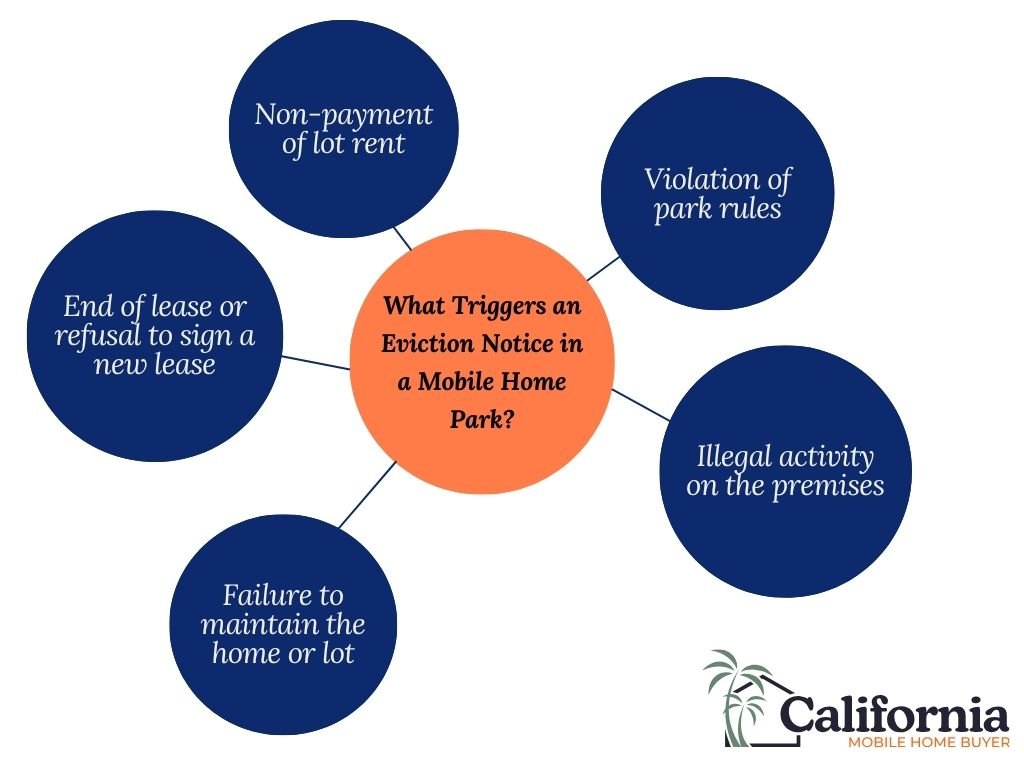
Several situations can lead to a mobile home park issuing an eviction notice, especially when the homeowner rents the land on which their manufacturer home sits. Common triggers include:
- Non-payment of lot rent: This is the most frequent cause. Falling behind on monthly rent payments gives the park owner legal grounds to start the eviction process.
- Violation of Park Rules: Mobile home parks often have community rules regarding noise levels, pet restrictions, cleanliness, and property upkeep. Repeated or serious violations can lead to eviction.
- Illegal Activity on the Premises: Any criminal behavior or suspected illegal use of the property, such as drug-related activity, can result in immediate eviction.
- Failure to Maintain the Home or Lot: If the home becomes a safety hazard or is in violation of local health or building codes, it could trigger an eviction notice.
- End of Lease or Refusal to Sign a New Lease: If a lease expires and the park chooses not to renew it or if a tenant refuses updated lease terms, they may be asked to vacate.
What is the Eviction Process for Mobile Home Owners?
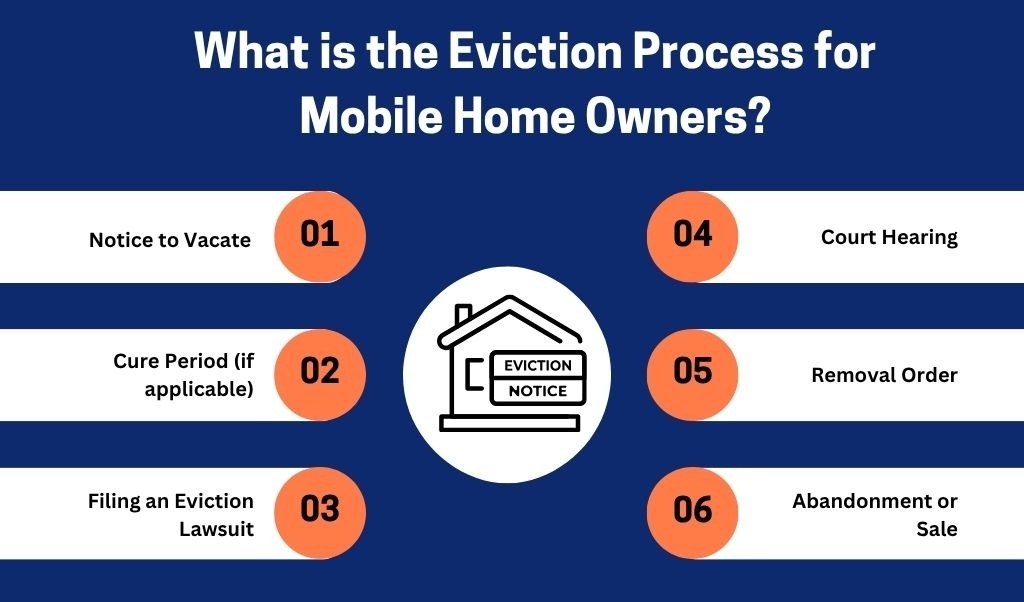
The eviction process for mobile home owners differs depending on whether you own the mobile home and rent the land, or rent both the home and the land. In most cases, mobile home owners are renting a lot in a mobile home park, which makes eviction more complex than a standard tenant eviction.
Here’s a general breakdown of how the process typically unfolds in accordance with mobile home eviction laws:
- Notice to Vacate: The park owner must serve you with a written notice, often 3 to 60 days in advance (depending on the state and reason), informing you of the violation, such as non-payment of rent, rule violations, or lease expiration.
- Cure Period (if applicable): For issues like unpaid rent or rule violations, you may be given a chance to correct the problem (pay overdue rent or fix the violation) within a set time frame to avoid eviction.
- Filing an Eviction Lawsuit: If the issue isn’t resolved, the landlord can file a formal eviction case with the local court. You’ll receive a court summons and a date to appear.
- Court Hearing: Both parties present their case. If the court rules in favor of the park, a judgment will be issued requiring you to vacate the land.
- Removal Order: If you fail to leave by the court-ordered deadline, law enforcement may intervene. If you own the mobile home, you may be required to move it off the property, which can be costly and logistically difficult.
- Abandonment or Sale: If you cannot move the home or abandon it, the park owner may eventually gain rights to sell or dispose of the home, depending on state laws. For instance, in the state of California, if a mobile home in a park is abandoned (defined as unoccupied with no rent paid for 60 days and reasonably believed to be neglected), the park owner must post a 30‑day notice, then seek a judicial declaration of abandonment before they can inventory, sell, or dispose of it under Civil Code § 798.61.
Because mobile homes are personal property but tied to real estate (the land), eviction laws can be complicated. It’s critical to understand your local tenant protections, especially if you’re a homeowner trying to sell the home without owning the land.
Can I Sell a Mobile Home in Eviction?
Yes, in many cases, you can legally sell your mobile home during an eviction process, but there are important conditions and limitations to keep in mind. If you own the mobile home but rent the land, you still have the legal right to sell the home as your personal property. However, the window to act may be short, and the park owner may have certain rights or claims that complicate the sale.
Here are key considerations:
- Timing is Crucial: Selling before the eviction is finalized gives you more control and helps avoid repossession or forced removal of your home.
- Unpaid Lot Rent or Fees: Any outstanding debts to the park may need to be settled before the home can be sold or moved. Some parks may place a lien on the home if rent is unpaid.
- Park Approval may be Required: Most mobile home parks require the new buyer to apply and be approved as a tenant before the home can remain on-site.
- Moving the Home: If the park is evicting you and requires the home to be removed, you may need to find a buyer willing to relocate it, which can significantly reduce your pool of potential buyers.
In short, selling is possible, but the eviction process adds legal and logistical hurdles. Acting quickly, understanding your rights, and being transparent with potential buyers about the situation is key to making a successful sale.
What are the Legal Challenges and Financial Implications When Selling During Eviction?
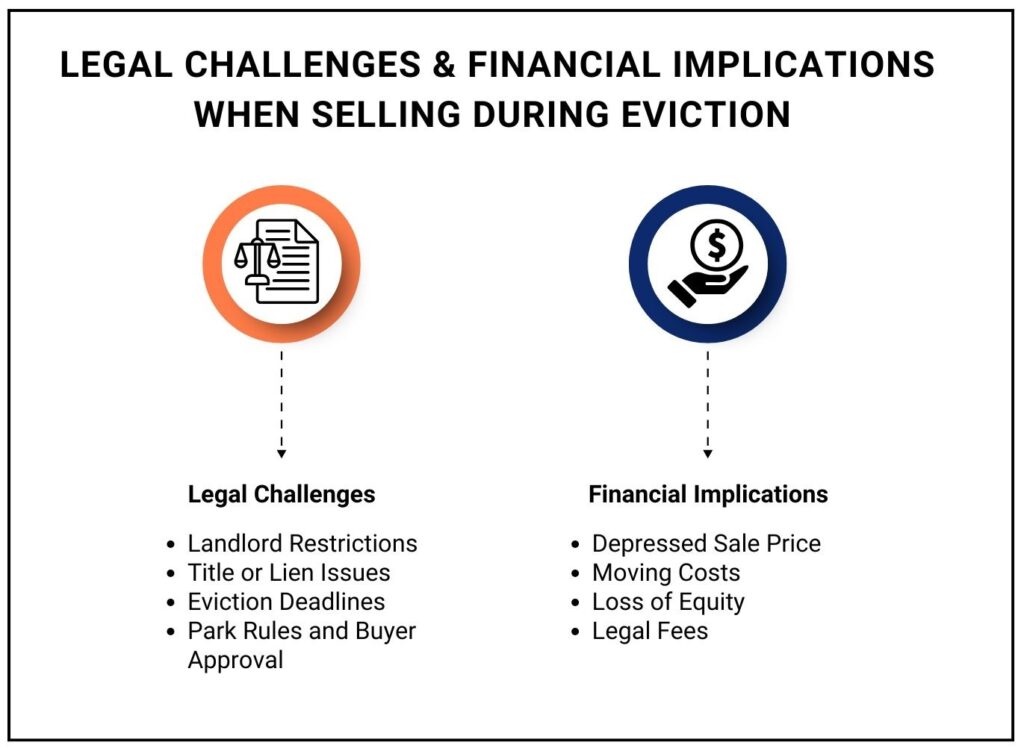
Selling a mobile home during an eviction can be legally complex and financially risky. While it is often possible to sell, several challenges may impact your ability to close the deal quickly or profitably.
Legal Challenges
- Landlord Restrictions: If you’re renting the lot, the park may require written consent or approval for any sale, especially if the buyer intends to keep the home on the premises.
- Title or Lien Issues: If there are unpaid lot rents, back taxes, or loans tied to the home, a lien may be placed on the title, legally blocking the sale until those debts are cleared.
- Eviction Deadlines: The legal timeline for eviction is strict. If the eviction is finalized before you complete the sale, you may lose the right to sell, or be forced to move the home under pressure.
- Park Rules and Buyer Approval: Even if you find a buyer, they may need to qualify with the mobile home park before being allowed to take possession. If denied, the sale may fall through.
Further Reading: Can you sell a home without a title?
Financial Implications
- Depressed Sale Price: Selling under time pressure often means accepting a lower price just to close the deal quickly.
- Moving Costs: If the park demands that the home be removed, you may need to pay thousands of dollars in transportation, setup, and permitting fees.
- Loss of Equity: If you’re unable to sell before the eviction is enforced, the park could take legal action to claim or dispose of the home, causing you to lose most or all of your equity.
- Legal Fees: Fighting the eviction or clearing liens may involve attorney fees and court costs, further eroding any profit from the sale.
In short, while selling during eviction is not impossible, it often comes with a high financial and emotional cost. Acting quickly and seeking legal guidance can help you navigate these risks and avoid losing your investment altogether.
How to Sell a Mobile Home in Eviction?
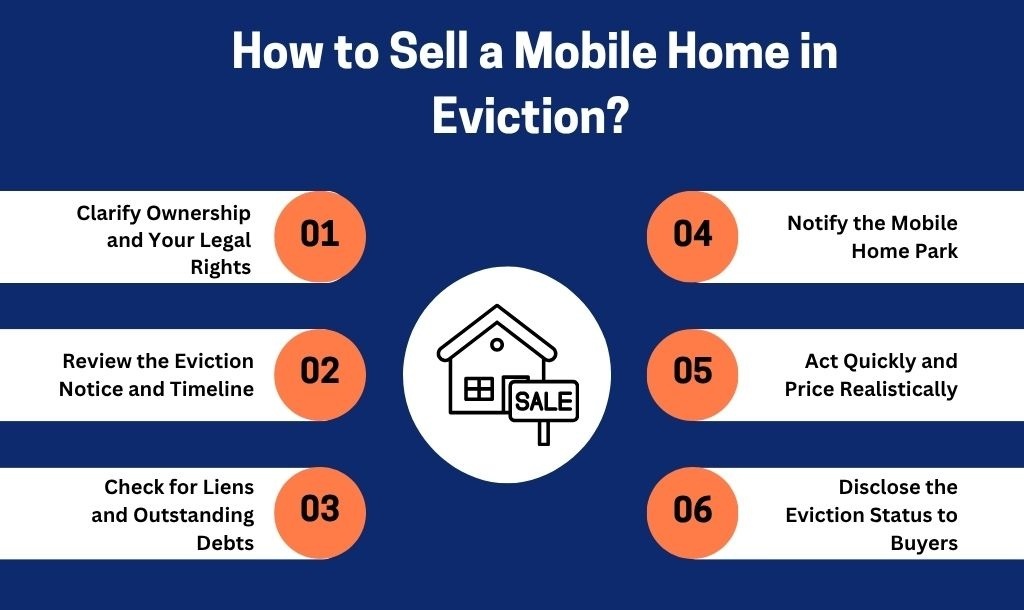
Selling a mobile home while going through eviction isn’t easy, but it is possible. The key is acting quickly, knowing your rights, and being transparent with all parties involved. Whether you’re trying to recover some equity or avoid losing the home entirely, this step-by-step guide walks you through the process in a clear, realistic way.
Step 1 (Clarify Ownership): How to Clarify Ownership and Your Legal Rights?
Before doing anything, it’s crucial to understand your legal standing. If you own the mobile home but rent the land beneath it, you still have the right to sell the home, even during an eviction. However, if you’re renting both the home and the lot, you don’t legally own the property and therefore can’t sell it. Knowing the distinction will determine what options you actually have. In most cases, mobile homeowners in eviction situations are renting the lot, which complicates, but doesn’t eliminate their ability to sell the structure.
Step 2 (Eviction Notice): How to Review the Eviction Notice and Timeline?
Carefully read the eviction notice to understand your timeline. The notice should state the reason for eviction, how many days you have to correct the issue (if applicable), and the date by which you must vacate the property. This timeline becomes your deadline for either selling the home or moving it. If you wait too long and the court grants the eviction, you may lose control over what happens to your home and your ability to profit from a sale. Acting early gives you more flexibility and options.
Step 3 (Check Liens): How to Check for Liens and Outstanding Debts?
Before listing your home for sale, make sure the title is free of legal encumbrances. If you owe back rent, utility bills, property taxes, or have a loan on the mobile home, there could be liens that prevent you from transferring ownership. In some states, mobile home parks can place a lien for unpaid rent, which may legally block the sale or entitle the park to a portion of the sale proceeds. You’ll need to either pay off the debts or negotiate with lienholders to release the title during closing.
Step 4(Notify): How to Notify the Mobile Home Park?
Most mobile home parks have rules requiring you to notify them if you plan to sell your home, especially if the buyer wants to keep it on-site. The park typically requires the buyer to fill out an application and pass background checks or meet income requirements before approving them as a new tenant. If the buyer is rejected, they may be forced to move the home, which could cause the sale to fall through. Open communication with park management via official channels like email can prevent delays and legal complications later.
Step 5 (Act Quickly): How to Act Quickly and Price Realistically?
In an eviction situation, time is not on your side. So you may not have the luxury of holding out for top dollar. Pricing your mobile home competitively can attract serious buyers fast. Prioritize cash buyers who can close quickly and are willing to take on the unique risks of buying during an eviction. If you’re short on time, you might consider working with a mobile home investor or “as-is” buyer who specializes in distressed sales. You may not get full market value, but you’ll likely avoid losing the home altogether. Contact California Mobile Home Buyer today for a fast, no-obligation cash offer and get a fair deal.
Step 6 (Disclose Eviction Status): How to the Disclose the Eviction Status to Buyers?
Being honest with potential buyers about the eviction is not just ethical; it’s essential. Many buyers, especially investors, are still interested in the property if the price is right and the terms are clear. Hiding the eviction status could lead to mistrust, cancelled deals, or legal disputes after the sale. Transparency builds trust and helps ensure a smoother transaction, even under difficult circumstances. It also protects you legally by ensuring you’ve made the buyer fully aware of any deadlines or risks.
Selling your mobile home during eviction isn’t ideal, but with urgency, the right support, and a well-informed approach, you can still walk away with some value instead of losing everything.
Also Read: Mobile Home Buyer Huntington Beach, CA: Quick Cash Offers for Your Home
Eviction Looming? Get a Fast Cash Offer from California Mobile Home Buyer
When you’re up against an eviction deadline, time isn’t a luxury. You need cash and certainty now. At California Mobile Home Buyer, we deliver a zero‑obligation cash offer and no waiting around. If you accept, we can close in as little as 5–7 days, so you never have to worry about a drawn‑out sale being upended by court dates.
We purchase homes as‑is, meaning you won’t pay for repairs, cleaning, or agent commissions, and there are no hidden fees or closing costs to eat into your equity. From handling all paperwork and lien clearances to coordinating title transfers, we manage every detail so you can move forward with cash in hand and peace of mind. So, get your cash offer now.
Conclusion
When you want to sell a mobile home during an eviction, you need to know your legal rights. You also have to think about what this will mean for your money. You should not forget about any debts you still have on the mobile home. The sale could be affected if there are court orders or if the person who is buying the home is also facing eviction. Time is the biggest factor here. So, sell your home quickly to experts like California Mobile Home Buyer so that you need not face hassles later on.
Frequently Asked Questions
1. Do I need a written tenancy agreement to sell my mobile home?
While it’s not required to sell your mobile home, a written tenancy agreement can clarify your rights, especially if you’re renting the land under a fixed term tenancy or in a care home setting.
2. What if the eviction is based on renovations or demolition plans?
If eviction is due to renovations, demolition, or a building permit issue, you may still sell the home; just be upfront with buyers about the termination date and relocation requirements.
3. What happens if I don’t move out by the eviction date?
If you stay beyond the legal period of time outlined in the eviction order, the local law authorities may enforce removal. This can delay or block your ability to sell the mobile home.
4. Can a former tenant return to sell their mobile home after eviction?
A former tenant who still owns the mobile home may be able to sell it, but only if the park hasn’t taken legal possession or removed it from the rental unit or lot.
5. Are there special rules for park tenants selling during eviction?
Yes, park tenants often face special rules, such as buyer approval by park management or home removal after a set period. Always check local regulations before listing your home.
6. What information must I provide when selling during eviction?
You’ll need to give the buyer all required information, including the eviction status and any amount equal to unpaid rent or fees that could impact the sale. Hiding such activity can lead to legal issues.
7. Can a landlord evict me so a parent of the landlord, landlord’s spouse, or other family member can move in?
Yes. The Residential Tenancies Act typically allows eviction for “personal use” if the unit is needed for the landlord, the landlord’s spouse, a parent of the landlord, or another close family member, provided proper notice and any special rules (such as minimum notice periods) are followed.