

Need to sell your mobile home, but it has to be moved? That’s a tricky spot. Most buyers won’t touch it. Park rules get in the way. And moving a home isn’t cheap or simple.
If you’ve been hitting roadblocks, no serious offers, agents turning you down, or parks making things difficult, you’re exactly who we help.
At California Mobile Home Buyer, we buy manufactured homes that need to be moved fast, as-is, and anywhere in California. There are no listings, repairs, or towing headaches.
This guide explains how to sell a mobile home that needs to be relocated and how to avoid the hassle completely.
Selling a Manufactured Home to be Moved in California- What’s the Catch?
Yes, you can sell a manufactured home that needs to be moved in California, but there’s one big catch: how the home is classified.
In California, a mobile home is either considered:
- Personal property – the home is not permanently attached to land
- Real property – the home is affixed to land, like a traditional house
If your home is classified as personal property, it can be sold separately and moved, no land sale required. But even then, you’ll need the right paperwork: a valid title, a tax clearance certificate, and often approval from the park if the home is located in a mobile home community.
Here’s the good news:
You don’t need to figure all this out yourself. At California Mobile Home Buyer, we handle the paperwork, deal with parks, and guide you through every legal step.
So yes, you can sell a manufactured home to be moved in California, and we’re here to make it simple.
What to Know Before You Sell a Mobile Home to Be Moved?
One of the first decisions you’ll make is whether you’re selling just the mobile home or the land, too. In most park situations, you’ll be selling the home only. But if you own the lot, you can separate the sale and potentially boost your total return.
We help sellers navigate both. Whether you want to keep the land, sell it later, or transfer it with the home, we’ll structure the deal to fit your goals.
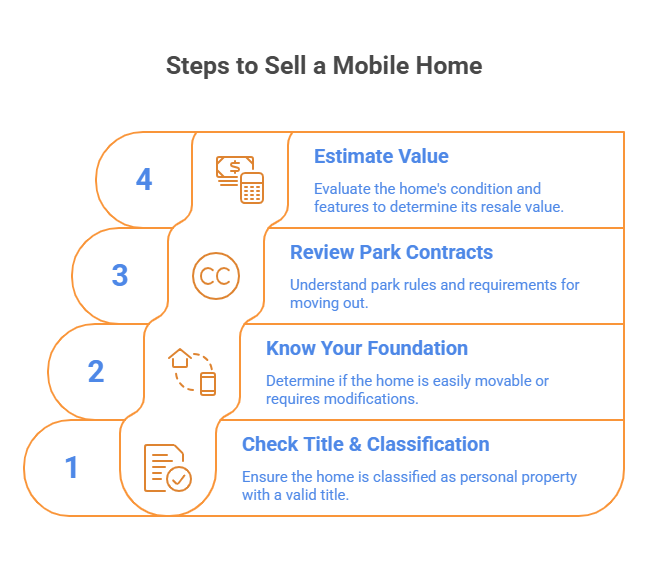
1. Check Your Home’s Title and Classification
To sell a mobile home without land, it must be classified as personal property, not real estate. That means:
- You’ll need a valid HCD-issued title (like a car title)
- Any liens or loans should be cleared (or disclosed early)
- If it’s been converted to real property, a reversal process may be needed
2. Know Your Foundation Type and Mobility Status
Some mobile homes are permanently affixed to the ground with a foundation system. If so, it may need detailing or structural modifications before moving.
If your home is still on its axles or was designed to be moved, it’s often easier and faster to sell to be relocated. Not sure what you have? Our team can assess it in one quick visit.
3. Review Park Contracts and Move-Out Rules
If your home is in a park, management may require written notice, final inspections, or fees before a move. Some even restrict which moving companies can operate on-site.
We’ve worked with dozens of California parks and can help you navigate exit policies, lot rent timelines, and required documentation.
4. Estimate Value Based on Real Conditions
Here’s what really affects your mobile home’s resale value:
- Age & structural condition (even older homes are eligible)
- Size and layout (single-wide vs. double-wide)
- Energy-efficiency features like double-pane windows, insulation, and newer HVAC systems
- Roof type (metal vs. shingle), siding, and skirting condition
Bonus: While upgrades like paint or fixtures help, you don’t need to renovate. We buy mobile homes as-is, no cleanup or staging required.
Also Read: Sell Your Mobile Home Fast With Best Mobile Home Buyers, Westminster, CA
What are the Legal Requirements & Permits in California?
Before you sell and move a manufactured home in California, there are a few legal boxes to check. Don’t let the paperwork scare you off, we help sellers handle this every day.
Whether your home is in a park, on private land, or inherited, here are the documents and approvals you’ll need.
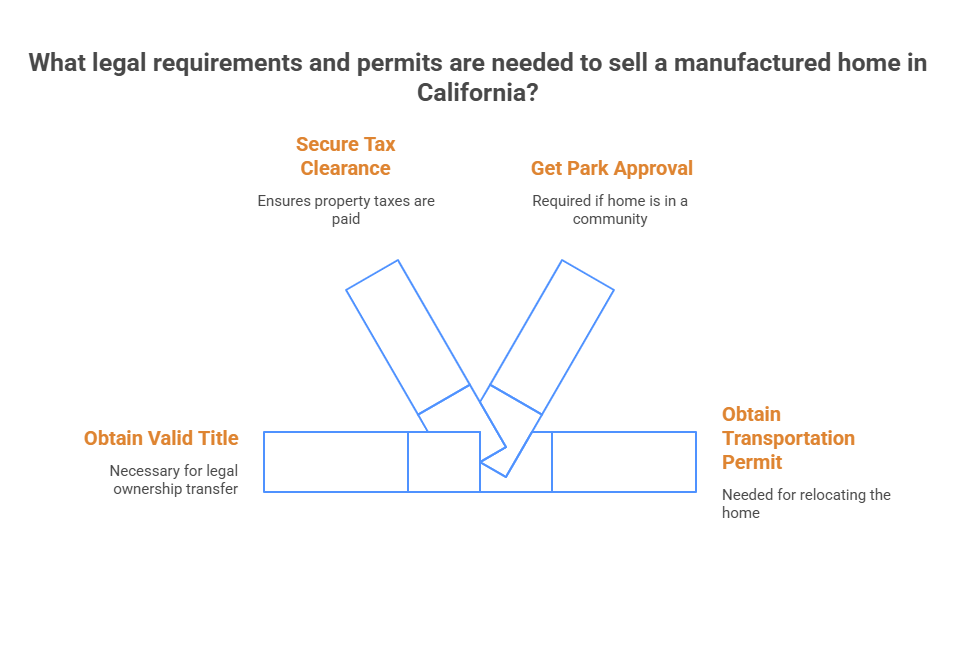
1. Get a Valid Title from the California HCD
To legally transfer ownership, you’ll need a current title issued by the California Department of Housing and Community Development (HCD).
2. Secure a Tax Clearance Certificate
This certificate shows that all property taxes on the mobile home are paid up. It’s required by the county before any ownership transfer can happen.
3. Get Park Approval (If the Home’s in a Community)
If your home is located in a mobile home park, management may need to approve the sale and move-out. That could mean giving notice, getting inspections, or signing off on forms.
4. You’ll Need a Permit to Move the Home
California requires a transportation permit before any manufactured home is relocated on public roads. The permit type depends on your home’s size and the planned route.
How Does Moving Work When Selling to a Cash Buyer?
When you’re selling a manufactured home that needs to be moved, understanding the logistics is just as important as finding the right buyer. Unlike traditional home sales, moving a mobile home involves both physical preparation and regulatory compliance.
If you’re selling to a cash buyer, here’s what typically happens during the moving process:
Who Pays for Moving?
In many cash sales, especially when selling to an investor or mobile home specialist, the buyer will often cover the cost of relocation. This is usually factored into the offer amount, especially if the home is in move-ready condition.
However, this isn’t guaranteed. It’s important to clarify early in the process:
- Will the buyer arrange the movers?
- Will they deduct the cost from your offer or pay separately?
- Are you expected to prep the home beforehand, or will they handle that?
Always get clear, written terms before accepting an offer so you know where your responsibility ends.
What’s Involved in Moving a Manufactured Home?
The actual move requires more than just loading the home onto a trailer. Here are the key steps:
- Utility Disconnection: Water, gas, electric, and sewer lines need to be properly shut off and capped.
- Removal of Skirting & Attachments: Elements like steps, decks, awnings, or carports must be taken off. Skirting panels need to be removed to access the undercarriage.
- Securing the Structure: Doors, windows, and any loose features must be braced to prevent damage during transit.
- Permits & Route Planning: Moving a manufactured home in California requires a transportation permit and sometimes additional approvals for oversized loads or escorted routes.
Some buyers handle these steps through licensed movers; others may expect the seller to prepare the home for transport. Be sure to ask about this during the negotiation.
Working With Licensed Movers
By law, mobile homes in California must be moved by a licensed and bonded transporter. Attempting to move it yourself isn’t just risky, it’s illegal.
A professional mover will:
- Assess the home’s structural condition before approving the move
- Arrange for transport vehicles, escorts, and scheduling
- Handle setup at the destination, if required
If you’re working with a buyer who includes moving as part of the deal, ask if they work with licensed mobile home movers and request a basic timeline of the moving process.
Thinking about selling a mobile home that needs to be moved?
Before you commit, make sure you understand what’s involved and what you’re responsible for. If you’d like a clear, no-pressure breakdown of the moving process based on your specific situation, reach out for a free consultation.
Can You Sell Older or Pre-1976 Mobile Homes?
Yes, older mobile homes, including those built before 1976, can be sold, but there are important limitations to understand.
In 1976, the U.S. Department of Housing and Urban Development (HUD) introduced national building and safety standards for manufactured housing. Homes built before these standards (often referred to as “pre-HUD” homes) don’t automatically meet today’s safety codes, which makes financing, insuring, and even moving them more complicated.
Challenges With Pre-1976 Homes
If your mobile home was built before HUD regulations took effect, you may run into a few roadblocks. Here’s what typically makes older homes harder to sell or relocate:
- Limited Financing Options: Most banks and lenders will not issue loans for homes built before June 15, 1976, even if the home has been updated.
- Insurance Restrictions: It may be difficult or more expensive to get mobile home insurance for pre-HUD models.
- Transport Limitations: Movers often require a structural inspection before agreeing to relocate older units, and some may refuse to move homes that don’t meet minimum safety standards.
- Resale Value: Due to these limitations, older homes typically have lower resale value, and fewer buyers are interested unless the home is in excellent condition or located in a desirable park.
What to Do if You Own One
Still want to sell your pre-1976 home? It’s possible, especially with the right preparation and clarity. Start with these steps to improve your chances:
- Inspect the structure: Focus on the roof, frame, electrical system, and undercarriage for signs of rot, leaks, or outdated wiring.
- Gather paperwork: Titles, prior permits, and any evidence of upgrades or maintenance can help reassure potential buyers or movers.
- Disclose upfront: Being transparent about the age and condition of your home will help avoid wasted time or unrealistic expectations during the sale process.
What Are the Costs of Moving a Mobile Home in California?
Moving a manufactured home isn’t as simple, or as cheap, as hauling furniture. It involves permits, planning, and a specialized moving crew. The cost depends on several factors, including the size of your home, the distance, and how accessible the current and new locations are.
Below is a general breakdown of what you can expect to pay if you’re covering the move yourself:
- Single-wide: Typically costs between $3,000 and $5,000 for moves under 100 miles.
- Double-wide: Often ranges from $8,000 to $12,000, as these homes need to be separated and transported in sections.
These estimates usually include disconnection, transport, and reinstallation, but not always. Always confirm what’s included in the quote.
Factors That Influence Moving Costs
Before committing to a move, consider the following variables that may increase or decrease your final cost:
- Distance: The farther the move, the higher the transport and fuel costs.
- Terrain: Moving through mountain passes, narrow roads, or urban areas can increase the complexity and price.
- Permits: Oversized load permits, route planning, and potential police escorts all add to the cost.
- Site Conditions: Hard-to-access lots, uneven ground, or tight park spaces may require additional labor or equipment.
- Home Condition: Older homes might need reinforcement before transport, which adds time and cost.
California Mobile Home Buyer Handles Permits, Paperwork, and Park Approvals
Selling a mobile home that needs to be moved can feel like a maze of forms, signatures, and park rules, but it doesn’t have to be.
At California Mobile Home Buyer, we take care of everything behind the scenes:
- Transportation permits required by the state
- Title and tax clearance paperwork from the HCD and county
- Coordination with park managers for notice, move-out, and compliance
Whether your home is in a tight park, has missing paperwork, or you’re just not sure where to start, we streamline the process so you don’t have to deal with red tape or chase down approvals.
All you have to do is tell us your timeline, and we’ll handle the rest.
Conclusion
Selling a manufactured home that needs to be moved isn’t simple, but it’s absolutely doable with the right information.
From understanding title status and park rules to handling site preparation and permits, each step matters. Whether your home is old, in a park, or facing a tight move date, knowing what to expect gives you more control and fewer surprises.
If you’re weighing your options, start with the facts. A clear plan, a realistic timeline, and awareness of local regulations can save you time, money, and unnecessary stress.
The key? Don’t rush the move, get it right, not just done.
Frequently Asked Questions
What should I do before the moving truck arrives?
Secure all loose items and remove personal belongings. Notify utility companies and disconnect services early. Doing this gives you peace of mind and avoids delays on your move date.
Is site preparation required at the new location?
Yes, site preparation at the new site is essential. It includes grading the land, checking utility access, and complying with local regulations before your manufactured home can be installed.
Do I need a new title after the move?
If your home crosses county lines or changes ownership, a new title may be required. Check with your local Department of Motor Vehicles for title transfer guidelines and necessary permits.
Can you sell a manufactured home and move it without park approval?
If your home is in a manufactured home park, review your lease and the park’s terms of use. Most parks require written notice or third party inspection before allowing a move.
How to sell and move a manufactured home in one transaction?
To simplify, sell directly to a buyer who handles moving logistics. Confirm they’ll arrange the moving truck, site setup, and necessary permits to avoid surprises after closing.