

| TL;DR You cannot always sell a mobile home with just a bill of sale. Most states, including California, require a proper title transfer to complete the transaction legally. A bill of sale is an essential legal document that records the transfer of ownership. It includes key information such as the buyer’s and seller’s names, sale date, purchase price, and mobile home details, including the year, make, model, and VIN. To fully and legally sell a mobile home, you will generally need both the bill of sale and the title. In some cases, you may also need a tax clearance letter, park approval, and HUD inspection documents, depending on the location and condition of the home. While a bill of sale may temporarily serve as proof of purchase, it does not replace a title. It is typically insufficient on its own for legal transfer of ownership or registration. Using a state-compliant bill of sale template and having it notarized is strongly recommended to provide legal protection for both the buyer and seller. Selling a mobile home involves several steps, including confirming legal ownership, determining whether land is included, preparing the home for sale, setting a fair price, marketing it effectively, and completing all required documentation. Suppose you want to avoid the complications of paperwork, title issues, or park approval. In that case, you can sell your mobile home as-is for cash to California Mobile Home Buyer, who will handle everything from title transfer to legal documents |
|---|
Selling a mobile home might seem as simple as handing over the keys and signing a bill of sale, but is that really enough? If you’re wondering, “Can you sell a mobile home with just a bill of sale?” the short answer is: it depends on your state laws and whether the mobile home is classified as personal property or real estate. A bill of sale for a mobile home is a critical legal document that records the transfer of ownership; however, it may not satisfy all legal requirements by itself, especially if the title isn’t properly transferred or if land is involved.
In this guide, we’ll explain what a bill of sale for a mobile home covers, how to write a bill of sale for a mobile home, and how to get a bill of sale for a mobile home if you’re planning to buy or sell.
What Is a Bill of Sale for a Mobile Home?
According to the U.S. Census Bureau, over 21.2 million Americans live in manufactured homes, accounting for 6.4% of all housing units nationwide. A home bill of sale is a contract that ensures the sale of a mobile home is legal when a seller and buyer trade a manufactured home.
This form clearly outlines the purchase price, the condition of the mobile home, and the payment terms. It works as a proof of purchase. The bill of sale benefits both parties by confirming the ownership transfer and documenting the details of the transaction.
Why Is a Bill of Sale for a Mobile Home Legally Important in the California?
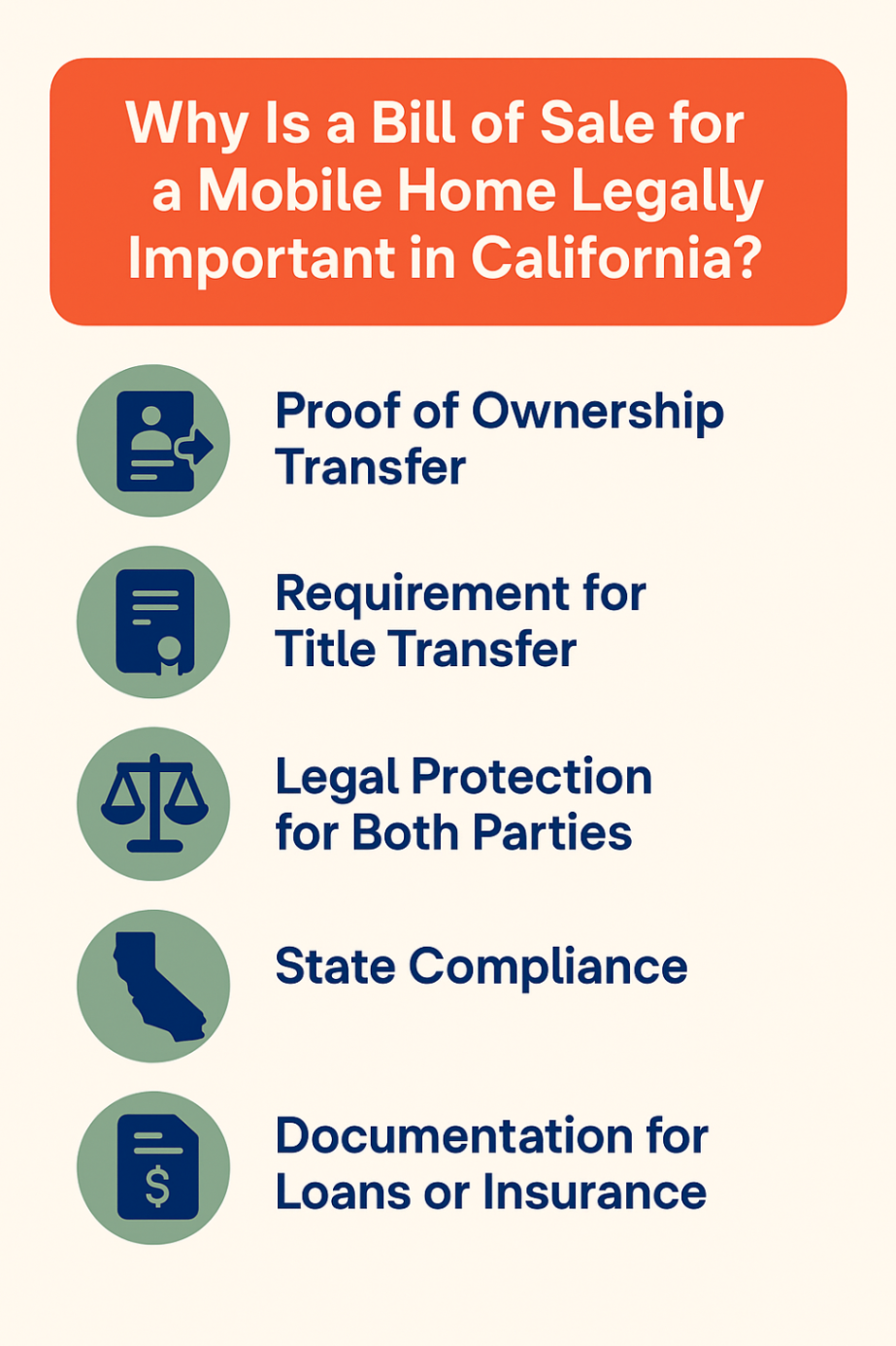
A bill of sale for a mobile home is legally important because it serves as formal proof that ownership has transferred from the seller to the buyer. In California, this document plays a vital role in protecting both parties and ensuring compliance with state-level regulations.
1. Proof of Ownership Transfer
The bill of sale outlines key details of the transaction, including the names of the buyer and seller, the date of sale, the purchase price, and a description of the mobile home (with details such as make, model, year, and VIN). This information confirms that the buyer is the new legal owner.
2. Requirement for Title Transfer
In most states, the Department of Motor Vehicles (DMV) or Housing Authority requires a bill of sale to process the title transfer. Without it, the buyer may not be able to register the home or prove legal ownership.
3. Legal Protection for Both Parties
The bill of sale protects:
- The seller assumes no future liability for taxes, insurance, or any legal claims related to the home.
- The buyer is protected from potential disputes over ownership or payment terms.
4. State Compliance
Some states treat mobile homes as vehicles, while others treat them as real estate. Regardless of classification, having a bill of sale ensures the transaction meets state requirements, mainly when the mobile home is sold without land.
5. Documentation for Loans or Insurance
Lenders and insurance providers may request a copy of the bill of sale as proof of purchase before offering financing or coverage.
Learn more about how to sell a mobile home without a title in California if you’re unsure about your current paperwork.
Also Read: The Most Reputable Mobile Home Buyers, Fontana, California
What Paperwork Do You Need to Sell a Mobile Home?
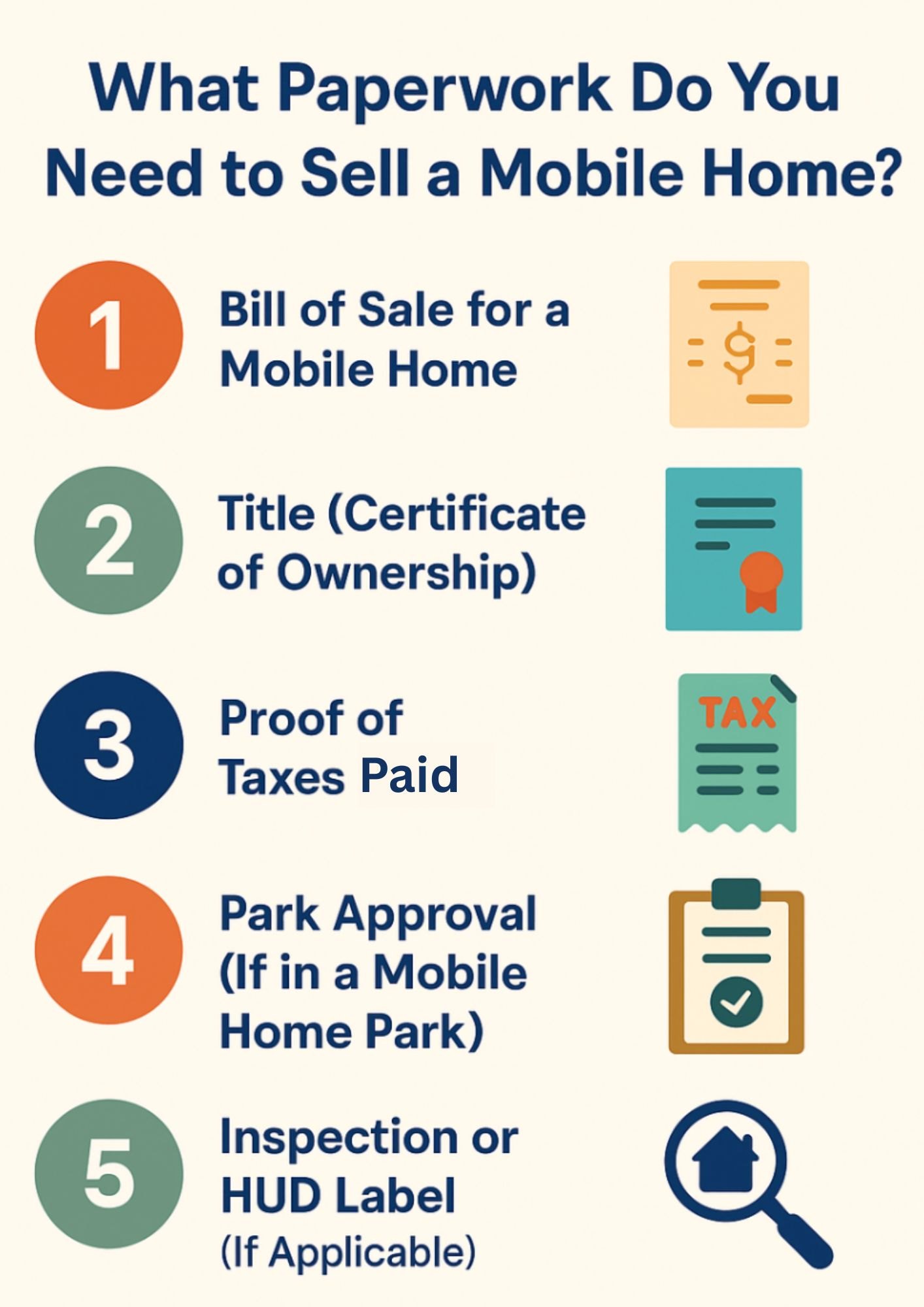
If you’re wondering how to sell a mobile home in California, here’s a checklist of what’s typically required:
1. Bill of Sale for a Mobile Home
This is the most crucial document in the transaction. It confirms the sale and transfer of ownership, listing details like:
- Buyer and seller names
- Sale date and price
- Mobile home description (year, make, model, VIN)
If you’re unsure how to write a bill of sale for a mobile home, many states provide templates, or you can work with a lawyer to draft one. If you’re the buyer, learning how to get a bill of sale for a mobile home ensures you have legal proof of ownership moving forward.
2. Title (Certificate of Ownership)
The title must be signed over to the buyer, similar to a car title. If the mobile home is attached to land, you may also need to transfer a deed through your county recorder’s office.
3. Proof of Taxes Paid
Most states require sellers to show that all property or mobile home taxes are paid up to the sale date. A tax clearance letter may be required.
4. Park Approval (If in a Mobile Home Park)
If the home is located in a park, the buyer may need approval from the park management. Provide a written notice to the park and secure necessary documents as required by your lease agreement.
5. Inspection or HUD Label (If Applicable)
Some states may require an inspection, especially for older homes. HUD labels (also known as HUD Data Plates) are essential for demonstrating compliance with federal construction standards.
Can You Legally Sell a Mobile Home with Just a Bill of Sale?
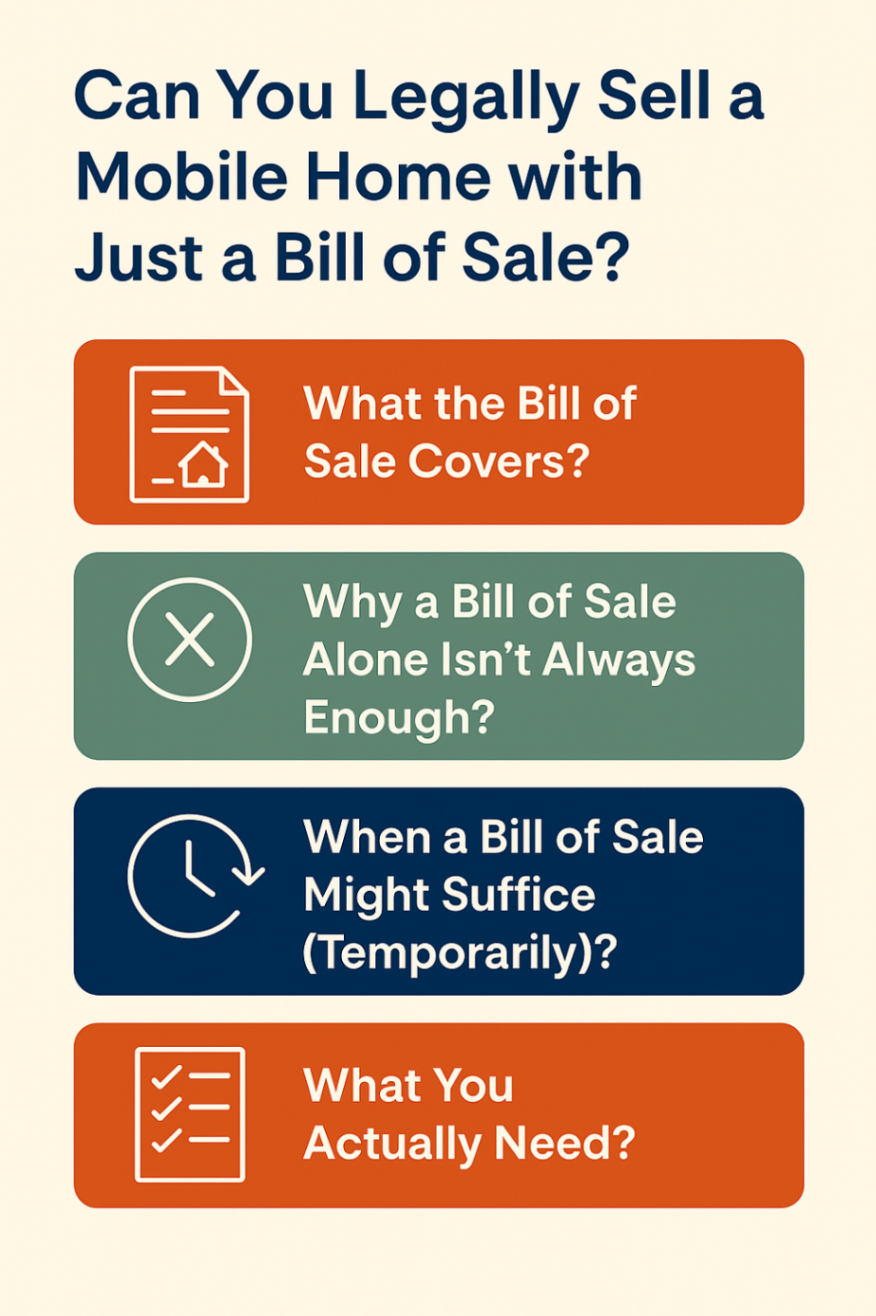
The question “Can you sell a mobile home with just a bill of sale?” often comes up in private party transactions, and the answer depends on several legal factors, including your state’s laws and the status of the home (whether it’s considered personal property or real estate).
1. What the Bill of Sale Covers?
A bill of sale for a mobile home is a legal document that records the transaction between the buyer and seller. It typically includes:
- Buyer and seller information
- Sale date and amount
- Detailed description of the mobile home (year, make, model, VIN)
However, while it documents the sale, it doesn’t replace the title transfer process or meet all legal requirements on its own.
2. Why a Bill of Sale Alone Isn’t Always Enough?
In most U.S. states, you cannot legally complete the sale of a mobile home with just a bill of sale, you also need to transfer the title. Here’s why:
- The title proves legal ownership, much like with a car.
- State DMVs or housing authorities require title transfer forms, the signed title, and sometimes additional documentation.
- Without title transfer, the buyer cannot register the home or prove full legal ownership.
3. When a Bill of Sale Might Suffice (Temporarily)?
There are a few exceptions where a bill of sale may temporarily serve as proof of ownership:
- In private sales, while waiting for the title transfer to process
- For homes without land, where the mobile home is considered personal property
- In states with less formal mobile home registration laws (though this is increasingly rare)
Even in these cases, the bill of sale is usually just one part of a larger paperwork package required by your state.
4. What You Actually Need?
To fully and legally transfer ownership, you’ll typically need:
- A properly executed bill of sale for a mobile home
- The signed title certificate
- Any required tax clearance or inspection documents
- Park approval (if applicable)
What is the Step-by-Step Process for Selling a Mobile Home?
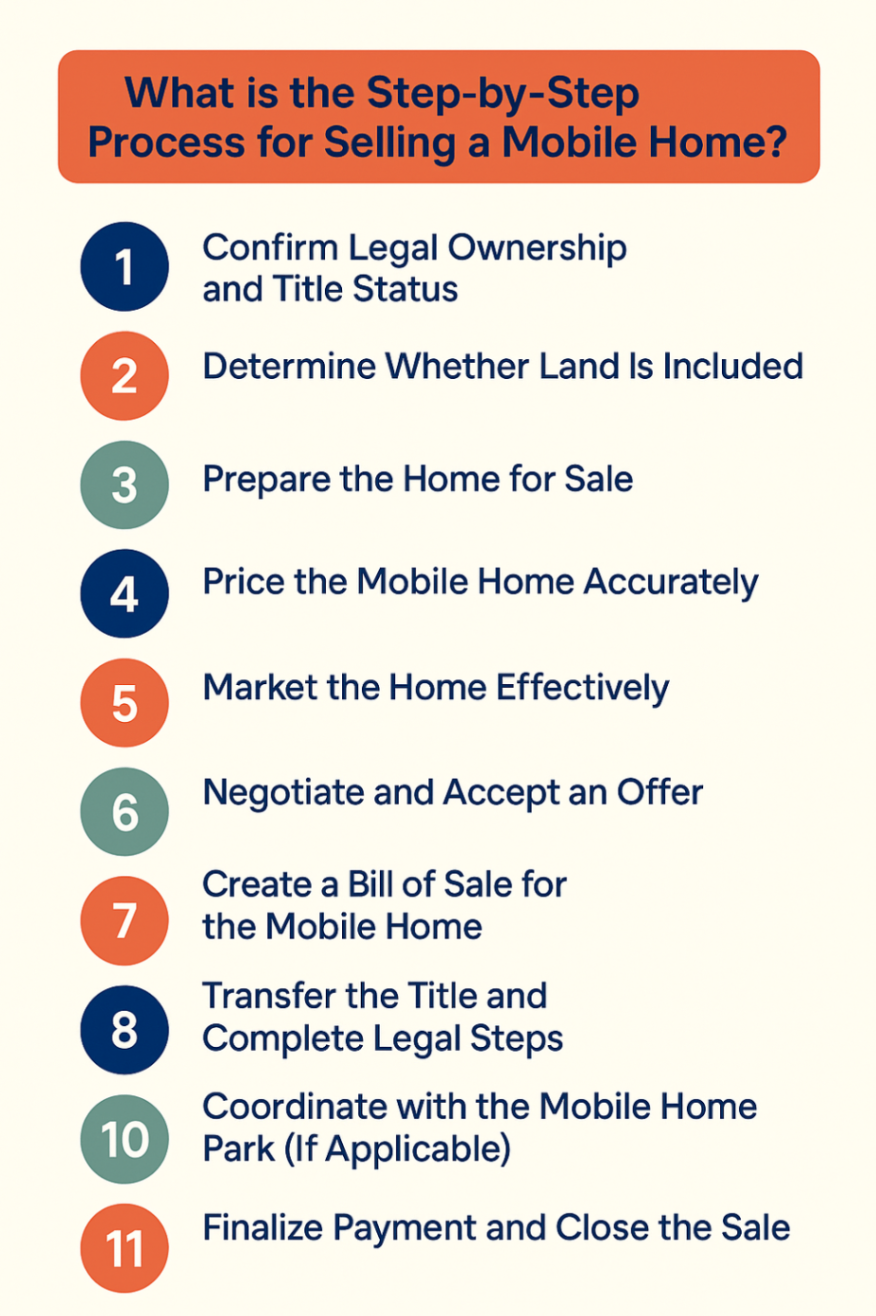
Selling a mobile home involves more than just finding a buyer, it requires thorough legal documentation, adherence to regulatory compliance, and a well-structured transaction. Below is a detailed, step-by-step guide to help you complete the sale smoothly and by the law.
1. Confirm Legal Ownership and Title Status
Start by making sure you’re the legal owner listed on the mobile home’s title. If the home has an outstanding loan or lien, you’ll need to resolve it before selling. The title must be clear and ready to be signed over. If the original title is missing or damaged, request a duplicate from your state’s Department of Motor Vehicles (DMV) or housing agency before proceeding.
2. Determine Whether Land Is Included
The paperwork required to sell a mobile home varies depending on whether the home is being sold with land. If you’re only selling the mobile home, it’s considered personal property and is handled like a vehicle. But if the home is permanently attached to land, it’s classified as real property, and a real estate deed transfer may be required. Understanding this distinction helps you comply with the correct legal process.
3. Prepare the Home for Sale
First impressions matter, especially when selling an older mobile home. Clean the home thoroughly, make minor repairs, and consider staging it to make it more appealing to buyers. Gather all relevant documents, including the title, park lease (if located in a mobile home park), appliance warranties, and any inspection reports. A well-presented and well-documented home increases buyer trust and saleability.
4. Price the Mobile Home Accurately
To set a fair asking price, research recent sales of similar mobile homes in your area. Take into account the home’s age, condition, size, included land (if any), and location. If you’re unsure, hiring a professional appraiser or mobile home specialist can help you arrive at a realistic and competitive value.
5. Market the Home Effectively
List the mobile home on platforms like MHVillage, Facebook Marketplace, Craigslist, or Zillow (if land is included). Use high-quality photos and write a clear, honest description. If the home is in a park, note any lease terms or restrictions. You can also consider working with a local real estate agent experienced in mobile home sales.
Wondering what your mobile home is worth? Discover your home’s value in minutes
6. Negotiate and Accept an Offer
Once you attract interest, be prepared to negotiate. Discuss price, included appliances or furnishings, and closing terms. Once you and the buyer reach an agreement, you’re ready to move on to the documentation phase.
7. Create a Bill of Sale for the Mobile Home
A bill of sale for a mobile home is a legally binding document that records the details of the transaction. It should include the buyer’s and seller’s names, sale date, purchase amount, and a full description of the mobile home, including year, make, model, and VIN. If you’re unfamiliar with how to write a bill of sale for a mobile home, consider using a legal template or contacting a professional.
8. Transfer the Title and Complete Legal Steps
Sign over the mobile home’s title to the buyer. In most states, this also involves completing a title transfer application, paying a fee, and submitting both to the DMV or state housing agency. If you’re transferring land along with the home, you’ll need to work with a title company or real estate attorney to transfer the deed legally.
9. Coordinate with the Mobile Home Park (If Applicable)
If the mobile home is located in a park, notify park management of the sale and make sure the buyer is approved as a new resident. You may need to transfer or terminate the existing lot lease, depending on park rules. Failing to follow park policies could delay or even void the sale.
10. Finalize Payment and Close the Sale
Once all paperwork is in order and the buyer is ready, accept payment through a secure method, such as a cashier’s check or wire transfer. Provide the buyer with the signed bill of sale, the signed title, the keys, and any other relevant documents. Don’t forget to cancel your insurance, utilities, and property tax obligations.
11. Keep Copies and File Final Documents
For your protection, retain copies of all key documents, including the bill of sale, title transfer confirmation, and proof of payment. If required in your state, file a release of liability with the DMV to officially remove your name from the home’s records.
Sample Mobile Home Bill of Sale
If you’re preparing to sell or buy a mobile home, having a well-drafted bill of sale is essential for documenting the transaction legally and clearly. Below is a sample mobile home bill of sale that outlines all the necessary details, including buyer and seller information, home description, purchase terms, and legal clauses. You can use this as a template and customize it based on your state’s requirements.
| Mobile Home Bill of Sale Date of Sale: July 21, 20251. Seller Information Full Name: John D. Seller Address: 123 Oak Lane, Houston, TX 77001 Phone: (555) 123-4567 Email: john.seller@email.com 2. Buyer Information Full Name: Jane A. Buyer Address: 456 Maple Street, Dallas, TX 75201 Phone: (555) 987-6543 Email: jane.buyer@email.com 3. Mobile Home Description Year: 2012 Make: Clayton Homes Model: Horizon Series Size: Double-Wide (28′ x 52′)VIN: ABC123456789TX Serial Number: CH-2012-TX-45678 Current Location: 123 Oak Lane, Houston, TX 77001 Land Included: ☐ Yes ☑ No 4. Purchase Price The total purchase price of the mobile home is $42,000 (Forty-Two Thousand Dollars), paid in full by the Buyer to the Seller on the date of sale. 5. Payment Method☑ Cash ☐ Cashier’s Check ☐ Wire Transfer ☐ Other: _________________________ 6. Warranties and Disclosures The Seller certifies that:They are the lawful owner of the mobile home. The mobile home is free of all liens and encumbrances. The mobile home is sold “as-is”, without warranties expressed or implied. 7. SignaturesSeller’s Signature: ___________________________ Printed Name: John D. Seller Date: ___________________________Buyer’s Signature: ___________________________ Printed Name: Jane A. Buyer Date: ___________________________ 8. Notarization (Optional but recommended) State of Texas County of Harris Subscribed and sworn before me on this ___ day of ____________, 2025, by John D. Seller and Jane A. Buyer. Notary Public Signature: ___________________________ My Commission Expires: ___________________________ |
|---|
Sell Your Mobile Home Fast, No Hassles, No Hidden Fees
Tired of dealing with agents, endless paperwork, or buyers who waste your time? At California Mobile Home Buyer, we make it simple. Whether your mobile home is in good condition, needs repairs, or doesn’t have a title yet, we’ll buy it as-is, for cash, with zero commissions.
We handle everything:
- Title transfers
- Park approvals
- Back taxes or liens
- All the legal paperwork, including your bill of sale
You’ll get a fair cash offer, flexible closing options, and full support every step of the way.
Don’t wait. Get your no-obligation cash offer today!
Contact us now and sell your mobile home in days, not months.
Conclusion
Selling a mobile home isn’t just about exchanging keys; it’s about following the proper legal process to protect both parties. A properly written bill of sale for a mobile home is a crucial document that outlines the terms of the sale, including the purchase price, the mobile home’s condition, and the vehicle identification number (VIN). Whether you’re paying in a lump sum or installments, this record of ownership transfer is often required under tax law and state-specific guidelines.
To stay compliant, always pair your mobile home bill of sale with a title transfer and any required approvals from the park or county. And if you’re unsure where to begin, using a state-compliant bill of sale template can simplify the process and ensure that all legal requirements are met.
Frequently Asked Questions
Who handles the transfer of ownership documents?
Typically, the seller is required to provide the necessary paperwork for the transfer of ownership of a mobile home. This includes items such as the bill of sale and the title. If the mobile home is in a mobile home park, the park management can also help with this. Buyers will use these documentation papers when they have to register.
What happens if there is a lien on the mobile home?
A lien on the mobile home can complicate the sale of the mobile home. The person or group holding the lien must be paid, and you need to clear any additional fees before you can use a valid legal document to transfer the home to someone else. If you do not take care of this, the mobile home title will stay unsettled.
What does it mean if a mobile home doesn’t have a title?
If you do not have a mobile home title, you may not be able to transfer ownership legally. Still, a detailed mobile home bill of sale can be proof of purchase. The buyer should research what the state requires for the transfer of ownership if there is no title. This helps stop any legal trouble.
Is a bill of sale valid without a title?
A bill of sale outlines the details of a deal, but you will often need both the home title transfer and this bill when selling a mobile home. If you use only the sale of your mobile home bill of sale, it may not be sufficient for what the state requires, even with all the necessary details included.
Does a bill of sale for a mobile home require notarization?
Notarization is not always needed for a mobile home bill of sale. Still, having the bill of sale notarized can be a good idea. It lends more credibility to the bill of sale and helps you comply with the law when selling a mobile home.