

Key Highlights
- Selling without a title is possible, but more complex and risky.
- A title is the main proof of ownership required for most sales.
- Missing titles can result from lost documents, transfer issues, or liens.
- State laws and specific requirements vary by location.
- Duplicate titles or alternatives, like a bill of sale, may be used.
- Homes without a title often sell for less and attract fewer buyers.
- Proper documentation and transparency help ensure a smooth sale.
If you’re trying to sell a mobile home without a title, the process can quickly become confusing. You may have a buyer ready and a price agreed, but the moment the title is mentioned, everything seems to stall. So, can you sell a mobile home without a title? What should have been a straightforward sale suddenly feels complicated and uncertain.
That uncertainty can be frustrating, especially if you need to sell quickly or move forward with your plans. Questions start to come up. Can you legally sell without a title? What documents do you need? Will buyers still be interested? These concerns are common, particularly when paperwork has been lost, ownership was never properly transferred, or the home was never fully titled.
The good news is that selling a mobile home without a title is often possible, but it requires the right approach. In this guide, you’ll learn what your options are, the steps you need to take, and how to handle the process confidently while avoiding common mistakes.
What Is a Mobile Home Title and Why Does It Matter?
A mobile home title is a legal document that proves ownership of the home and records important details such as the owner’s name, the home’s identification information, and any liens or loans attached to it. It functions similarly to a vehicle title and is essential for verifying that the person selling the home has the legal right to transfer ownership.
Why Does It Matter?
- Proof of Ownership: A valid title confirms that you legally own the mobile home and have the authority to sell it.
- Required for Sale or Transfer: Most buyers, lenders, and authorities require a title to complete the ownership transfer.
- Helps Avoid Legal Issues: Without a title, disputes over ownership can arise, delaying or preventing the sale.
- Shows Financial Obligations: The title reveals any existing liens or loans, which must typically be cleared before selling.
- Builds Buyer Confidence: Buyers are more likely to proceed when ownership is clear and properly documented.
A mobile home title is more than just a document—it is the key to a smooth, secure, and legally recognised sale, ensuring both the seller and buyer are protected throughout the transaction.
Can You Sell a Mobile Home Without a Title?
Selling a mobile home without a title can become complicated when buyers require a clear title as legal proof of ownership before proceeding. Without proper documentation, even an agreed sale can stall.
- It is possible in certain cases, but the transaction involves additional legal steps compared to a standard sale.
- Alternative ownership evidence is required, such as a bill of sale, tax records, or park-issued documentation.
- State-specific regulations determine the process, and many require a replacement or bonded title before ownership can be transferred.
- Unresolved liens or incomplete records can block the sale, as legal ownership must be clearly established.
- Marketability may be affected, as buyers face higher risk and limited financing options.
While a sale without a title can proceed under the right conditions, ensuring proper documentation and meeting legal requirements is essential to complete the transaction without delays.
Why Might a Mobile Home Title Be Missing?
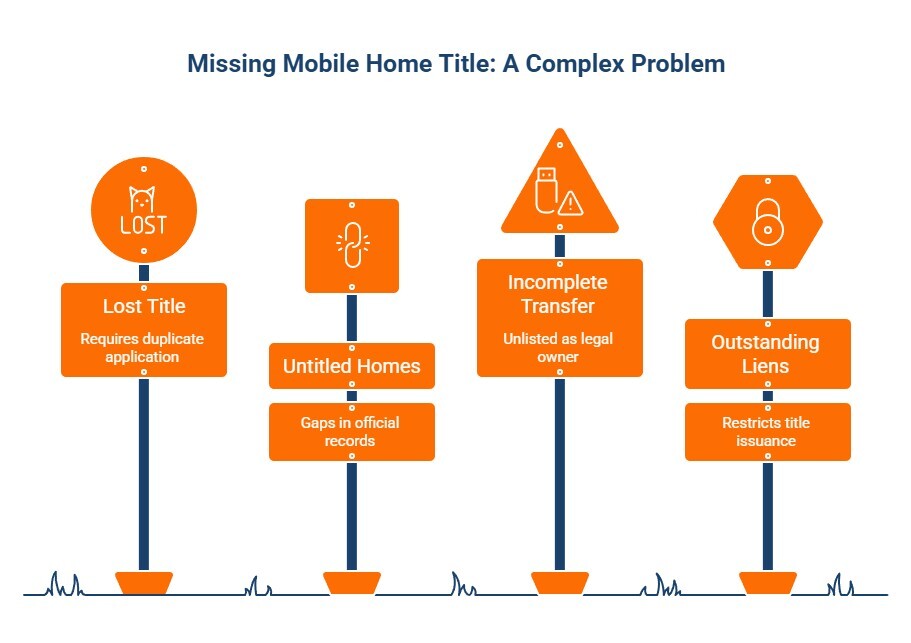
A mobile home title can be missing for several reasons, each affecting how easily mobile home ownership can be verified and transferred. These situations often arise from lost documentation, incomplete legal records, or unresolved financial and administrative issues that were not properly addressed at the time.
1. Lost, Damaged, or Misplaced Titles
A title may be lost, damaged, or misplaced over time, particularly when documents are not stored securely or are transferred between owners without proper record-keeping. Moves, handling errors, or physical deterioration can make the title unusable, requiring sellers to apply for a duplicate through the appropriate state authority.
2. Homes Never Properly Titled or Converted to Real Property
Some mobile homes were never formally titled, or they were incorrectly converted into real property without completing the required legal process. This results in gaps within official records, making ownership difficult to verify. Sellers may need to follow state-specific procedures or provide additional documentation to establish legal ownership.
3. Ownership Transfer Was Never Completed
In certain cases, a previous sale may have occurred without updating ownership records with the relevant authority. This can leave the current seller unlisted as the legal owner. Informal agreements or undocumented transactions often cause these issues, requiring additional verification to confirm a valid ownership chain.
4. Outstanding Liens or Legal Issues
Financial obligations or legal disputes can also prevent a new title from being issued or transferred. Unpaid loans, active liens, or tax-related issues may restrict access to the title. Until these matters are resolved, authorities may delay or deny issuing a new or duplicate title for the property.
Identifying the exact reason for a missing title is essential, as resolving the underlying issue helps restore ownership records, reduces legal risk, and allows the sale process to move forward without unnecessary delays.
Clearing these issues is necessary before proceeding with the sale, and working with experienced buyers like Cali Mobile Home Buyer can help simplify the process.
Is It Legal to Sell a Mobile Home Without a Title?
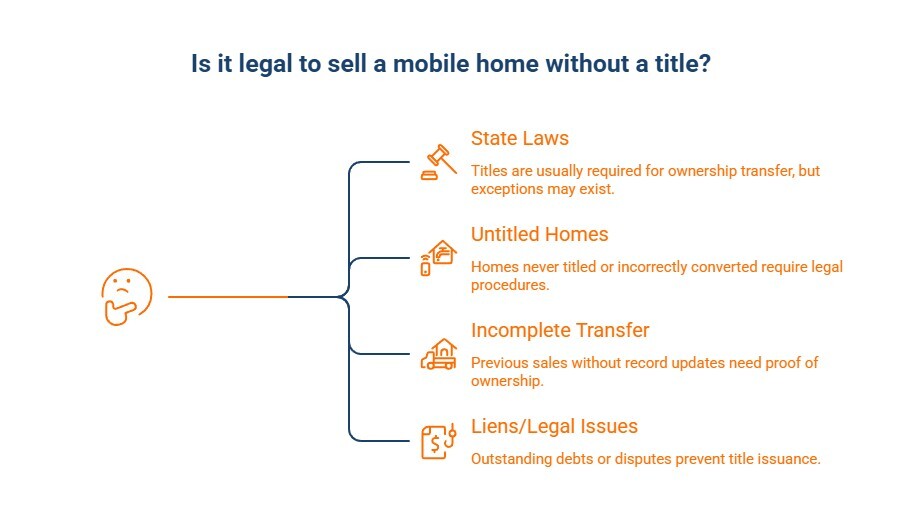
Selling a mobile home without a title can be legally complex, and requirements vary by state. In most cases, a valid title is needed to transfer ownership in today’s real estate market, but certain exceptions may apply depending on how the home is classified and local regulations.
1. State Laws and Title Requirements
A title may be lost, damaged, or misplaced over time, particularly if records were not properly stored or transferred between owners.
- Documents can be misplaced during relocation or poor record-keeping
- Physical damage may render the title unusable
- Missing paperwork delays ownership verification
- A duplicate title must usually be requested through state authorities
- Supporting documents may help temporarily but do not replace the title
Resolving this early helps prevent delays and supports a smoother transaction.
2. Homes Never Properly Titled or Converted to Real Property
Some mobile homes were never formally titled, or they were incorrectly converted into real property without completing the required legal process. This creates gaps in official ownership records. Buyers may request additional documentation, and sellers often need to follow state-specific procedures to establish ownership before proceeding with a sale.
3. Ownership Transfer Was Never Completed
In certain situations, a previous sale may have taken place without updating ownership records with the relevant authorities. This can leave the current seller unlisted as the legal owner. Informal agreements or unrecorded transactions often cause these issues, requiring additional proof to confirm ownership and ensure a valid transfer.
4. Outstanding Liens or Legal Issues
Financial or legal complications can also prevent a title from being issued or transferred. Unpaid loans, active liens, tax obligations, or ownership disputes may restrict access to the title. Until these matters are resolved, authorities may not release or reissue the document, delaying any attempt to sell the mobile home.
Selling without a title may be possible, but it requires meeting state rules, proving ownership, and resolving any legal or financial issues first.
What Are the Risks or Penalties for Selling a Mobile Home Without a Title?
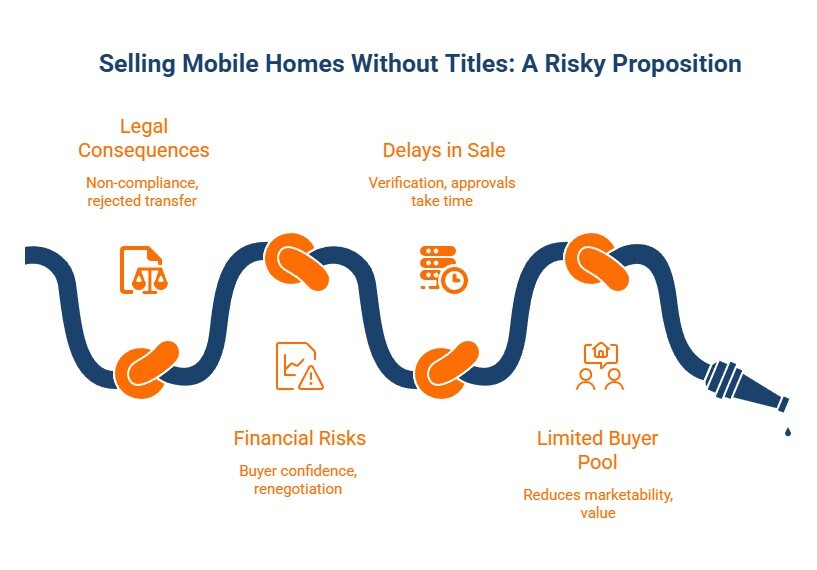 Selling a mobile home without a valid title can expose you to several legal and financial risks. Without proper ownership documentation, the transaction may face complications that affect its validity, timing, and overall success, making it important to understand the potential consequences before proceeding.
1. Legal Consequences and Compliance Issues
Without a valid title, the sale may not meet legal requirements for ownership transfer. Authorities may reject or delay the process, especially if necessary documentation is incomplete. In some cases, sellers may face penalties, and unclear ownership can lead to disputes that complicate or invalidate the transaction.
2. Financial Risks and Buyer Disputes
A missing title can affect buyer confidence and introduce financial uncertainty. Buyers may hesitate, renegotiate, or withdraw from the deal entirely. Disputes over ownership or payment terms can arise, and sellers may need to accept lower offers to offset the perceived risk associated with incomplete documentation.
3. Delays in Sale and Transaction Completion
Title-related issues often slow down the sale process, as additional verification and documentation may be required. Approvals from authorities can take time, and unresolved concerns may cause delays at multiple stages. In some cases, transactions may fail to complete due to ongoing uncertainty.
4. Limited Buyer Pool and Marketability
Selling without a title significantly reduces the number of potential buyers. Traditional buyers and lenders typically require clear ownership records, leaving cash buyers or investors as the primary options. This limited demand can make the property harder to sell and affect its overall market value.
Understanding these risks helps you prepare for potential challenges and take the necessary steps to complete the sale legally, efficiently, and with greater confidence.
What Steps Should You Take If the Title Is Missing and You Want to Sell?
If your mobile home title is missing, you should first attempt to resolve the issue through proper legal channels before proceeding with a sale. When that is not possible, a structured approach with clear documentation and transparency becomes essential to complete the transaction smoothly and compliantly.
Step 1: Verify Ownership and Check for Liens
Begin by confirming that you are the legal owner of the mobile home and identifying any financial obligations attached to it. This includes reviewing purchase records, matching the serial number with official records, and checking for unpaid loans, liens, or tax-related issues that could prevent ownership transfer.
Step 2: Gather Required Information and Documents
Once ownership is confirmed, collect all supporting documents that can help establish proof of ownership. This typically includes identification, purchase or sale records, registration details, tax documents, and the mobile home’s serial number, all of which are necessary for both title replacement and sale preparation.
Step 3: Apply for a Duplicate or Replacement Title
Where possible, apply for a duplicate title through the appropriate state authority, such as the DMV. Submit the required forms, provide proof of identity and ownership details, and pay any applicable fees. This is the most reliable way to ensure a legally recognised and straightforward transaction.
Step 4: Prepare the Mobile Home and Sale Information
If you plan to proceed with the sale, ensure the home is presentable and all key details are organised. Basic maintenance, clear identification information, and accessible documentation help improve buyer confidence and make the process more efficient.
Step 5: Disclose Title Issues to Buyers
Be transparent about the missing title from the beginning. Clearly explain the situation, provide any available proof of ownership, and disclose any liens or unresolved issues. Open communication reduces risk and helps establish trust with potential buyers.
Step 6: Complete the Sale with Alternative Documentation
If the title cannot be obtained in time, proceed using alternative documentation such as a bill of sale, supported by tax records, registration details, or prior agreements. Ensure all documents are accurate, signed, and clearly identify the mobile home to support the transfer.
Following these steps helps you either resolve the title issue or proceed with the sale in a structured way, reducing legal risks, improving buyer confidence, and ensuring the transaction can move forward without unnecessary delays. For a faster option, visit calimobilehomebuyer
What Are Your Options If You Cannot Get the Title Quickly?
If you cannot obtain the title in time, you can still proceed using alternative legal methods to avoid legal problems. These options help establish ownership temporarily or provide a path to complete the sale without waiting for a full title replacement.
1. Using a Bill of Sale as Temporary Proof
A bill of sale can document the transaction and provide basic evidence of ownership, but it is not a substitute for a legal title. Its acceptance depends on local requirements and buyer willingness, particularly in private or cash transactions.
- Records buyer and mobile home seller details, purchase price, and date of sale
- Includes the mobile home’s serial number for identification
- May support possession or occupancy transfer in some jurisdictions
- Typically does not satisfy lender or official transfer requirements
- Often used alongside additional supporting documents
2. Applying for a Bonded Title or Court Order
A bonded title or court order is a more formal solution when ownership cannot be clearly verified. These methods help establish legal ownership through a structured process, making the sale more secure and widely acceptable.
- A bonded title involves obtaining a surety bond based on the home’s value
- Protects future buyers against potential ownership claims
- A court order may be required if the ownership history is unclear
- Requires documentation, verification, and approval from authorities
- Provides a recognised legal pathway to transfer ownership
These options can help you move forward in the short term, but completing a proper title replacement remains the most reliable way to ensure a fully compliant and secure sale.
What Documents Are Needed to Sell a Mobile Home Without a Title?
Selling a mobile home without a title can seem complicated, but alternative documents can help verify ownership and support the sale. Understanding the required paperwork ensures a smoother, more secure transaction for both buyer and seller.
- Bill of sale outlining buyer, seller, price, and transaction date
- Proof of ownership, such as prior purchase agreements or transfer records
- Mobile home identification details, including serial or VIN number
- Tax or insurance records showing consistent responsibility for the home
- Affidavit of ownership explaining why the title is missing
While these documents can support a sale, they are typically used in private or cash transactions and may not meet formal transfer or financing requirements.
Additional Paperwork for Buyers and Sellers:
In some cases, additional documentation may be required to strengthen the transaction and address legal or classification issues.
- Valid identification for both parties to verify the transaction
- Certificate of origin if the home was never formally titled
- Lien or loan documents to confirm any outstanding financial obligations
- Property-related documents, such as a deed, if classified as real estate
These records help clarify ownership status and reduce uncertainty, particularly when the home’s legal classification or financial history is involved.
Struggling to Sell Your Mobile Home Without a Title?
Selling a mobile home without a title can feel overwhelming, especially when buyers hesitate, paperwork gets complicated, and the process drags on longer than expected. You want a simple, fair sale, but title issues can make everything feel uncertain and stressful.
That’s where Cali Mobile Home Buyer makes the difference. We help homeowners sell their mobile homes quickly and easily, even without a title. Our process is designed to remove complications, so you don’t have to worry about legal hurdles, delays, or confusing paperwork.
Why Homeowners Choose Us:
- Fast Cash Offers: Get a fair, no-obligation offer within a short time
- No Repairs Needed: Sell your mobile home as-is, regardless of condition
- No Hidden Fees: No commissions, no deductions, no surprises
- Flexible Closings: Choose a timeline that works best for you
- Experience With Title Issues: We handle complex situations, including missing titles
If you’re looking for a faster, simpler way to sell without the usual stress, we’re here to help.
Get your free cash offer today at calimobilehomebuyer.com and move forward with confidence, no pressure, no repairs, just a straightforward way to sell your mobile home.
Conclusion
Selling a mobile home without a title is possible, but it requires careful planning, proper documentation, including transfer documents, and an understanding of state laws to ensure a successful sale. Addressing title issues early or using the right alternatives can help avoid delays and build buyer confidence.
With the right approach, you can complete the sale smoothly and move forward without unnecessary complications. If you want a faster, hassle-free process, working with experienced buyers can simplify the entire transaction.
Frequently Asked Questions
Should I sell my mobile home with or without land?
Selling with land usually increases value and attracts more buyers, as it offers long-term stability. Selling without land can be faster but may limit buyer interest and reduce price.
Can an abandoned mobile home be sold without a title?
Yes, but it can be difficult. You must first establish legal ownership, often through a bonded title, court order, or state process. Requirements vary by location, so checking local laws is essential before proceeding.
What does it mean when a mobile home has no title?
It means there is no official legal document proving ownership of the mobile home, including the owner’s name. This can make it difficult for insurance companies to verify ownership, transfer the property, or complete a sale without additional steps or documentation.
Can I transfer ownership of a mobile home without having the title?
In most cases, no you need a valid title to transfer ownership. However, some states allow alternatives like a bonded title, court order, or other legal documentation, depending on local regulations.
Does selling a mobile home without a title affect its value?
Yes. Selling without a title usually lowers the value because buyers face added risk and uncertainty. As a result, offers are often reduced, and the pool of potential buyers may be limited.
How much can you sell a mobile home without a title for?
A mobile home without a title typically sells for less than market value due to higher risk and limited buyer interest. Prices vary based on condition and location, but sellers often accept lower offers, especially from mobile home investors, cash buyers, or investors willing to handle title issues.
How can you sell your mobile home quickly without a title?
To sell quickly without a title, focus on cash buyers or investors, be transparent about the issue, and provide supporting documents. Pricing the home competitively and keeping the process simple can attract serious buyers and help complete the mobile home transactions without unnecessary delays.
Can I sell my mobile home without a title?
Yes, you can sell your mobile home without a title in some cases to a private buyer, but you must prove ownership, follow state regulations, and use alternative documents, as missing a title can limit buyers and complicate the sale process.ements.