

| TL;DR Buyers and lenders often treat relocated mobile homes differently due to worries about structural integrity, financing restrictions, and compliance with local regulations. Selling a moved mobile home requires updated titles, moving permits, installation certifications, and adherence to zoning laws. Missing paperwork can lead to major delays or failed deals. Gather essential documents upfront, such as proof of ownership, HUD labels, transport permits, and disclosure forms, to build buyer trust and ensure a smooth sale. Determine your home’s post-move value, make necessary repairs, and highlight its best features in listings. Be transparent about its move history and market it on relevant platforms. Once you accept an offer, finalize disclosures, assist with title transfer, and provide all necessary documentation to avoid hiccups during the closing process. |
|---|
Selling a mobile home is one thing; selling one that’s already been moved is a whole different ball game. Whether it’s been relocated once or several times, a moved mobile home often raises eyebrows for potential buyers, lenders, and even park managers. Questions about structural integrity, financing eligibility, and legal requirements can turn a simple sale into a stressful puzzle. But don’t worry. Selling a moved mobile home is possible, and with the right strategy, it can be just as smooth as any traditional sale. In this guide, we’ll walk you through the essential steps on how to sell a mobile home that has been moved without any stress.
Why Relocated Mobile Homes Are Treated Differently?
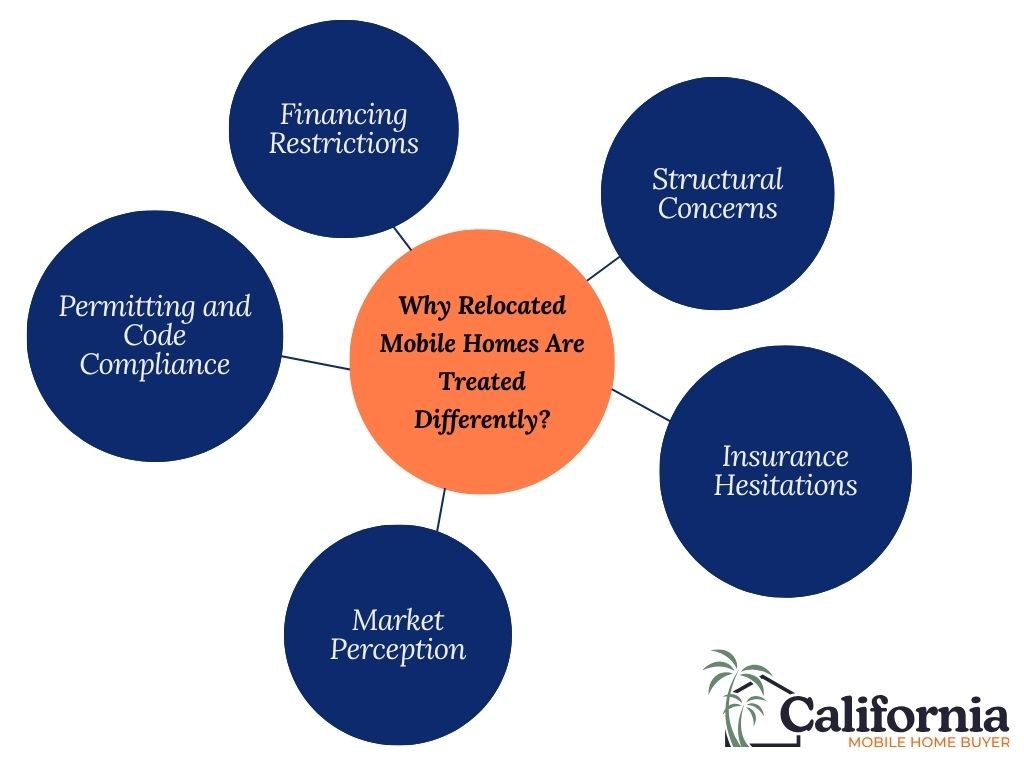
Unlike site-built homes, mobile homes are designed to be transportable, but each move can affect their structural integrity, value, and compliance with local housing codes. This makes it challenging for most homeowners trying to sell a mobile home. Here are the key reasons why relocated mobile homes are treated differently from the unmoved ones:
- Structural Concerns: Even if a move is professionally handled, the process can strain the frame, compromise seals, or misalign doors and windows. Buyers and inspectors may be more cautious as a result.
- Financing Restrictions: Many lenders are hesitant to finance mobile homes that have been moved. In fact, FHA and VA loans typically require the home to remain on its original site to qualify. This limits buyer options and can affect how quickly the home sells.
- Permitting and Code Compliance: Different states and municipalities have varying rules about relocating mobile homes. If the home doesn’t meet local zoning or HUD standards post-move, it may require costly upgrades or might not be allowed at all.
- Insurance Hesitations: Insurers may view a moved mobile home as a higher risk, especially if the move wasn’t properly documented or if damage occurred during transit.
- Market Perception: Simply put, a moved home is seen as less stable or trustworthy in the eyes of some buyers. In fact, according to one study, the consumer perception issues tied to outdated views of quality and depreciation is bringing down the growth of manufactured homes sector by 0.8%. So, even if everything checks out, you may need to offer more transparency or reduce the price to ease concerns.
What are the Legal Considerations for Moved Mobile Homes?
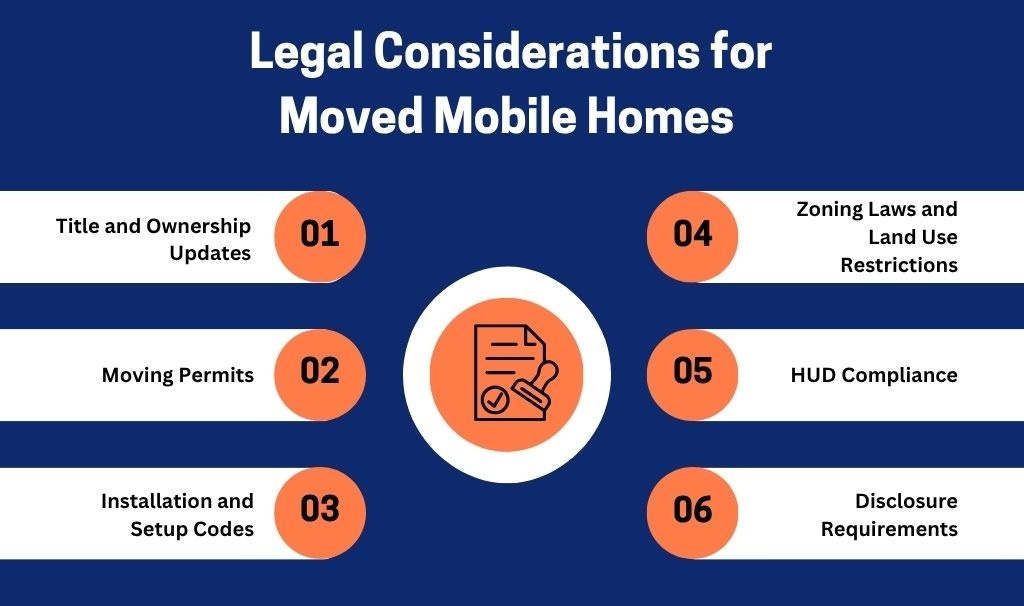
When a mobile home is moved, it doesn’t just change locations; it also enters a new legal landscape. Failing to understand the legal considerations involved can delay your sale, cause compliance issues, or even make your mobile home unsellable. Here are the key legal factors you need to be aware of when you plan to sell mobile home to be moved or one that has already been moved:
1. Title and Ownership Updates
Mobile homes are titled like vehicles in California. When the home is relocated, you may need to update the mobile home title with the new address or jurisdiction. In some cases, the home might need to be “retitled” as real property or personal property depending on where it’s placed.
2. Moving Permits
You cannot legally move a mobile home without a state-issued moving permit. This typically requires:
- Proof of ownership
- Paid property taxes
- An inspection to ensure the home meets HUD standards
If these permits weren’t obtained before the move, you may face legal penalties or complications when trying to sell.
3. Installation and Setup Codes
Each state or municipality has specific installation codes. The home must be anchored, leveled, and set up according to local safety standards. If it wasn’t properly reinstalled, you could be held liable for any future issues, and the buyer may not get financing.
4. Zoning Laws and Land Use Restrictions
Not every parcel of land allows for mobile homes, and zoning laws can vary significantly from one area to another. You must ensure the land where the home now sits is zoned for manufactured housing. Some areas may also have age or size restrictions.
5. HUD Compliance
Mobile homes built after 1976 must meet HUD code. When a home is relocated, some jurisdictions require proof that it still complies with those standards, especially in terms of safety and energy efficiency. You may need to provide HUD certification labels and a data plate.
6. Disclosure Requirements
In many states, sellers are legally required to disclose whether a mobile home has been moved, especially if it’s been relocated more than once. Failure to disclose this could lead to legal action post-sale.
How to Sell a Mobile Home that has been Moved? Step By Step Process
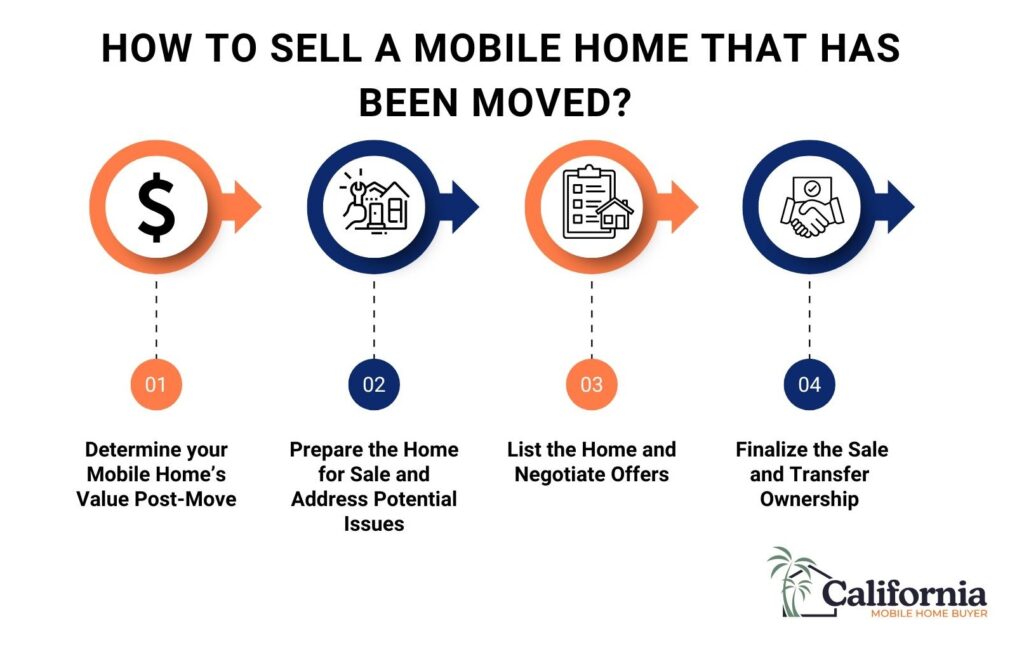
Selling a mobile home that has been relocated comes with some extra steps, but it’s completely doable. In fact, it is possible to sell a mobile home even without a realtor if you get the steps right. This section will walk you through the process from start to finish:
What are the Essential Documents and Paperwork Required?
Before you begin, gather the following to avoid delays later:
- Title (proof of ownership)
- Bill of Sale (if previously sold)
- HUD Certification Labels and Data Plate
- Moving Permits and Transport Documentation
- Installation Certification (tie-downs/foundation inspection)
- Zoning and Land Use Approval
- Seller’s Disclosure Form
- Tax Receipts and Utility Information
These documents help assure buyers, lenders, and agents that the move was legal and that the home meets structural and legal standards at the time of sale.
Step 1 (Valuate): How to Determine Your Mobile Home’s Value Post-Move?
Your first step should be determining a fair and realistic worth of your mobile home. A mobile home that has been moved may be valued differently than one that hasn’t, especially if it was moved more than once. Research recent sales of similar mobile homes in your area that have also been relocated. If in doubt, consider getting it appraised by a professional appraiser to help set the right asking price.
When pricing, take into account any repairs made, upgrades, the current condition, and the home’s location. Be honest about the move when calculating the value, as home buyers will factor that into their offers.
Step 2 (Prepare): How to Prepare the Home for Sale and Address Potential Issues?
Next, make sure the mobile home is in great shape for showing. Inspect the structure thoroughly, checking for damage from the move, such as roof issues, plumbing shifts, or settling problems. Address any visible defects, as buyers may be more cautious with a moved modular home. Ensure the home is properly leveled, anchored, and compliant with local building codes.
A clean, well-maintained home is more appealing, so take time to deep-clean the interior and tidy up the exterior. If possible, consider a pre-sale inspection to show that the home is sound, especially if you’re aiming to ease concerns related to its relocation.
Step 3 (List): How to List the Home and Negotiate Offers?
Once the home is ready, it’s time to put it on the market. Create a compelling listing that includes clear photos and an honest description. Mention that the home has been moved but focus on its strengths, such as renovations, energy efficiency, or its desirable new location. Use multiple platforms to reach potential buyers, including mobile home listing sites, social media marketplaces, and local real estate groups.
When offers start coming in, review them carefully. Some buyers may be using financing that won’t apply to a moved home, so it’s important to ask upfront about their payment plans. Stay open to negotiation, but make sure any buyer is aware of the home’s history and that you’re prepared to answer questions or provide documentation if concerns arise.
Step 4 (Finalize): How to Finalize the Sale and Transfer Ownership?
Once you’ve accepted an offer, you’ll move into the final phase of the sale. Work with the buyer to sign a purchase agreement and share any required disclosures. Provide all relevant documentation: title, permits, installation certifications, and inspection reports, so the transaction stays transparent and compliant.
If the buyer is financing the purchase, there may be additional steps like appraisals or lender-required inspections. Coordinate with the buyer to complete the title transfer according to your state’s requirements. Before handing over the keys, make sure utilities are settled, taxes are paid, and any community fees (if in mobile home parks) are up to date.
The above steps are applicable if you are wondering how to sell a mobile home that must be moved.
How California Mobile Home Buyer can Help You Sell a Mobile Home that has been Moved?
At California Mobile Home Buyer, we purchase mobile homes that have been moved, quickly, directly, and without hassle in California. Whether your home has been relocated once or multiple times, we’re still interested. We don’t require it to be in perfect condition or fixed to a permanent foundation, and we don’t ask you to handle repairs, staging, or endless paperwork.
We’ll make you a fair cash offer, often within 24 hours, and can close the deal in as little as 5 to 7 days. If you’re looking for a straightforward way to sell your moved mobile home, we’re ready to buy it. Grab a cash offer now.
Conclusion
Selling a mobile home that has been moved may come with a few extra hurdles, but it’s far from impossible. With the right paperwork, an honest approach, and a solid understanding of what buyers and lenders are looking for, you can navigate the process with confidence. From verifying permits and installation compliance to marketing your home effectively, every step you take toward preparation increases your chances of a smooth and profitable sale.
Frequently Asked Questions
Can I sell a mobile home that’s been moved multiple times?
Yes, you can sell a mobile home that has been moved many times. But, for its resale, it is important to have the right documentation. The condition of the mobile home after moving it also matters. When a mobile home is moved often, people might worry about its strength. So, you should get it inspected and certified. This step will help buyers trust the mobile home more.
What financing options are available for buyers of moved mobile homes?
Buyers who get moved mobile homes often use owner financing. This is because most common financing rules are very strict. Real estate loans usually prefer homes that have a permanent foundation. Because of this, it is important to look at other financing choices when buying these homes.
Do I need a special inspection after my mobile home has been moved?
Yes, it is important to do checks after moving a mobile home, especially when you want to sell it. Inspectors can look at the plumbing, electrical systems, and appliances, and the way the home is built. This gives you certifications that buyers like to see. It helps them feel good about buying the mobile home.