

Tired of paying high commission fees when selling your mobile home? You’re not alone in thinking there’s a better way. With the growing trend of FSBO (For Sale by Owner) mobile home sales across the U.S., more sellers are realizing they can take control of the process and save thousands in the process.
If you’re looking for a faster sale, hoping to avoid realtor commissions, or already have local leads, selling independently might be your best move.
In this guide, we’ll show you exactly how to sell a mobile home without a realtor, from figuring out the right price and preparing your home, to marketing it effectively and handling all the closing paperwork. Let’s dig in!
Is it Legal to Sell a Mobile Home Without a Realtor in California?
Yes, it’s completely legal to sell a mobile home without a realtor in California, as long as you follow the state’s legal requirements. Mobile homes are generally considered personal property, which means the sales process differs from that of traditional real estate. Here’s what you need to know to stay compliant:
- You Must Hold a Clear Title: Ensure the mobile home title is in your name and free of liens or unresolved loans.
- Full Disclosure is Required: California law mandates that you inform buyers about the home’s structural condition, any known defects, and outstanding debts or liens.
- Park Rules Apply: If your home is in a mobile home park, you’re typically required to notify park management and get approval for the buyer.
- Follow Local Regulations: Requirements may vary by city or county; double-check your local laws to avoid delays or legal issues.
With the proper paperwork and disclosures in place, selling a mobile home without a realtor in California is not only legal, it’s entirely doable.
Realtor or No Realtor? How Your Selling Experience Will Differ
Selling a mobile home with a real estate agent versus solo has significant distinctions. Let’s explore the key differences below:
| Aspect | With Agent | Without Agent |
|---|---|---|
| Commission Fees | Requires paying 5–10% of the sale price as agent fees. | Eliminates commission costs, saving thousands. |
| Necessary Documents | Agents handle paperwork, like the bill of sale and disclosures. | Sellers must manage legal documentation themselves. |
| Marketing Strategies | Realtors market via MLS platforms and their networks. | You must market using platforms like Craigslist & Facebook. |
| Control Over Sale | Limited control over pace and pricing strategies. | Full control over pricing, negotiations, and timelines. |
Thinking of skipping the agent and taking charge of your sale? Let’s understand how to do it exactly, step by step.
How to Sell a Mobile Home Without a Realtor? Steps Inside
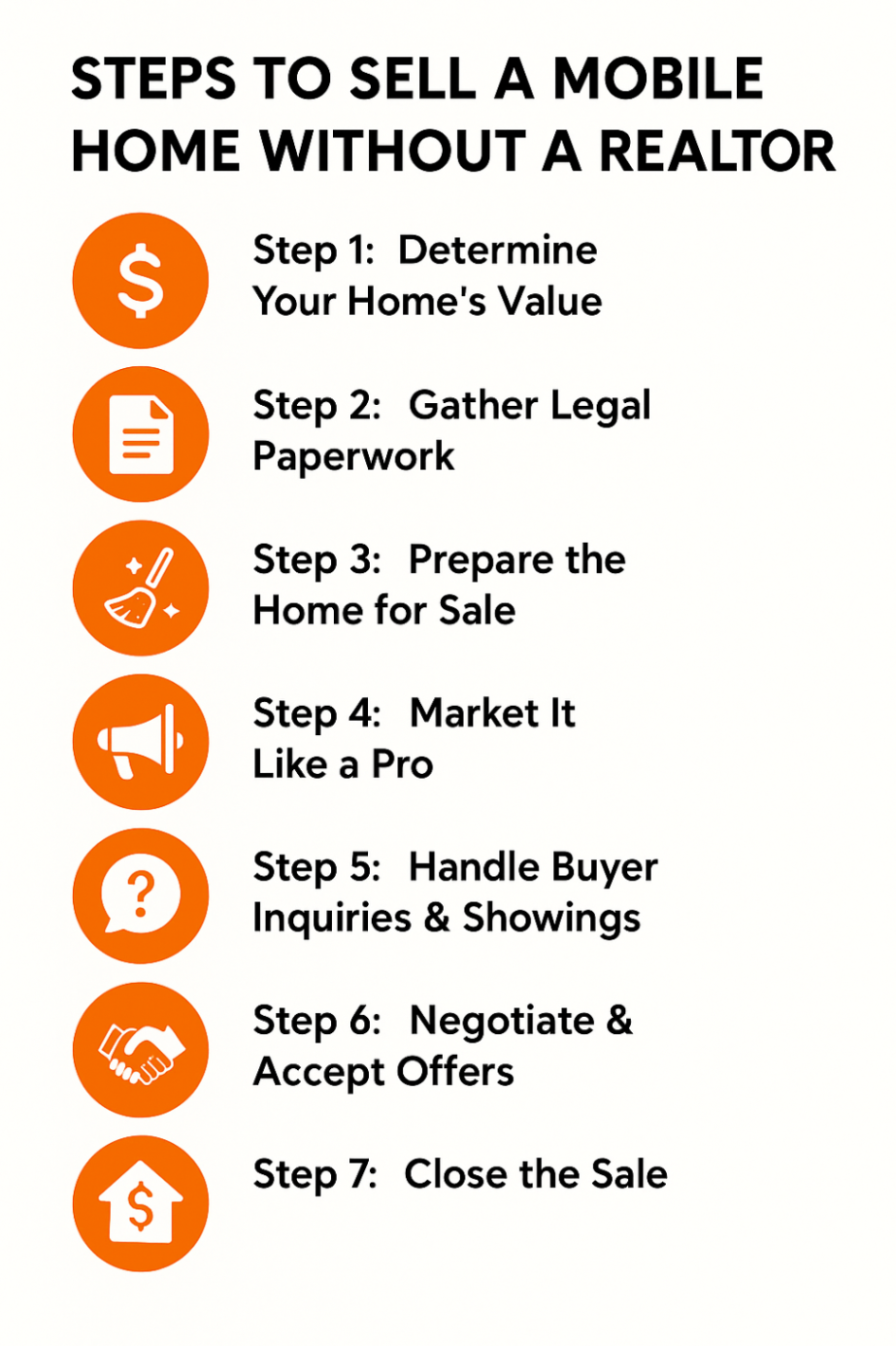
Ready to take full control of your mobile home sale? Skipping the realtor lets you save on commissions, set your own pace, and stay in charge. But it also means managing everything, from pricing to closing yourself.
Don’t worry. This step-by-step guide walks you through how to sell your mobile home independently, confidently, and successfully.
Step 1: Determine Your Home’s Value
Before you list your mobile home, make sure you know what it’s really worth. A well-priced home draws serious buyers and helps you avoid long delays or lowball offers.
- Use online tools like NADA Guides to get a general estimate.
- Consider factors like year, make, model, and condition of your home.
- Consider the impact of location, local market trends, and lot ownership.
- For unique or upgraded homes, a professional appraisal can offer better pricing confidence.
A solid valuation sets you up for a smoother, more profitable sale.
Step 2: Gather Legal Paperwork
Having the right paperwork ready can save you time and prevent last-minute deal breakers. Before listing your mobile home, make sure you’ve gathered the following essential documents:
- Mobile Home Title: Must be in your name and lien-free.
- Bill of Sale: Outlines the terms of the sale and final price.
- HUD Data Plate or Compliance Certificate: Proves the home meets federal safety standards.
- Lot Lease Agreement: Required if your home is in a park or on rented land.
- Local Disclosure Forms: Required by California and most states for transparency.
Step 3: Prepare the Home for Sale
First impressions matter, so take time to make your mobile home shine. A little effort here can mean a faster sale at a better price.
- Deep clean and declutter to make the space feel open and inviting.
- Handle necessary repairs like leaky faucets, squeaky doors, or worn skirting.
- Stage the interior with neutral décor and good lighting.
- Show off value-boosting features like new appliances, fresh paint, or a solid roof.
- Use professional photos and videos to make your listing stand out online.
Don’t want to fix anything? California Mobile Home Buyerpurchases homes as-is; no repairs or cleaning needed! Get a guaranteed, no-obligation cash offer from California Mobile Home Buyer within 24 hours.
Step 4: Market It Like a Pro
To sell your manufactured home fast, you need to market it like a seasoned pro. The goal is to grab attention and create urgency among prospective purchasers.
- List it on top platforms like Facebook Marketplace, Zillow, and FSBO.com.
- Write an irresistible description that highlights the condition of the home, any upgrades (like new plumbing or roofing), and whether it sits on private land.
- Set a competitive price based on local comps, land ownership, and the overall value of the property.
- Use signage in nearby communities and include a phone number for quick contact.
Step 5: Handle Buyer Inquiries & Showings
Once your listing goes live, expect phone calls and messages to start rolling in. How you respond can make or break the deal.
- Screen for potential buyers by asking about financing, move-in timelines, and intent.
- Stay safe during showings, bring a friend, schedule during daylight hours, and avoid sharing too much personal info.
- Keep your home presentable and clutter-free before every showing.
- Address objections clearly, be upfront about the home’s specifications, past repairs, or lot lease terms.
Step 6: Negotiate & Accept Offers
This is the stage where deals are made or lost. Negotiating smartly can help you walk away with the best possible outcome.
- Review all offers carefully, comparing price, contingencies, and payment method.
- Use common tactics, like counteroffers or deadline pressure, to keep things moving.
- Negotiate key terms, including price, closing timeline, and whether furniture or appliances are included.
- Handle lowball offers professionally, thank the buyer, counter respectfully, or simply decline.
Step 7: Close the Sale
You’re almost at the finish line! The closing process finalizes the sale of a property and officially transfers ownership of the mobile home to the new buyer.
- Finalize paperwork like the bill of sale, receipt, disclosures, and the most important document: the mobile home title.
- Handle escrow (if used) to safely manage funds and ensure both parties meet their obligations.
- Transfer the title according to your state’s guidelines. In California, this is done through the Housing and Community Development office.
- Pay applicable taxes or fees, such as title transfer charges or park-related dues.
Consider working with a title company or real estate attorney to ensure everything is done by the book. Once it’s all signed and sealed, hand over the keys and celebrate your successful sale!
DIY Sale? Here’s What to Avoid When Selling Your Mobile Home
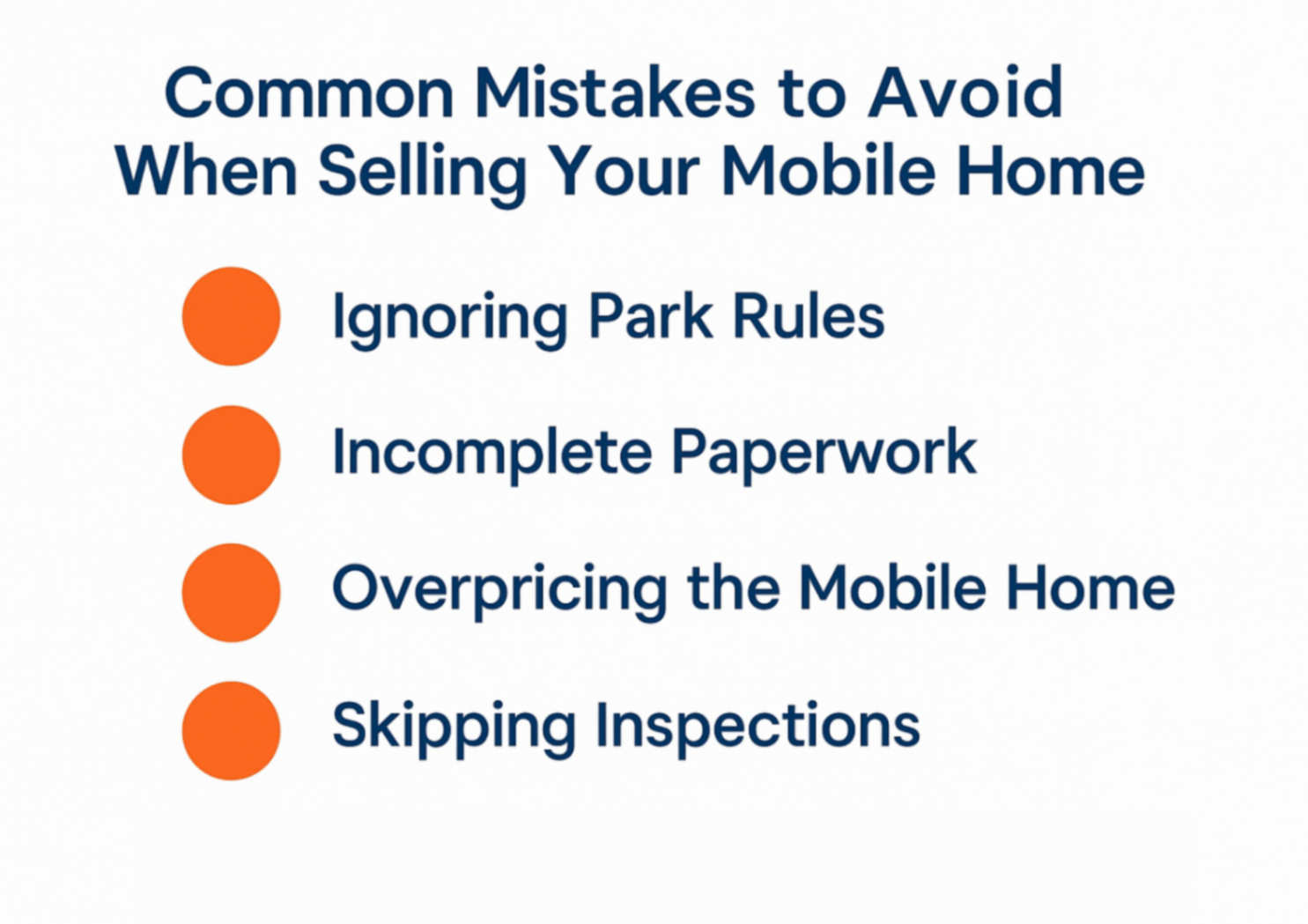
Selling your mobile home without a realtor gives you full control, but it also means you’re responsible for every detail. Avoid these common For Sale By Owner (FSBO) slip-ups to keep your sale on track:
- Ignoring Park Rules: If your home is in a mobile home park, failing to notify management or get buyer approval can delay or cancel the sale.
- Incomplete Paperwork: Missing signatures or required documents (like the title or disclosures) can lead to legal issues or failed transfers.
- Overpricing the Home: Setting the price too high can scare off serious buyers. Use tools and comps to price it right.
- Skipping Inspections: Even if not required, a pre-sale inspection builds buyer trust and can help you catch red flags early.
Avoiding these mistakes helps your FSBO journey stay smooth, legal, and profitable.
Want to Skip the Hassle? Get a Cash Offer from California Mobile Home Buyer
Selling your mobile home doesn’t have to mean months of listings, open houses, and commission fees. California Mobile Home Buyer offers a faster, simpler alternative, with zero realtors involved.
Here’s how we make it easy:
✅ Cash Offers in 24 Hours: No waiting on bank approvals or drawn-out negotiations.
✅ No Repairs or Clean-Up Needed: We’ll buy your home as-is, even if it needs work.
✅ No Agent Fees: Keep more of your money with zero commission costs.
✅ We Handle All the Paperwork: Title transfers, disclosures, and required documentation? We’ve got it covered.
✅ Licensed Across California: Serving in and around California, we’re a trusted local buyer who knows the rules.
Want to sell fast and stress-free? Get a no-obligation cash offer today and move on your terms.
Reach out to California Mobile Home Buyer here.
Conclusion
Selling your mobile home without a realtor might seem like a big task, but with the right guidance, it’s entirely doable and potentially more profitable.
By following the FSBO steps we covered, like pricing your home accurately, preparing it for showings, handling paperwork, and closing the sale, you stay in full control while avoiding steep commission fees. Whether you’re looking for a quick cash offer or want to find the right buyer on your own terms, this guide gives you the confidence to move forward.
Go ahead, skip the middleman and make the most of your sale, your way.
Frequently Asked Questions
Do I need a special license to sell my mobile home in California?
No special license is required to sell your mobile home in California as long as you have its title and legal agreements in place. The Department of Motor Vehicles processes title transfers, ensuring compliance with regulations.
How much does the average mobile home sell for?
The average asking price for a mobile home varies based on its age, condition, and location in California. In a robust local market, prices typically range from $20,000 to $100,000 during a calendar year.
What is needed to sell a mobile home in California?
You’ll need required documents like the bill of sale, the mobile home’s title, and transfer disclosures. These ensure a smooth sale while maintaining compliance with California’s legal regulations. Proper documentation protects both buyer and seller.
Can I sell my mobile home if it’s located in a park?
Yes, mobile homes in parks can be sold, but you’ll need to check local regulations and park rules. Ensure lease agreements, HOA (Homeowners Association) compliance, and park management approvals to facilitate the sale process.
How long does it typically take to sell a mobile home without a realtor in California?
Selling a mobile home without a realtor in California can take anywhere from a few weeks to several months unless you work with California Mobile Home Buyer, who can close in as little as 7 days with a cash offer.