

Selling an older mobile home isn’t always straightforward. Aging interiors, park regulations, and a narrower buyer pool can make the process feel uncertain, leaving you wondering, “Will anyone actually buy this?”
The reality is: yes, you can sell an older mobile home with the right approach. But selling a mobile home isn’t the same as listing a traditional house. From title transfers to park rules, there are several unique challenges to navigate.
But don’t worry, this guide will walk you through each step: pricing your home, preparing it for sale, marketing it effectively, and closing the deal. Whether you’re moving on, downsizing, or cashing out, a smooth sale is within reach, even if your home isn’t in perfect shape. Let’s dive into the steps that get results.
Do You Need to Make Repairs or Sell As-Is?
Before listing your mobile home, one key decision can shape your entire selling strategy: Should you invest in repairs or sell the home as-is? Both options have their advantages, and the right choice depends on your timeline, budget, and the current condition of your home.
Let’s explore the advantages and disadvantages of repairing your old mobile home before sale:
| Pros of Repairing | Cons of Repairing |
|---|---|
| Boosts Resale Value: Small upgrades can increase what buyers are willing to pay. | Can be Expensive: Labor, materials, and professional help add up quickly. |
| Attracts More Buyers: A clean, well-maintained home stands out. | Delays the Sale: Even simple repairs can take time. |
| May Lead to a Quicker Sale: Buyers prefer move-in-ready homes. | Returns Aren’t Guaranteed: Costly fixes may not translate to higher offers. |
While making repairs can help your mobile home appeal to more buyers, it’s not always the most practical or profitable choice. In fact, there are situations where skipping repairs entirely and selling the home as-is can actually save you time, money, and stress.
Let’s take a closer look at when that approach makes the most sense.
When Selling As-Is Makes Sense?
Sometimes, putting more money into repairs just isn’t worth it. Here are situations where selling your mobile home as-is may be the smarter move:
- The Home Needs Major Repairs: If the roof, HVAC, plumbing, or structure is significantly damaged, the cost to fix it might outweigh any added value.
- You Need to Sell Quickly: If you’re relocating, facing financial pressure, or just want to move on, skipping repairs can save weeks (or even months).
- You’re Targeting Cash Buyers or Investors: Many investors specialize in buying homes as-is. They don’t expect repairs and are often ready to close fast, without you spending a dime on upgrades.
Selling as-is doesn’t mean settling; it means focusing on convenience, speed, and practicality. If your home isn’t in top shape but you want a hassle-free transaction, this route can still deliver a fair, stress-free sale.
Ready to Sell Your Mobile Home As-Is?
Skip the stress of repairs, open houses, and long wait times. Get a guaranteed, no-obligation cash offer within 24 hours and sell your mobile home exactly as it is; no cleanup, no fixes.
How to Sell an Old Mobile Home Easily?
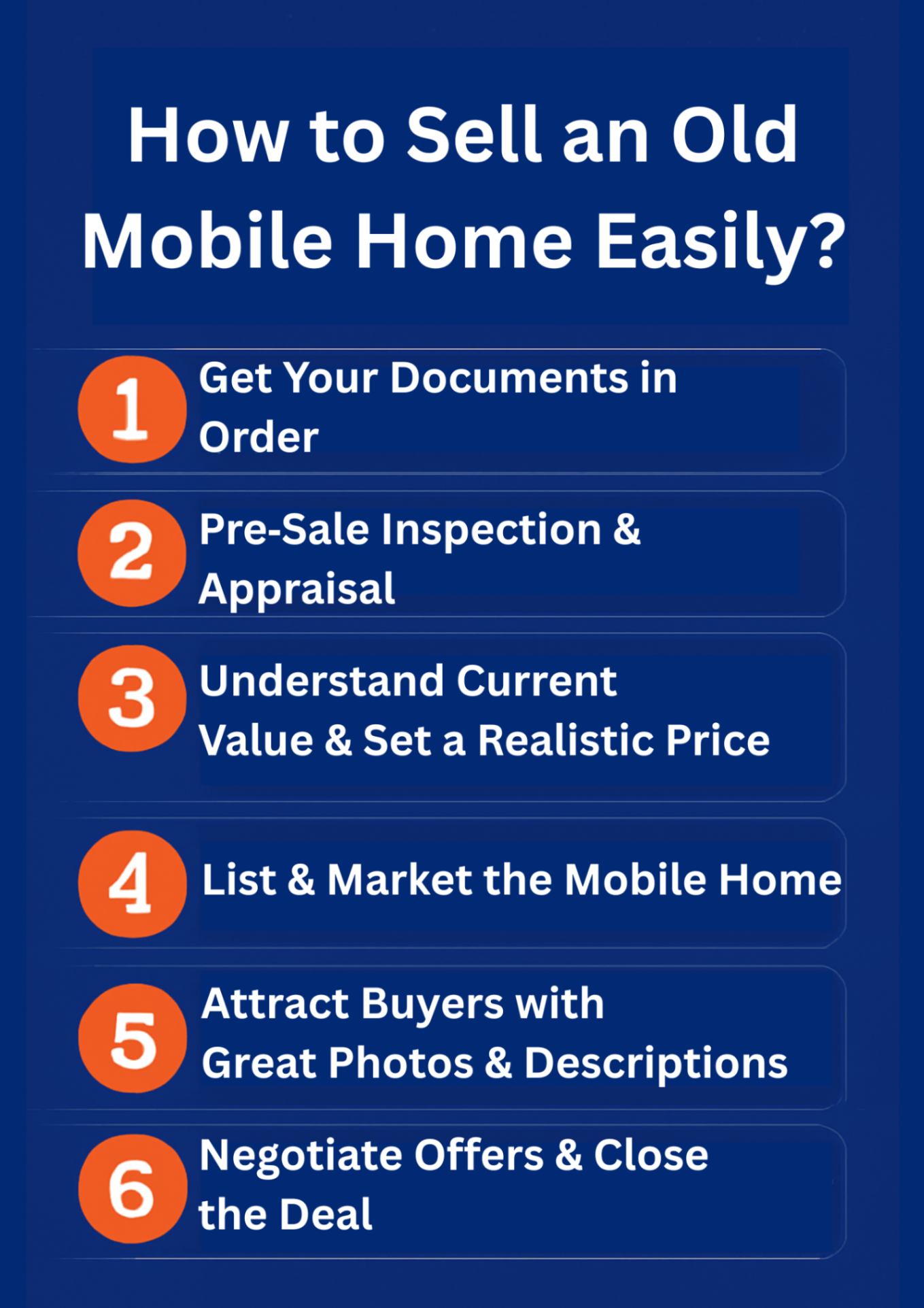
Selling an older mobile home doesn’t have to be complicated. With a step-by-step approach, the right paperwork, and some smart prep, you can streamline the process and attract serious buyers without unnecessary stress.
1. Get Your Documents in Order
Having your paperwork organized is crucial for completing the sale without legal hiccups. Here’s what you need:
- Mobile Home Title: The most important document. Make sure you have the original title, as ownership cannot be transferred without it.
- Bill of Sale: This outlines the sale terms, purchase price, and agreement between you and the buyer. It’s essential for both parties.
- HUD Data Plate & Label: Located on the exterior of the home, the red HUD tag (also known as the certification label) confirms your home meets federal safety standards.
- VIN Tags: These identification numbers, found inside the home and on the chassis, verify the home’s origin and match it to the title and registration.
- Proof of Property Tax Payments: Buyers often want reassurance that all taxes are up to date. Be prepared to show recent payment receipts or clearance certificates.
- Certification of Occupancy (if applicable): This verifies that the home complies with local building codes and can legally be occupied.
Gathering the right documentation not only builds buyer trust but also accelerates the transaction process. Before listing the property, double-check every piece of paperwork with the Department of Motor Vehicles (DMV) and other local authorities to avoid unexpected delays.
2. Pre‑Sale Inspection & Appraisal
Before listing, a pre-sale inspection and appraisal can give you a clear picture of your mobile home’s value and help avoid pricing mistakes. Here’s why it’s worth it:
- Identify hidden issues like plumbing, electrical, or pest damage
- Prepare accurate disclosure documents to build buyer trust
- Evaluate structural integrity, utilities, and exterior appeal
Hire a licensed appraiser experienced with manufactured homes to assess condition and market value. Use the appraisal as a pricing benchmark and to spot areas that may need minor upgrades. It’s a smart move that makes your listing stronger and more transparent.
3. Understand Your Mobile Home’s Current Value & Set a Realistic Price
Pricing your old mobile home competitively is essential to attracting potential buyers. To price your old mobile home effectively, you need more than guesswork; market data and objective factors matter. Here are some key factors that must be considered:
- Age, condition, and location all influence buyer interest and resale value.
- Land inclusion can significantly raise your asking price.
- Spring and summer typically draw more motivated buyers.
- Sold comparables help you set a competitive price; check listings in your area.
- Title status matters too; clean titles boost buyer confidence.
Older mobile homes depreciate over time, and demand can vary widely. For accurate pricing, check the NADA Manufactured Home Value Guide.
4. List & Market the Mobile Home Effectively
Marketing your mobile home the right way can speed up the sale and attract serious buyers. Use a mix of online and offline strategies to boost visibility.
- Online platforms likeCalifornia Mobile Home Buyer, MHBay, Zillow, & Facebook Marketplace are great for reaching local buyers quickly.
- Tap into the realtor’s network if you’re open to working with a pro.
- Place ‘FOR SALE’ signs in the park, windows, and nearby intersections.
In your listing, highlight key details, like home condition, title status, land ownership, available paperwork, financing options, and whether the home needs to be relocated. The more transparent, the better.
5. Attract More Buyers with Great Photos and Descriptions
Visual appeal matters when selling mobile homes. Showcase your home’s condition with quality images and engaging descriptions. Consider these tips:
- Mention upgrades, like new flooring, appliances, or fresh paint, to show added value.
- Take well-lit, wide-angle shots that make each room feel spacious and inviting.
- Write informative captions that include room dimensions, layout notes, and condition details to give buyers confidence.
Presenting your mobile home professionally draws in potential buyers and amplifies interest, which can lead to better offers.
6. Negotiate Offers & Close the Deal
Receiving an offer is exciting, but don’t rush. Smart negotiation can make a big difference in your final profit.
- Review every offer carefully, consider the buyer’s financing, requested repairs, and proposed closing timeline.
- Negotiate based on your home’s condition, recent upgrades, or comparable sales if the offer is too low.
- Always get offer terms and counteroffers in writing to avoid confusion.
- Be upfront about disclosures and property conditions to build trust and avoid post-sale issues.
Once both sides agree, move forward with the title transfer and closing paperwork. Finalize handover by giving the buyer keys, ownership documents, and assisting with any needed permits or park approval paperwork.
Common Pitfalls & How to Avoid Them
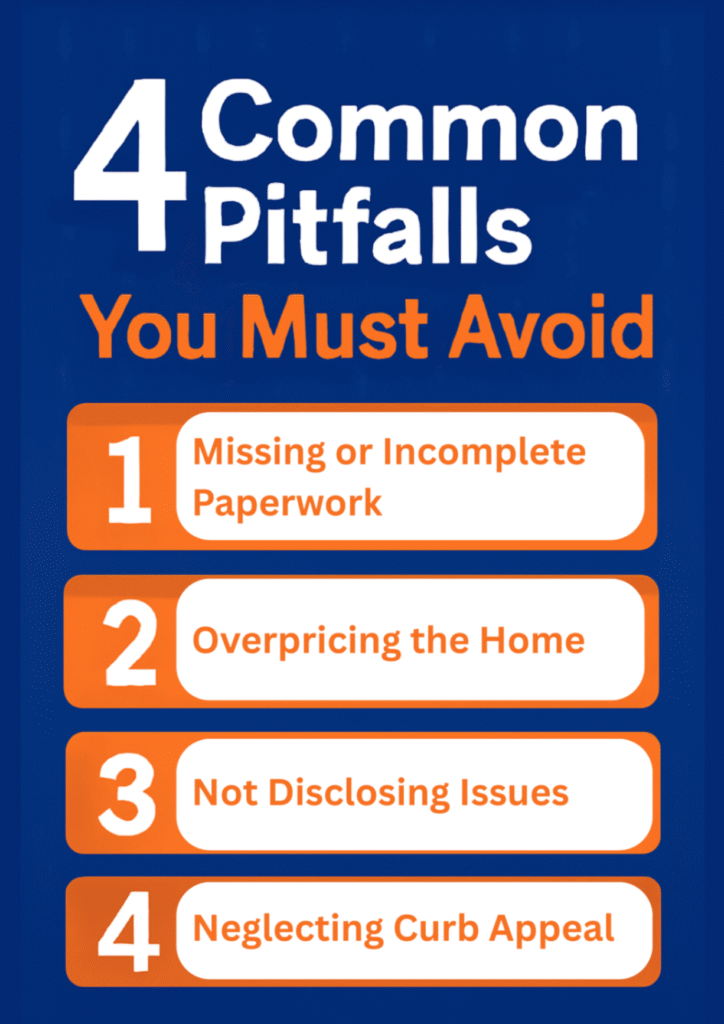
Even with a solid plan, certain missteps can derail the process or delay your sale. Knowing what to avoid is just as important as knowing what to do. Let’s take a look at the most common pitfalls and how to steer clear of them.
1. Missing or Incomplete Paperwork: Missing documents, like the title, VIN tags, or proof of tax payments, can delay or even cancel your sale. Gather all essential paperwork upfront and verify it with your local DMV or housing authority.
2. Overpricing the Home: It’s tempting to ask for more, but an overpriced listing can sit for months with no bites. Research recent sales in your area, check the NADA value, and consider getting an appraisal to set a realistic price from the start.
3. Not Disclosing Issues: Hiding known problems like leaks, outdated systems, or pest damage might save time now, but it can lead to buyer disputes or legal trouble later. Transparency builds trust and protects you post-sale.
4. Neglecting Curb Appeal: First impressions matter even for mobile homes. Dirty siding, cluttered yards, or broken skirting can make buyers walk away. A quick clean-up and minor fixes can make a big difference.
Need to Sell an Old Mobile Home in California? We’re Ready to Buy Today
If you’re wondering how to sell old mobile home in California, California Mobile Home Buyer is ready to make it simple, fast, and stress-free. We buy mobile homes in any condition, no repairs, no cleaning, and no real estate commissions required.
Just share a few details, schedule a quick visit, and get a guaranteed, no‑obligation cash offer within 24 hours. Whether your home needs work, is on rented land, inherited, or you simply want a fast sale, we’ll handle title transfers, disclosures, and paperwork for you.
Skip the agent fees and waiting, sell as-is, and get cash on your terms. Contact us today!
Conclusion
Just because your mobile home is older doesn’t mean it’s unsellable. With the right approach, being organized, transparent, and setting realistic expectations, you can attract serious buyers and close a deal that works for you. Whether you’re selling as-is or making a few upgrades, there’s still a market for well-presented, honestly priced homes.
Don’t wait, take the first step toward a smooth, stress-free sale. The more informed you are, the more confident and successful your sale will be.
Frequently Asked Questions
Can I sell my mobile home if I still owe money on it?
Yes, you can sell a mobile home with an outstanding lien. Ensure the financing details and lien are disclosed to the buyer. Work with your lender and the DMV to transfer documentation and title to the new owner smoothly.
Are there tax implications when selling an old mobile home?
Selling a mobile home may lead to tax considerations based on its classification, personal property, or real property. Confirm its status with your local authorities and clarify applicable taxes before putting up a sale sign.
How much do older mobile homes sell for?
The price varies by local market, home’s condition, and appraised value of your home. Well-maintained homes typically sell for more, while those needing upgrades range from $4,000-$6,000. Resale costs should include transportation and repair expenses.
What is the best way to sell a mobile home?
Leverage platforms like California Mobile Home Buyer, connect with a mobile home dealer, or hire a realtor. Combine marketing methods with competitive pricing to capitalize on the mobile home market efficiently.
What is considered an older mobile home?
Homes manufactured before the 1980s often fall under the “older mobile home” category. Confirm with the Department of Motor Vehicles or check the certificate of occupancy for detailed information about the home’s status in Washington or other regions.