

| TL;DR You’re a legal inheritor if the mobile home was passed to you via will, trust, or probate, and you’re on the title. Selling it requires clear ownership, proper paperwork, and an understanding of value, condition, and taxes.Small upgrades, clean presentation, and market research can maximize value and attract offers fast. Handle all documents properly, clear taxes or liens, and ensure a smooth title transfer to complete the sale legally. Decide on selling strategies based on your mobile home’s location, whether in a park or on private land. Co-heir disputes, missing titles, liens, and park rules can slow things down, but all have solutions. |
|---|
Inheriting a mobile home can be a bittersweet experience. While it’s a valuable asset, figuring out what to do with it, especially if you want to sell, can feel overwhelming.
Between legal paperwork, ownership transfers, and emotional ties, the process can quickly become confusing. But you’re not alone, and selling an inherited mobile home doesn’t have to be a stressful experience.
Whether you’re handling probate or already have legal title, this guide will walk you through every step of how to sell inherited mobile home, from paperwork to closing, so you can make the most informed (and stress-free) decision possible.
What Qualifies as an Inherited Mobile Home?
Not all mobile homes passed down from a loved one are automatically considered “inherited” in the legal or financial sense. To determine whether you’ve truly inherited a mobile home and what responsibilities or rights come with it, you’ll need to understand a few key factors.
Here’s what typically qualifies:
- The Original Owner Is Deceased: The home must have belonged to someone who has passed away, and you’ve been named as a legal heir through a will, trust, or probate court process.
- You’ve Been Assigned Ownership or Interest: If you now hold the title of the mobile home, either directly or through a legal process, you’re considered the inheritor. Without the title in your name, you may not have the legal right to sell or rent it.
- It’s Classified as Personal Property: In many states, mobile homes are treated as personal property unless they’re permanently affixed to land. This affects how ownership transfers and how the IRS views the inheritance for tax purposes.
- There’s a Record of Transfer: Whether it’s through a probate court, affidavit of inheritance, or Department of Housing title transfer, there needs to be documentation showing the mobile home now belongs to you.
- Rental Income or Use Doesn’t Disqualify It: Even if the home was generating rental income before or after the previous owner passed, it can still be considered an inheritance as long as it’s legally transferred to you.
Now that you understand what qualifies as an inherited mobile home, let’s walk through the exact steps to sell it smoothly and legally.
How to Sell Inherited Mobile Home in Today’s Market?
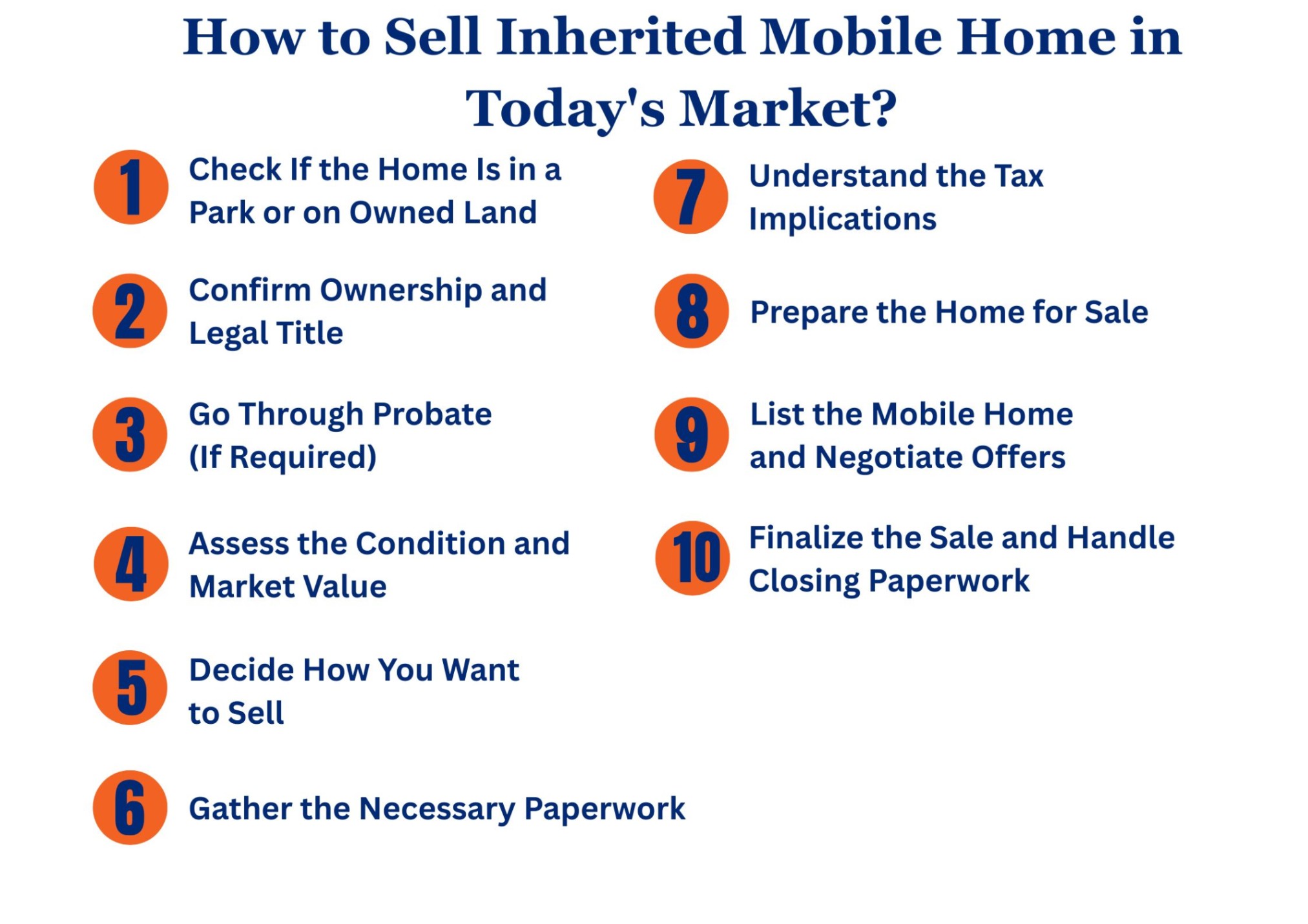
Selling an inherited manufactured home in today’s market requires attention to the home’s condition, its market value, and applicable tax rules. Let’s dive into the specific steps involved in selling inherited mobile homes effectively.
Step 1: Is the Home in a Park or on Owned Land?
Understanding the land status is crucial for a smooth sale:
- In a park? Review the lease agreement. Most parks charge lot rent and may impose restrictions. Some even have a “right of first refusal”, giving the park manager first dibs on buying.
- On owned land? You’ll have more flexibility. If the home is on a permanent foundation, it may qualify as real property, making it easier for buyers to finance.
Being clear about the land status helps you determine pricing strategies, marketing plans, and buyer eligibility. This distinction influences nearly every aspect of the selling process.
Need more information on selling mobile homes without land? Read our latest blog How Can I Sell My Mobile Home Without Land for Cash?
Step 2: Do You Have Legal Ownership and the Mobile Home Title?
Before selling, make sure you legally own the mobile home:
- Check the title of your mobile home. Mobile homes have titles like vehicles. Contact the DMV to locate title records.
- No title? Use the death certificate, insurance documents, or property tax records to trace ownership.
- Unclear ownership? You may need probate court involvement or a bonded title.
- Check for liens or mortgages. Clear any that could block the sale.
Completing accurate paperwork, including the title transfer to the new owner, simplifies the closing phase of the sale. Ensuring all documents are in order protects you from future disputes or legal issues with buyers.
Learn more about selling without a title here: Can You Sell a Mobile Home Without a Title?
Step 3: Do You Need to Go Through Probate?
Probate is the legal process of validating a will and transferring assets after someone’s death. It may be required if the mobile home title is still in the deceased’s name. Here’s what you need to know:
- Time and Cost: Probate can take weeks to months and may involve court fees and legal expenses.
- Key Documents Needed: Gather the death certificate, property title, and any will or trust paperwork.
- Tax Considerations: Be aware of potential estate taxes or inheritance tax during probate.
- How to Avoid It: Use a living trust, joint ownership, or a transfer-on-death title (in applicable states).
Successfully completing probate paves the way for a clear title transfer to the new owner.
Step 4: Have You Assessed the Condition and Market Value?
Before pricing your inherited mobile home, evaluate its overall condition and market appeal:
- Inspect Key Areas: Check flooring, walls, and appliances for damage or wear. Minor upgrades, like painting or replacing floors, can boost value.
- Consider Repairs or Sell As-Is: Weigh the cost of repairs against potential returns.
- Determine Market Value: Age, location, and whether the home sits on owned land all influence pricing.
- Compare Similar Listings: Look at mobile homes nearby to set a competitive, fair price.
Once you know the home’s value, you can confidently choose the best selling strategy.
Wondering how much you can sell your mobile home for? Click here for more information.
Step 5: What’s the Best Way to Sell Your Inherited Mobile Home?
Choosing the ideal selling method for your inherited mobile home depends on your priorities. Factors like time, effort, and potential profit will influence your decision.
- Traditional Sale: Partner with real estate agents to fetch higher sale prices, but allow extra time for marketing and buyer approvals.
- Cash Buyers: Sell quickly with minimal effort, though prices are generally lower.
- Dealers: Engage mobile home dealers for a hassle-free transaction for modern units.
- FSBO (For Sale By Owner): Maximize profit by avoiding commissions, but expect to manage the entire sale yourself.
Want speed and simplicity? Selling your mobile home as-is to California Mobile Home Buyer could be your best option. Get a cash offer within 24 hours and skip repairs, agents, or delays.
Step 6: Do You Have the Required Paperwork Ready?
Selling the inherited mobile home involves gathering essential documents for a smooth transaction. The paperwork must confirm ownership and legal compliance.
- Mobile Home Title: Ensures legal ownership transfer to buyers.
- Death Certificate: Required for probate and registering the change of ownership.
- Good Deed/DWV Records: Essential for homes on private land.
- Lease Agreements: For mobile homes situated in parks or rented lots.
Having all documents ready avoids delays during the closing process. Double-check to ensure accuracy and completeness to present a hassle-free transaction to the new owner.
Step 7: Do You Understand the Tax Implications?
Selling an inherited mobile home comes with potential home sale tax considerations. Here’s what mobile homeowners should know:
- Capital Gains Tax: You may owe taxes on profits, but a stepped-up cost basis, based on the value of the home at the time of inheritance, can reduce what’s taxable.
- Primary Residence Exception: If the mobile home was your primary residence, you might qualify for the home sale tax exclusion or federal estate tax exemption.
- IRS Reporting: Use IRS Form 8949 to report gains or losses from the sale.
Consider consulting a tax professional to ensure compliance and minimize tax liabilities tied to the sale of your inherited manufactured home.
Step 8: Is the Home Ready to Show and Sell?
A well-prepared mobile home attracts more serious buyers and smoother offers. Here’s how to get it ready:
- Make Key Upgrades: Fix broken fixtures, add a fresh coat of paint, and improve landscaping to boost curb appeal.
- Gather Documents: Have the mobile home title and property tax records ready for a transparent, quick closing.
- Know Your Market: Research local real estate trends to price competitively and benefit all parties.
Proper preparation helps maximize value and ensures a smoother selling process.
Step 9: Are You Ready to List the Home and Negotiate Offers?
Once your inherited mobile home is prepped and paperwork is in order, it’s time to list and negotiate. To attract the right buyers and get the best deal, follow these key steps:
- Ensure Paperwork is Ready: Confirm the mobile home title and legal documents are in order before listing.
- Highlight Key Features: Market unique advantages, like a permanent foundation or favorable park lease terms.
- Use Strategic Pricing: Base your asking price on a solid market analysis and the home’s value.
- Negotiate Smartly: Keep tax implications and potential capital gains in mind when reviewing offers to make the best financial decision.
Need help selling an old mobile home? Click here to read our guide.
Step 10: Have You Finalized the Sale and Closing Paperwork?
Finalizing the sale of an inherited mobile home involves several vital steps to ensure compliance with legal and financial obligations. The seller must gather all necessary paperwork, including the mobile home title and any relevant documents indicating the new owner’s right to inherit the property.
At this stage, understanding tax implications is crucial, as capital gains may apply if the sale price exceeds the inherited basis. Handling all closing documentation correctly will facilitate a smooth transfer and provide peace of mind for the beneficiaries.
Also Read: Want the Best Cash Offer? Top Used Mobile Home Buyers Ramona Can Help
What Are the Common Challenges & How to Overcome Them?
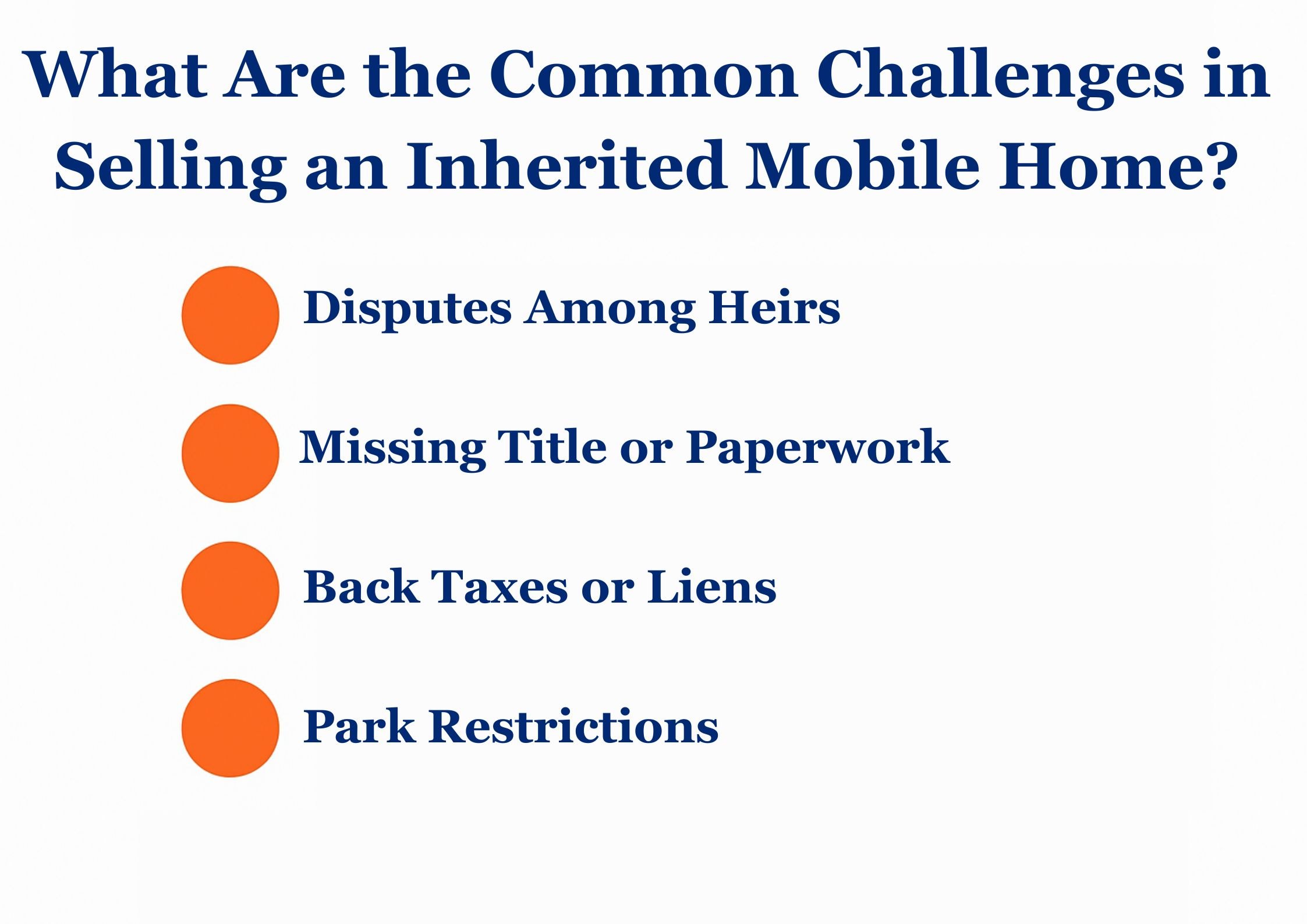
Navigating the sale of an inherited property can present several challenges for beneficiaries. Here are common hurdles and how to handle them:
- Disputes Among Heirs: Conflicting opinions among family members can delay the sale. Resolve through open communication, mediation, or legal guidance to protect everyone’s interests.
- Missing Title or Paperwork: Contact your state’s DMV or housing authority to apply for a duplicate title. Use the death certificate or property tax records to support your claim.
- Back Taxes or Liens: These must be cleared before closing. Reach out to the tax office or lienholder to set up payment or negotiate a release.
- Park Restrictions: Review the lease agreement. Some parks require buyer approval or enforce a right of first refusal; check with the park manager early in the process.
Also, read our latest blog to understand the key difference between a mobile home and a manufactured home.
Need a Local, Trustworthy Buyer for Your Inherited Mobile Home in California?
Feeling overwhelmed by repairs, paperwork, or park red tape? California Mobile Home Buyer has you covered with a hassle-free, fair solution:
- Sell it “as-is”, no repairs, no cleaning, no headaches.
- No commissions or hidden fees, keep more of the offer in your pocket.
- Fast, transparent process, get a cash offer within 24 hours and close in as few as 5–7 days.
If you want to sell quickly, avoid stress, and walk away with cash, contact us today and see how easy selling your inherited mobile home can be.
Fill out the form or call (562) 412‑5474 to get started.
Conclusion
Navigating the complexities of selling an inherited mobile home can be challenging, yet understanding the processes involved significantly eases the burden.
From addressing probate requirements to preparing the home for sale, each step requires careful consideration to ensure a successful transaction. By being mindful of tax implications and potential complications, sellers can make informed decisions.
Ultimately, with the right approach, selling inherited property can be a smooth experience, allowing families to honor their loved ones while securing their financial future.
Frequently Asked Questions
Do I have to pay taxes when you sell an inherited mobile home?
When selling an inherited mobile home, you may need to pay capital gains tax if the home’s value increased since the original owner’s passing. However, the stepped-up basis rule often allows you to sell without paying taxes on profits from its appreciated value at inheritance.
Can I sell a mobile home if the title is not in my name yet?
Yes, you can sell a mobile home even if the title is not in your name, but it requires specific legal steps. Ensure you have the necessary documentation or authority from the current owner or executor to facilitate the sale process smoothly.
How do I handle disagreements with co-heirs during the sale process?
To handle disagreements with co-heirs, maintain open communication, and document all decisions. Consider mediation if conflicts arise. Discuss each party’s concerns calmly and work towards a mutually beneficial agreement, ensuring everyone feels heard and valued during the sale process.
Are there any legal considerations when selling an inherited mobile home?
Yes, selling an inherited mobile home may involve legal considerations such as verifying property ownership, understanding probate laws, and dealing with any outstanding liens or taxes. Consulting a real estate attorney can help ensure compliance and avoid potential legal issues during the sale process.
Should I make repairs or renovations before selling the mobile home?
Assessing repairs or renovations before selling your mobile home can enhance its appeal and value. Focus on necessary repairs that improve safety and functionality, while considering your budget. Avoid over-investing; prioritize upgrades that provide the best return on investment.