

| TL;DR Selling a mobile home? Yes, the IRS expects you to report it, even if no tax is due. Use it as a home? You may get a tax break under Section 121. Used it as a rental or for business? Be ready for depreciation recapture and different IRS forms. Sold at a loss? No taxes, but still needs reporting.Inherited, financed, or on rented land? Special rules apply, but taxes can still kick in. File forms like Schedule D, 4797, 8949, and maybe 1099-S, depending on how the home was used. Want a quick, stress-free sale? Contact California Mobile Home Buyer. |
Thinking about selling your mobile home and wondering what it means for your taxes? You’re not alone.
Whether you’ve owned it for years or just recently decided to move on, the tax implications of selling a mobile home can feel confusing, especially if you’re unsure whether it counts as real estate, personal property, or something in between.
The big question: If you sell a mobile home, do you have to claim it on your taxes?
In this blog, we break down when you’re required to claim it, what kind of taxes (if any) you might owe, and how exclusions like the home sale tax break could work in your favor. Let’s make sense of the numbers before tax season catches you off guard.
Do You Always Have to Report a Mobile Home Sale?
Yes. In most cases, the IRS (Internal Revenue Service) requires you to report the sale of your mobile home.
Even if you don’t owe any taxes, that doesn’t mean you’re off the hook. Reporting the sale is usually still necessary.
Here’s what your tax liability depends on:
- How did you use the home? Was it your primary residence, a rental, or a second property? This affects what rules apply.
- How much profit did you make? If you sold it for more than what you paid (plus improvements), you may face capital gains tax.
- Whether it qualifies for exclusions, homes used as a primary residence for at least 2 of the past 5 years may be eligible for tax exclusions under IRS rules.
- Even if no taxes are due, you may still be required to disclose the sale on your tax return, especially if you receive a Form 1099-S.
Curious about property tax rules for mobile homes in California? Read this guide to find out more.
How Did You Use the Mobile Home?
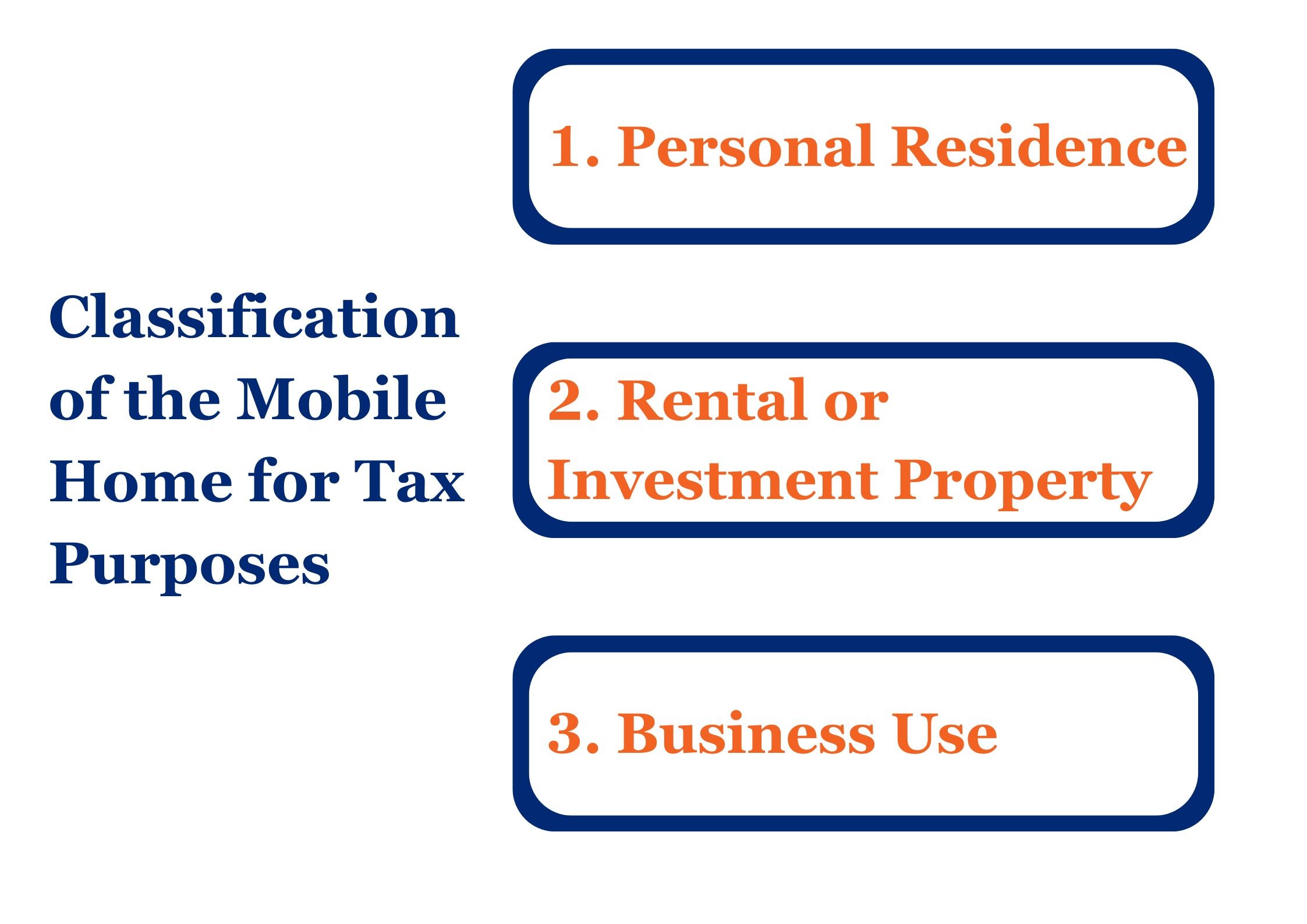
Before asking Do I have to pay taxes on the sale of my mobile home in California?, start with how you used the home. This determines what tax rules apply, what forms you’ll need, and whether you owe anything at all.
1. Was the Mobile Home Your Personal Residence?
If you lived in the mobile home as your primary residence:
- You may qualify for the Section 121 exclusion, up to $250,000 (single) or $500,000 (married) of gain tax-free.
- To qualify, you must pass the ownership and use tests, have lived in and owned the home for at least 2 of the past 5 years.
- Any taxable gain must be reported using Schedule D and Form 8949.
- This applies whether the home is real estate or registered through the California Department of Housing.
2. Was the Mobile Home a Rental or Investment Property?
If your mobile home was rented out or held as an investment:
- You’ll need to recapture depreciation, taxed at ordinary income rates.
- Report the sale using Form 4797 and Schedule D.
- Losses may be partially deductible under passive income rules, depending on your total income and usage.
3. Was It Used for Business Purposes?
If you used the mobile home for a business or trade (e.g., office, Airbnb):
- You must recapture depreciation under IRC Section 1245.
- Both gains and losses go on Form 4797.
- Unlike rentals, losses may be fully deductible, with fewer limitations.
Also Read: Best Mobile Home Buyer Garden Grove, CA: Sell Fast for Cash with No Hassle
Do You Pay Taxes When You Sell a Mobile Home?
If you sold your mobile home for more than you paid, you may owe taxes on the profit, known as a capital gain. But not every sale leads to a tax bill.
Here’s when you don’t owe taxes:
- You sold at a loss, and the home was for personal use (note: losses on personal-use property aren’t deductible).
- You qualify for the residence exclusion under Taxation Code Section 121.
Now, here’s when you might owe taxes:
- Your capital gain exceeds the Section 121 exclusion limits.
- You’re required to recapture depreciation if the home was used for rental or business purposes.
- If any part of your loan was forgiven, it could be treated as taxable income.
- Selling the home may trigger a reappraisal for home property taxes, depending on your state’s laws.
What If You’re in a Special Situation? (3 Scenarios That Change Your Tax Outcome)
Not every mobile home sale is straightforward. Whether it’s inherited, financed, or on rented land, these special scenarios can impact how much tax you owe (or don’t owe). If you’re asking, if I sell my mobile home, do I have to pay taxes? these cases deserve extra attention.
1. What If You Inherited the Mobile Home?
- You may get a step-up in basis, meaning the home’s value is reset to its fair market value at the time of the previous owner’s death.
- This can greatly reduce or eliminate taxable gain when you sell.
- Even with little or no tax owed, the sale still needs to be reported to the IRS.
2. What If You Still Have a Mortgage?
- If the buyer assumes your loan, the remaining debt counts as part of your sale proceeds and can affect your gain.
- If your lender forgives any amount, it may be considered Cancellation of Debt (COD) income, which is taxable.
3. What If the Home Is on Rented Land?
- It’s likely treated as personal property, not real estate, similar to a vehicle.
- You’ll still need to report any gain or loss, depending on how the home was used (residence, rental, or business).
- Even if sold in January or October, proper documentation is key to staying compliant.
Click here to sell your mobile home anywhere in California.
Read our blog and learn how to sell a mobile home without land for cash.
What Forms Do You Need to File?
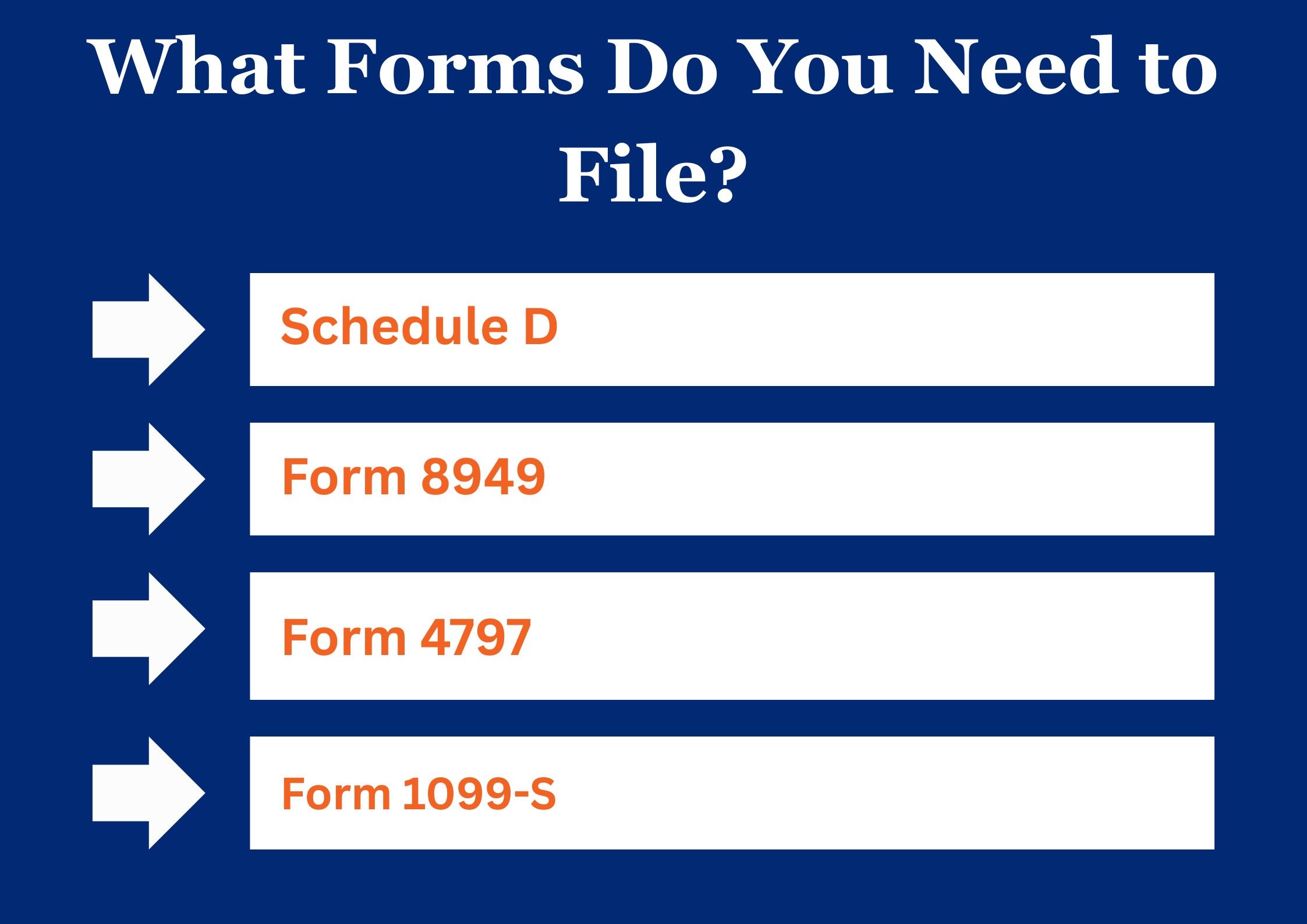
Selling a mobile home isn’t just about handing over the keys; it also means getting your tax paperwork in order. Whether it’s a personal residence, rental, or business asset, the IRS expects proper documentation. Here are the most common forms you may need to file:
| IRS Forms | Uses |
| Schedule D (Capital Gains and Losses) | Used to report gains or losses from the sale of capital assets, including mobile homes.Required in most personal residence or investment property sales. |
|---|---|
| Form 8949 (Sales and Dispositions of Capital Assets) | Details each individual asset sold (like your mobile home).Attach to Schedule D. |
| Form 4797 (Sales of Business Property) | If the mobile home was used for business or as a rental, use this to report the sale.Also used to calculate depreciation recapture. |
| Form 1099-S (Proceeds from Real Estate Transactions) | May be issued to you by the buyer, escrow company, or title agent.Even if you don’t receive one, you’re still responsible for reporting the sale. |
Don’t want the hassle of working with an agent? Here’s how you can sell your mobile home without a realtor in California.
How to Calculate Gain or Exclusion?
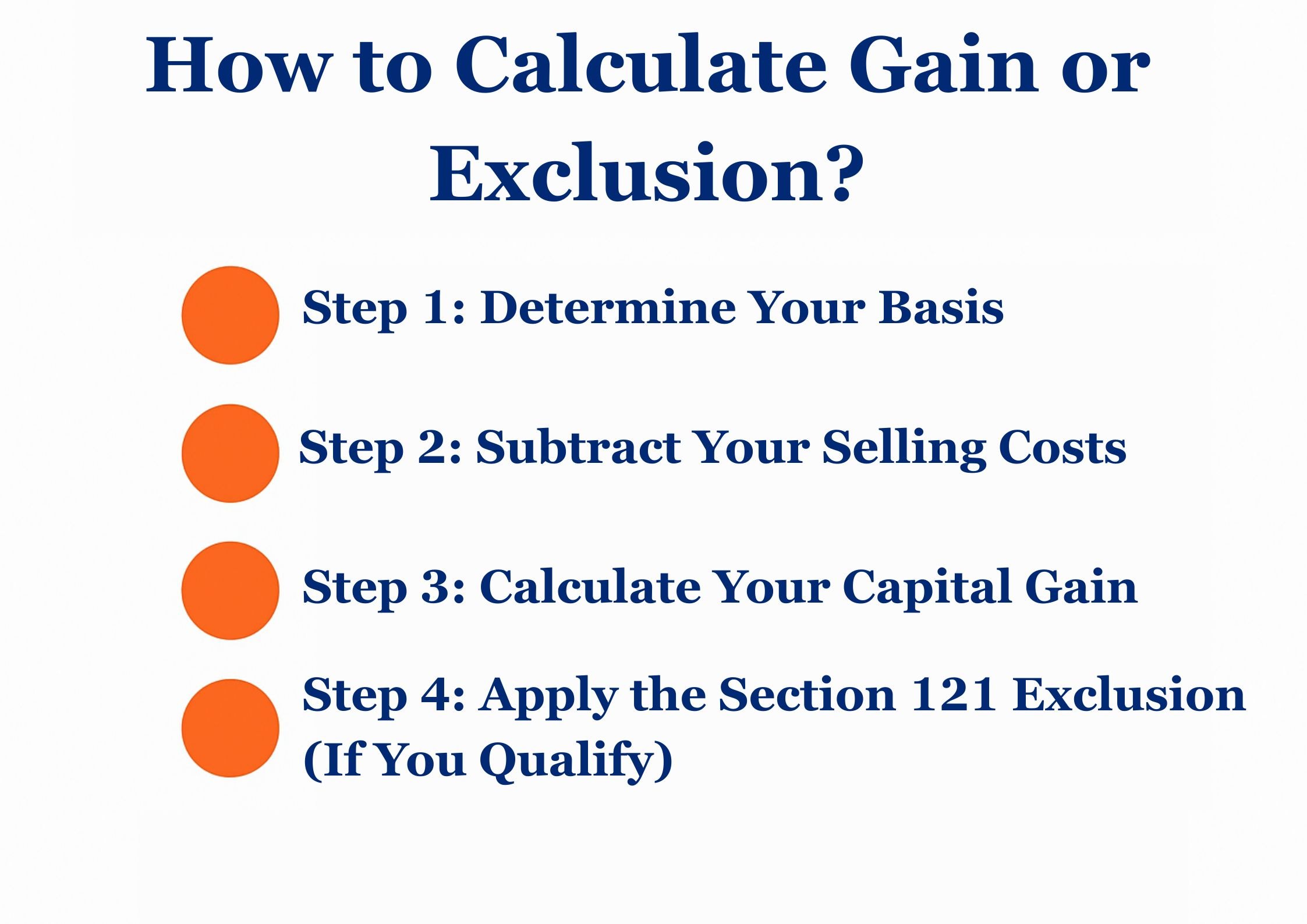
Figuring out whether you owe taxes starts with knowing how to calculate your capital gain and whether you qualify for any exclusions. The IRS doesn’t just look at your sale price; it looks at how much you gained after subtracting costs and adjustments.
Here’s how to break it down:
Step 1: What Is Your Basis in the Mobile Home?
This is usually what you paid for the mobile home, plus:
- Major home improvements
- Certain closing costs
- Fees paid to the California Department of Housing, if applicable
Step 2: What Were Your Selling Costs?
Reduce your gain by costs such as:
- Agent commissions
- Title and escrow fees
- Repairs made before the sale
Step 3: How Much Is Your Capital Gain?
Sale Price – (Adjusted Basis + Selling Costs) = Capital Gain
Step 4: Do You Qualify for the Section 121 Exclusion?
- Up to $250,000 (single) or $500,000 (married) of gain can be excluded if the home was your primary residence for at least 2 out of the last 5 years.
- Any gain above these limits is taxable.
Here’s an example in table format:
| Calculation Step | Example Value ($) |
|---|---|
| Original Purchase Price | $80,000 |
| Improvements (deck addition) | +$10,000 |
| Depreciation (if rental property) | -$5,000 |
| Adjusted Basis | $85,000 |
| Sale Price | $100,000 |
| Taxable Gain | $15,000 |
What’s the Step-by-Step Process for Filing Taxes After Selling a Mobile Home?
Filing taxes after selling your mobile home doesn’t have to be stressful; just follow these key steps to stay on track and avoid surprises. Here is a checklist that will help you throughout the process.
Step 01: Gather all documents involving purchase, sale price, and improvements.
Step 02: Identify the mobile home’s classification per reporting rules.
Step 03: Complete applicable IRS forms like Schedule D or Form 4797 by the April tax deadline.
Step 04: Verify property installment payments to avoid delinquent penalties by December review.
Step 05: Ensure compliance with local property tax adjustments for accurate tax bill minimization.
Final Tip: Keep copies of everything and consult a tax advisor to ensure full compliance, especially if your situation involves special cases like debt forgiveness or business use.
Why Should You Choose California Mobile Home Buyer for Selling Your Mobile Homes?
Looking for a quick, hassle-free mobile home sale? California Mobile Home Buyer is your trusted local expert, offering fast cash, zero fees, and no repairs needed.
What sets us apart:
✅ Licensed Dealer: We handle all paperwork, titles, and California Department of Housing (HCD) requirements for you.
✅ Community-Focused: Our mission supports real community development, not just transactions.
✅ Cash Offers in 24 Hours: No appraisals, no waiting; just a fair deal, fast.
✅ Close in as Little as 7 Days: On your timeline, stress-free.
Ready to sell your mobile home fast? Contact us today!
Conclusion
Selling a mobile home involves various tax implications that can significantly affect your financial outcome. Understanding whether your mobile home is classified as personal, investment, or business property is crucial, as this determines how you report the sale and any potential tax liabilities.
With the right knowledge, you can navigate the complexities of capital gains, exclusions, and reporting requirements. Whether you’re a first-time seller or have experience in the market, being aware of the regulations will ensure you make informed decisions.
Frequently Asked Questions
Do I need to report the sale of my mobile home on my federal taxes?
Yes, reporting is required if the sale resulted in a taxable capital gain exceeding allowable exclusions under federal taxation codes. Use Schedule D and Form 8949 for personal properties or Form 4797 for rental or business assets.
How do I determine the gain or loss from selling my mobile home?
Evaluate gain or loss by calculating the difference between the sale price and adjusted basis, factoring in market value adjustments, depreciation deductions, and base year value. Proper calculations ensure accurate reporting of taxable amounts.
Are there any tax exemptions available for mobile home sales?
Yes, homeowners may qualify for exemptions under IRC §121 for primary residences, excluding up to $250,000 ($500,000 for married couples) of taxable gain under applicable property tax and taxation code regulations.
Does it matter if my mobile home is on rented land versus owned land?
Yes, mobile homes on owned land may be classified as real property, impacting property taxes and taxation codes differently compared to mobile homes on rented land, which are typically considered personal property.
What documents should I keep after selling my mobile home for tax purposes?
Maintain purchase agreements, sale receipts, and records of improvements for audit-proof reporting. Forms like depreciation schedules are essential for rental properties under IRS reporting requirement.