

Key Highlights
- Average inspection costs for a mobile home typically range from $300 to $500, but can vary.
- Several factors influence mobile home inspection prices, including the home’s size, age, and location.
- The home’s condition is a major factor; older homes often require more detailed inspections.
- A comprehensive mobile home inspection checklist ensures all critical areas are examined.
- The inspection process is different from a traditional home due to its unique structural components.
You’ve found the perfect mobile home, or maybe you’re finally ready to sell yours. But before you celebrate, there’s one step that can make or break the deal: the inspection. Miss a major issue, and what looks like a dream home could quickly turn into a money pit.
That’s why understanding mobile home inspection costs isn’t just smart, it’s essential. Knowing what inspectors look for, what influences the price, and how to budget properly can save you from headaches and hidden expenses down the road.
Let’s uncover what to expect before you schedule your inspection.
What Is a Mobile Home Inspection?
Whether you’re buying, selling, or just checking the condition of an older mobile home, a professional inspection is one of the smartest steps you can take. It’s not just about uncovering hidden issues; it’s about protecting your investment and ensuring the home is safe, functional, and up to code.
A mobile home inspection is a detailed evaluation of your manufactured home’s structure and major systems. A certified inspector examines everything from the foundation and roof to plumbing, wiring, and HVAC, looking for potential problems or safety concerns. Since mobile homes are built differently than site-built houses, this process requires a specialized approach.
After the inspection, you’ll receive a comprehensive report outlining the home’s condition, what’s working well, what needs repair, and what might require attention in the near future. For buyers, it’s a way to make an informed purchase. For sellers, it’s a chance to address issues before listing. And for current homeowners, it’s peace of mind knowing your home is safe and structurally sound.
A thorough inspection typically covers all the essentials, from the roof and underbelly to the plumbing, electrical, and HVAC systems, following a detailed checklist to make sure nothing important is missed.
Average Cost of Mobile Home Inspections in 2025
The average cost of a home inspection for a mobile home in 2025 is typically between $300 and $500. The final price tag for your inspection costs will be influenced by the home’s size, age, and location, as well as the inspector’s experience.
The size of the home is one of the most direct factors affecting the price. A larger home simply takes more time to inspect thoroughly. Here is a general idea of how square footage can impact the average home inspection cost:
| Mobile Home Size (sq. ft.) | Estimated Inspection Cost |
|---|---|
| 700 | $200 |
| 1,000 | $250 |
| 1,250 | $300 |
| 1,500 | $400 |
| 2,000 | $600 |
How Mobile Home Inspections Differ from Regular Home Inspections?
Mobile homes aren’t built the same way as traditional houses, which means their inspections follow a completely different approach. While both types of inspections aim to uncover safety or maintenance issues, the areas of focus and construction methods vary greatly.
Here’s how they differ:
| Aspect | Mobile Home Inspection | Regular Home Inspection (Site-Built) |
|---|---|---|
| Foundation | Checks for pier, block, or slab support systems, tie-downs, and skirting stability. | Reviews permanent concrete foundation, crawl space, or basement for cracks and water issues. |
| Structure | Focuses on frame alignment, underbelly integrity, and transport straps. | Evaluates load-bearing walls, framing, and attic structures. |
| Building Codes | Must meet HUD (Housing and Urban Development) standards specific to manufactured homes. | Must comply with local or state building codes for site-built homes. |
| Plumbing and Electrical | Looks for flexible piping and modular electrical systems unique to mobile homes. | Inspects traditional fixed plumbing and wiring installations. |
| Energy Efficiency | Examines insulation under the home, sealed ductwork, and vapor barriers for heat retention. | Reviews attic and wall insulation, windows, and HVAC efficiency. |
| Mobility and Setup | Verifies that the home is properly secured for transport and correctly reinstalled on-site. | Not applicable; homes are permanently constructed on-site. |
What Factors Affect the Cost of a Mobile Home Inspection?
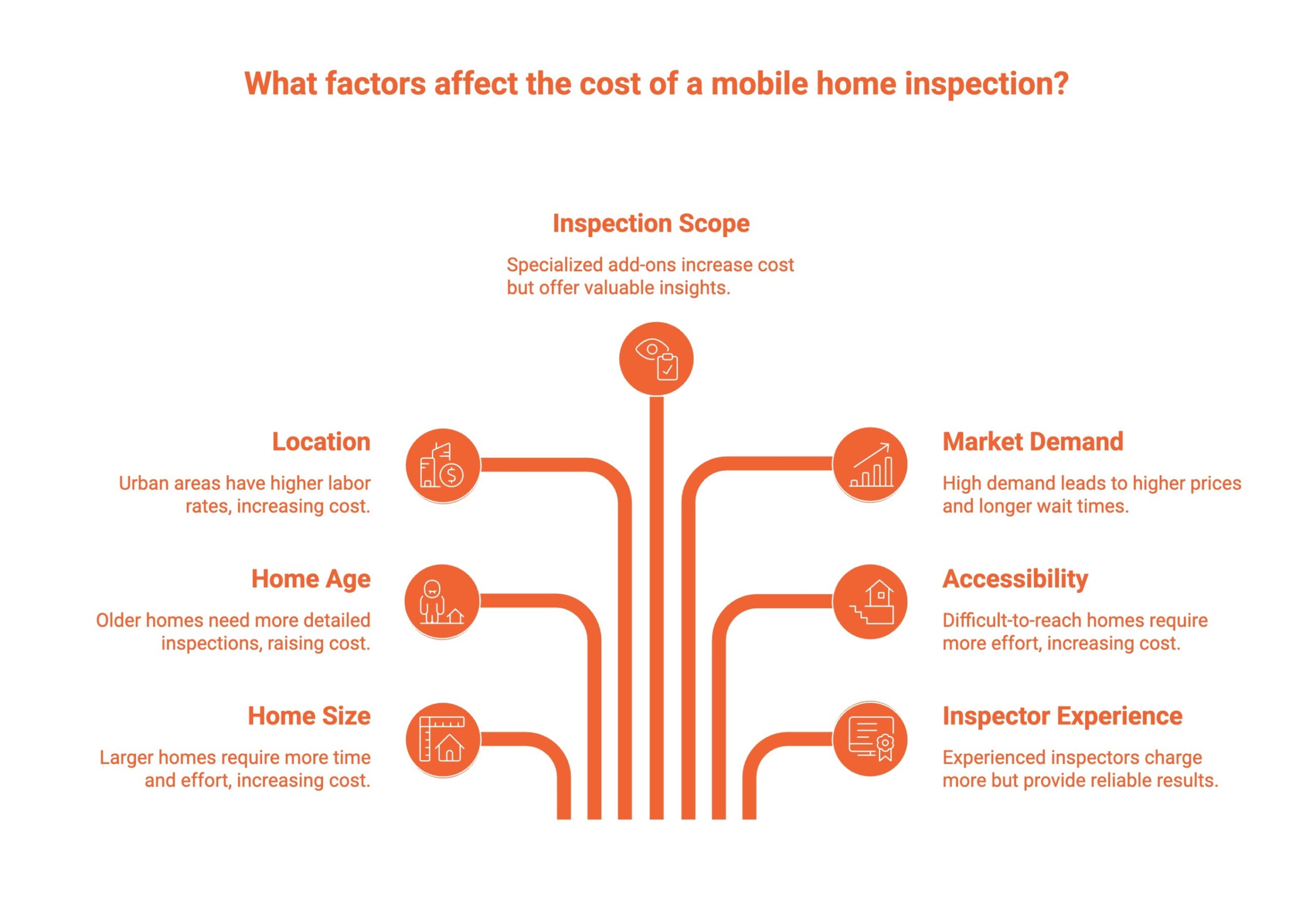
Understanding what drives the price of a mobile home inspection helps you plan your budget wisely. The cost isn’t random; it depends on several key factors like the home’s size, age, location, and even the inspector’s experience. Let’s break them down one by one.
1. Size and Layout of the Mobile Home
The size of your home plays the biggest role in determining the inspection cost. Larger homes take more time and effort to evaluate. Inspectors typically base their fees on square footage, meaning a double-wide will cost more to inspect than a single-wide.
The layout also affects pricing. A complex floor plan with extra rooms or systems requires additional time, which increases the overall cost.
2. Age and Condition of the Property
Older mobile homes usually require more detailed inspections. They may have outdated wiring, plumbing, or worn structural materials that take extra time to assess.
Newer homes, on the other hand, are quicker to inspect because inspectors focus mainly on confirming proper installation and ensuring new systems meet standards.
3. Location and Regional Price Variations in California
Where your home is located matters more than you might think. In urban areas like Los Angeles or San Francisco, inspection costs tend to be higher due to increased labor rates and demand.
In California, the average mobile home inspection cost can reach around $580, compared to the national average of $300–$500. Always get quotes from local inspectors to understand fair pricing in your area.
4. Scope of the Inspection
The type of inspection you choose affects your final bill. A standard inspection covers essentials like structure, roof, plumbing, electrical, and HVAC systems.
If you opt for specialized add-ons, such as pest checks, mold testing, or radon assessments, you’ll pay more. These extras offer valuable insights but increase the total cost.
5. Market Demand
When the real estate market heats up, so do inspection prices. High demand means fewer available inspectors, which can drive up rates and extend scheduling times.
During slower market periods, inspectors may lower prices or offer faster availability, so timing your inspection can make a financial difference.
6. Accessibility of the Property
Difficult-to-reach homes often cost more to inspect. Tight crawl spaces, steep lots, or heavy landscaping can make it harder for inspectors to access critical areas like the foundation or plumbing.
Extra time and effort mean higher labor costs. Be upfront about any access challenges so your quote accurately reflects the work involved.
7. Inspector’s Experience and Credentials
Experienced inspectors with advanced certifications often charge more, but they also deliver more accurate and reliable results.
While choosing a cheaper option may seem tempting, it can lead to missed issues that cost far more later. Paying for a qualified, reputable inspector ensures a thorough evaluation and peace of mind.
What Should Be Included in a Mobile Home Inspection Checklist?
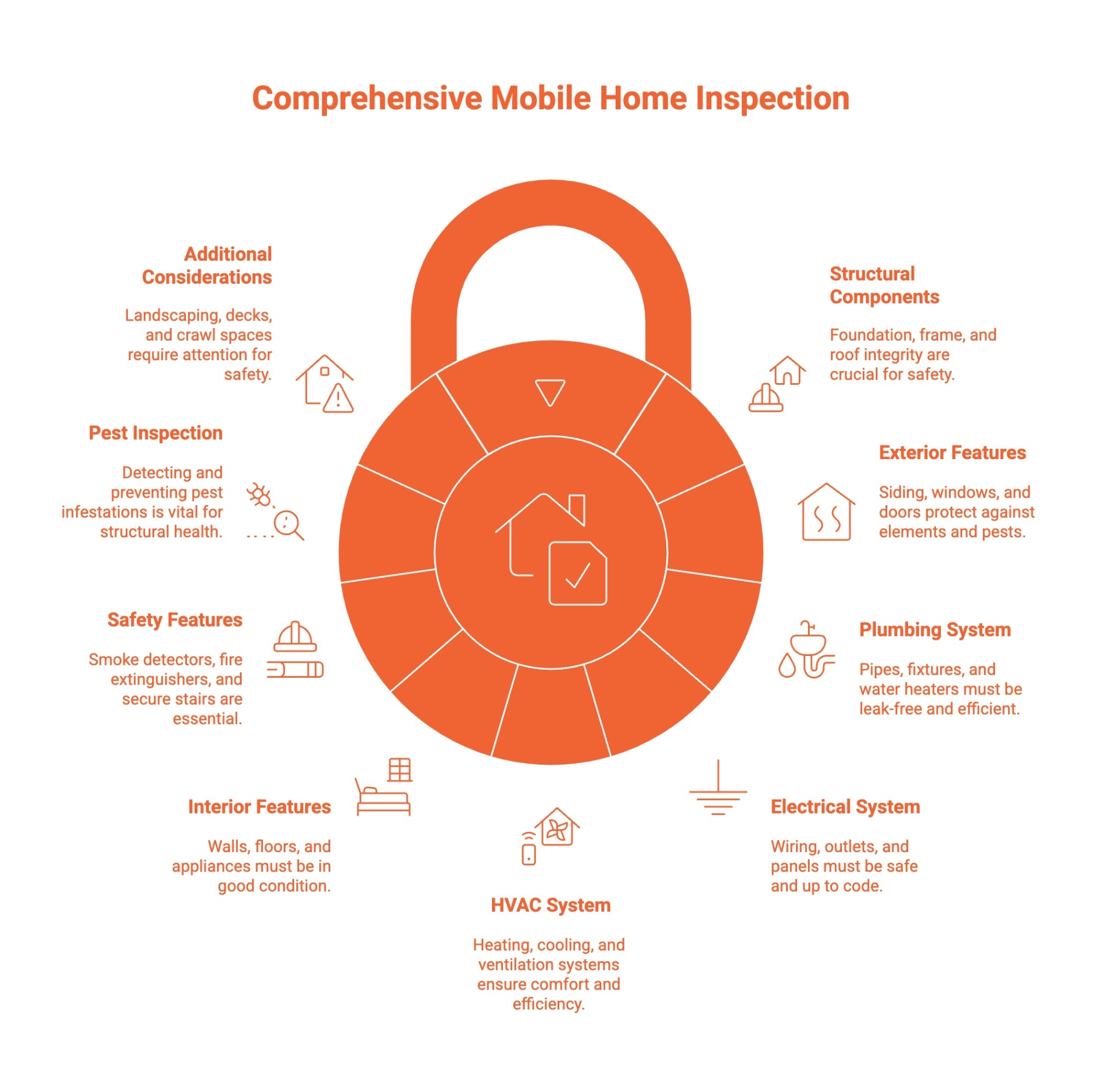
A detailed inspection checklist ensures no important area is overlooked during your mobile home evaluation. From the foundation to the roof, every component plays a role in the home’s safety, structure, and long-term value. Knowing what to expect helps you prepare, ask the right questions, and understand the results in your inspection report.
Here’s what a thorough mobile home inspection should cover.
1. Structural Components
A strong structure is the foundation of a safe home. The inspector will carefully check for cracks, settling, or instability in the foundation, piers, and blocks supporting the home. They’ll also inspect the frame, walls, and roof for damage or weakness that could affect stability.
Key areas to check:
- Foundation: Look for cracks, settling, or water damage.
- Frame and Walls: Inspect for bowing or structural issues.
- Roof: Check for leaks, missing shingles, or signs of wear.
- Tie-Downs: Ensure they’re properly secured and in good condition.
2. Exterior Features
The exterior protects your home from the elements, so it must be in good shape. The inspector will assess siding, windows, doors, and skirting for damage or gaps that could let in moisture or pests. Proper sealing and drainage are also checked to prevent future issues.
Your inspector will look for:
- Siding: Signs of rot, damage, or pest activity.
- Windows and Doors: Proper sealing and smooth operation.
- Skirting: Damage, gaps, or loose panels.
- Decks and Porches: Stability and secure attachment.
- Grading: Proper drainage away from the home.
3. Plumbing System
Leaks and water issues can quickly become expensive repairs. The inspector will review all pipes, fixtures, and the water heater to make sure they’re working properly and free from corrosion or leaks.
Plumbing checkpoints include:
- Pipes: Check for leaks or corrosion.
- Water Heater: Inspect for age, leaks, and efficiency.
- Fixtures: Test sinks, toilets, and showers for drainage.
- Water Pressure: Verify consistent flow throughout the home.
4. Electrical System
Electrical safety is non-negotiable. The inspector will test outlets, switches, and lighting, checking for faulty wiring, outdated components, and grounding issues. The main electrical panel will be reviewed for proper labeling and any signs of overheating.
The electrical inspection includes:
- Wiring: Frays, loose connections, or unsafe materials.
- Outlets and Switches: Functionality and grounding.
- Panel Box: Proper labeling and condition.
- Lighting Fixtures: Confirm everything operates safely.
5. Heating, Ventilation, and Air Conditioning (HVAC)
A working HVAC system keeps your home comfortable and efficient. The inspector will assess the furnace, air conditioner, vents, and thermostat to ensure everything runs safely and effectively.
HVAC inspection checklist:
- Heating System: Age, safety, and performance check.
- Cooling System: Proper operation and maintenance condition.
- Ventilation: Airflow and vent cleanliness.
- Thermostat: Functionality and temperature accuracy.
6. Interior Features
The interior inspection focuses on livability and condition. The inspector will look for cracks, stains, uneven floors, or water damage, as well as check built-in fixtures and appliances.
Interior checkpoints include:
- Walls and Ceilings: Cracks, stains, or moisture issues.
- Floors: Uneven spots, soft areas, or water damage.
- Appliances: Test stove, refrigerator, and dishwasher.
- Cabinets and Countertops: Stability and overall condition.
7. Safety Features
Safety devices can save lives and are a vital part of any inspection. The inspector ensures all smoke detectors, carbon monoxide detectors, and fire extinguishers are present and working.
Safety essentials:
- Smoke Detectors: Installed and operational.
- Carbon Monoxide Detectors: Properly placed and working.
- Fire Extinguishers: Accessible and not expired.
- Stairs and Railings: Stable and secure.
8. Pest Inspection
Pests can silently damage a home’s structure. Inspectors look for signs of termites, rodents, or nests that could indicate a current or past infestation.
The pest inspection covers:
- Signs of Infestation: Droppings, nests, or wood damage.
- Structural Damage: Weak or hollow spots from pests.
- Entry Points: Small gaps where pests could enter.
- Prevention: Effectiveness of existing pest control measures.
9. Additional Considerations
A few extra areas are often overlooked but just as important. Inspectors also check landscaping, decks, crawl spaces, and outbuildings to ensure proper safety and drainage.
Don’t forget to inspect:
- Landscaping: Confirm proper drainage away from the home.
- Decks and Porches: Check for stability and secure attachment.
- Crawl Space: Look for moisture, insulation, and structure issues.
- Outbuildings: Assess sheds or garages for safety and condition.
Want to Skip the Stress of Mobile Home Repairs or Inspections?
We get it, dealing with inspection reports, repair costs, and endless delays can feel overwhelming. If your mobile home needs more work than you’re ready to handle, there’s an easier way.
At California Mobile Home Buyer, we help homeowners like you move on quickly. We buy mobile homes as-is, in any condition, and handle the paperwork, taxes, and title transfer for you. No inspections, no agents, and no waiting, just a fast, fair cash offer you can count on.
Don’t spend weeks fixing up a home you’re ready to let go of. Get your free cash offer today and make your next move simple, stress-free, and on your terms.
Conclusion
A thorough mobile home inspection isn’t just another item on your to-do list; it’s one of the smartest investments you can make. By understanding what’s included and knowing which areas need close attention, you protect yourself from unexpected repairs, safety risks, and costly surprises down the line.
Whether you’re buying, selling, or simply checking your home’s condition, hiring a qualified inspector gives you confidence and peace of mind. A detailed report helps you make informed decisions about repairs, maintenance, and pricing, ensuring your mobile home stays safe, efficient, and valuable for years to come.
If you’re ready to take the next step, start by getting quotes from experienced mobile home inspectors in your area and choose one who understands the unique structure and standards of manufactured homes.
Frequently Asked Questions
How much does a typical mobile home inspection cost in 2025?
The average mobile home inspection costs between $300 and $500 in 2025. Prices may increase for larger or older homes and can be higher in states like California due to regional labor and permit costs.
What factors can affect the total price of a mobile home inspection?
Costs depend on home size, age, location, accessibility, and inspector experience. Additional services like pest or mold inspections also add to the total price. Larger homes and older units usually require longer, more detailed evaluations.
Are mobile home inspection costs different from regular home inspections?
Yes. Mobile home inspections are usually less expensive than traditional home inspections because they cover smaller structures but require specialized expertise for skirting, underbelly, and HUD compliance checks.
What is usually included in the price of a mobile home inspection?
A typical cost breakdown includes inspection of the home’s structure, roof, plumbing, electrical systems, HVAC, and safety features. Optional add-ons like radon or pest testing increase the overall price.
Do mobile home inspection costs vary depending on location?
Yes. Costs are higher in urban areas or states with high labor rates, such as California, while rural regions tend to offer lower inspection fees for the same services.
Is it worth paying for a mobile home inspection before buying?
Absolutely. Spending a few hundred dollars on an inspection can help you avoid thousands in repairs, ensuring the home is safe, code-compliant, and structurally sound before purchase.
Can you negotiate mobile home inspection fees with inspectors?
Yes. Many inspectors are open to negotiation, especially in slower markets or for repeat customers. Always compare multiple quotes to find fair, affordable rates.
How can I find affordable mobile home inspectors near me?
Search for certified inspectors experienced with manufactured homes, check reviews, and compare pricing from at least three local professionals. Ask for bundled services to lower your total inspection cost.
Are there any additional fees I should expect during a mobile home inspection?
Yes. Add-on services like pest checks, radon testing, or re-inspections may cost extra. Travel fees might apply if the home is in a remote or hard-to-access location.
Does the age of the mobile home influence the inspection cost?
Yes. Older homes cost more to inspect because inspectors spend extra time checking for outdated systems, water damage, and structural issues that newer homes typically don’t have.