

| TL;DR You can trade in a mobile home, much like you would a car, by using its value as credit toward the purchase of a new manufactured home. The main difference between a trade-in and a cash sale is that a trade-in reduces the price of a new home, while a cash sale allows you to sell the home as-is for a lump sum, with more flexibility and fewer conditions. Several factors affect your mobile home’s trade-in value, including the age and model of the home, its physical condition, size and layout, energy efficiency, location, market demand, and whether it can be easily moved.To get started with a mobile home trade-in, you will need key documents, including the certificate of title, bill of sale, purchase records, HUD data plate or serial number, a detailed condition report with photos, and park approval if the home is located in a mobile home community. The step-by-step trade-in process typically involves assessing your home’s condition, requesting a trade-in appraisal, selecting a new home, finalizing financing (if needed), signing paperwork, arranging for the removal of the old home, and taking delivery of the new one. If your home is older, damaged, or missing documents, you may want to consider selling your mobile home for cash instead. This option is faster, requires no repairs, and doesn’t involve title delays or park complications. The entire trade-in process generally takes a few weeks to two months, depending on how quickly the dealer can inspect your home, complete the paperwork, and deliver your new unit. |
|---|
Thinking about upgrading your current manufactured home? You’re probably wondering, “Can you trade in a mobile home like a vehicle?” The answer is yes, but the process involves more than just handing over keys and signing papers. Understanding how a mobile home trade-in works can help you maximize your home’s value, avoid common pitfalls, and streamline your transition to a new unit.
In this guide, we’ll walk you through how to trade in a mobile home, from evaluating its current condition and value to negotiating with dealers and handling title transfers.
What Is a Mobile Home Trade-In?
A mobile home trade-in is a convenient way to relocate. You do not have to sell the value of your current mobile home on your own. The process is similar to what you do when you trade in a car. You give your current mobile home to a dealer or retailer. They will take the value of your current mobile home and use it as a down payment or credit on a new manufactured home. This helps you pay less money upfront.
Many homeowners prefer this approach because it allows them to move quickly from one home to the next. It doesn’t matter whether you want a new manufactured home or a used one. A trade-in means you do not need to make ads, show your old mobile home, or look for buyers. This saves you money and time. With a mobile home trade, you can look forward to a more comfortable and newer home that better suits your needs.
If your home is older or needs work, you may also want to explore how to sell an older mobile home.
What’s the Difference Between a Mobile Home Trade-In and Selling for Cash?
How do you decide which is better for your situation? Understanding how mobile home trade ins work versus cash sales can help you weigh the pros and cons and choose the path that offers the best value and least hassle.
Mobile Home Trade In vs. Selling for Cash – Quick Comparison
| Factor | Mobile Home Trade-In | Selling for Cash |
|---|---|---|
| Purpose | Apply the value of your old home toward the purchase of a new one | Get a lump sum payment for your home |
| Process | The dealer evaluates your home and deducts value from the price of a new home | You sell to a buyer or company that pays cash directly |
| Timeline | Often tied to the delivery/availability of a new home | Can be completed quickly, often within days |
| Paperwork | The dealer handles most paperwork, including title transfer and removal logistics | You handle or outsource the title transfer, bill of sale, and closing steps |
| Flexibility | Limited to working with specific dealers and new home options | More flexible, sell on your terms, no new purchase required |
| Home Condition | Some dealers accept homes in poor condition but may deduct heavily from trade value | Cash buyers may accept homes “as-is,” even if old or damaged |
| Best For | Those planning to upgrade and buy a new mobile/manufactured home | Sellers looking to move on, downsize, or get cash quickly |
You can also look into selling a mobile home without a realtor to compare which route offers the most control.
What Factors Affect the Value of Your Mobile Home in a Trade-In?
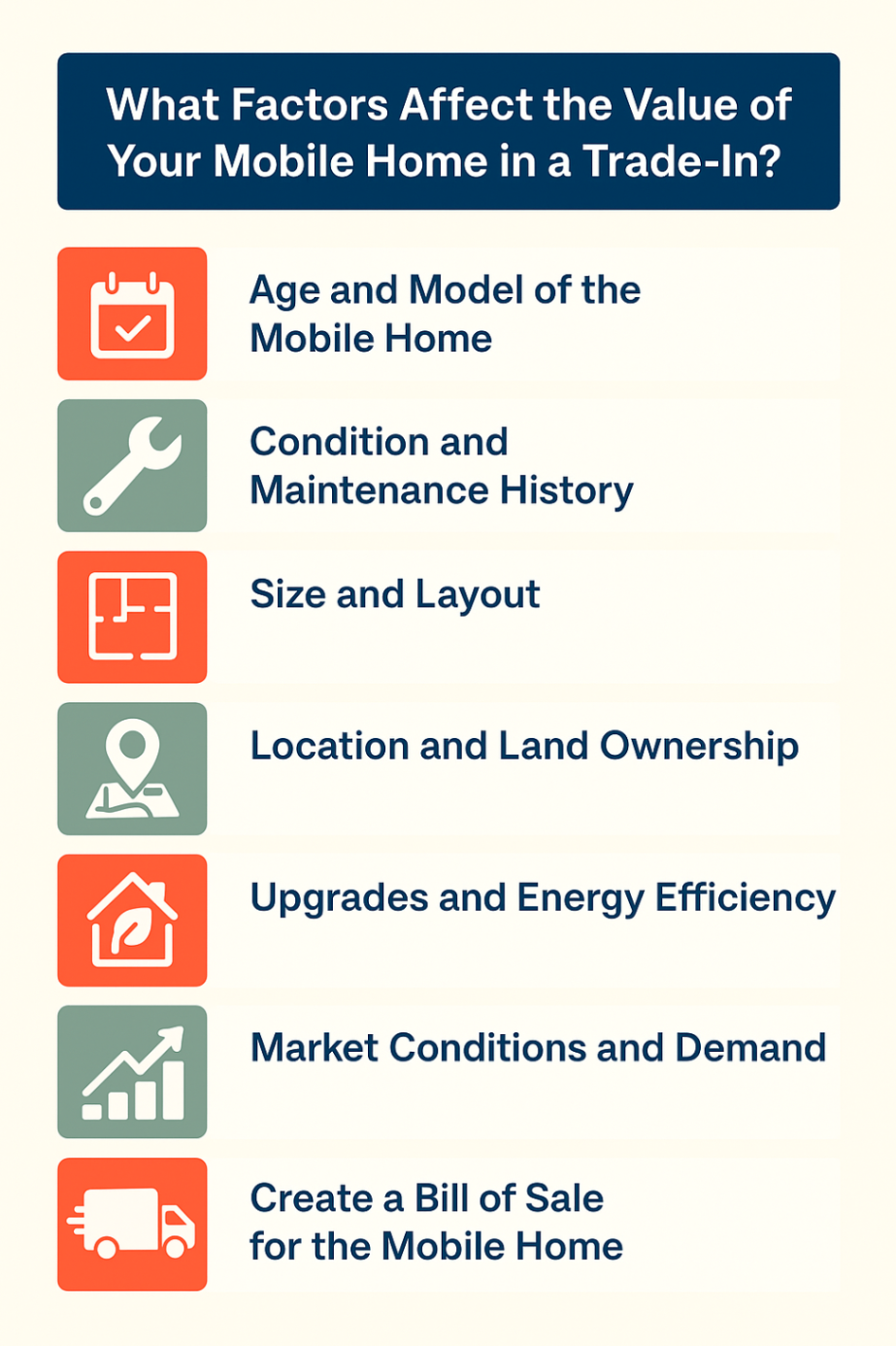
Whether you’re using your existing home as leverage for a new purchase or just trying to evaluate your equity, knowing how mobile home trade ins work starts with understanding how value is determined.
Here are the key factors that affect your mobile home’s trade-in or resale value:
1. Age and Model of the Mobile Home
Newer homes built after 1976 (post-HUD code) are typically more valuable. Older homes often depreciate more rapidly and may not meet current safety or structural standards, which can significantly reduce their trade-in value.
2. Condition and Maintenance History
Well-maintained mobile homes with quality shingles in good condition will always fetch higher trade-in credit. Dealers and buyers will assess the roof, flooring, plumbing, insulation, HVAC systems, and visible damage, such as mold or water intrusion. If you’re exploring how to trade in a mobile home, schedule a pre-trade inspection to catch any issues early.
3. Size and Layout
Single-wide, double-wide, and triple-wide homes vary in market value. Larger homes with modern layouts, open floor plans, and multiple bathrooms usually hold a higher trade-in value.
4. Location and Land Ownership
Is your mobile home located in a desirable park or on private land? Land ownership can significantly increase value, especially if utilities are already connected. However, in most mobile home trade in scenarios, only the structure is evaluated, not the land. You may need to move the home if trading it in with a dealer.
5. Upgrades and Energy Efficiency
Homes with updated kitchens, modern siding, upgraded windows, or energy-efficient appliances typically command a higher value. These upgrades can improve curb appeal and make your mobile home more attractive in a trade-in deal.
6. Market Conditions and Demand
Just like traditional real estate, your mobile home’s value is affected by supply and demand, especially if it is situated in a manufactured home community. High demand for affordable housing or specific models can increase trade-in value. Regional trends in California also play a role; therefore, it is helpful to obtain a localized estimate before entering negotiations.
7. Ability to Be Moved
If your mobile home can be relocated easily, it’s more attractive to dealers. Homes on permanent foundations or with damaged frames are more difficult to move, which reduces their trade-in potential. This is a critical point in understanding how a mobile home trade in works, mobility impacts marketability.
Not sure where you stand? You can get a sense of how much your mobile home is worth before beginning negotiations.
Also Read: Best Mobile Home Buyers Vista, CA To Cash Fast
What You Need to Get Started with a Mobile Home Trade In?
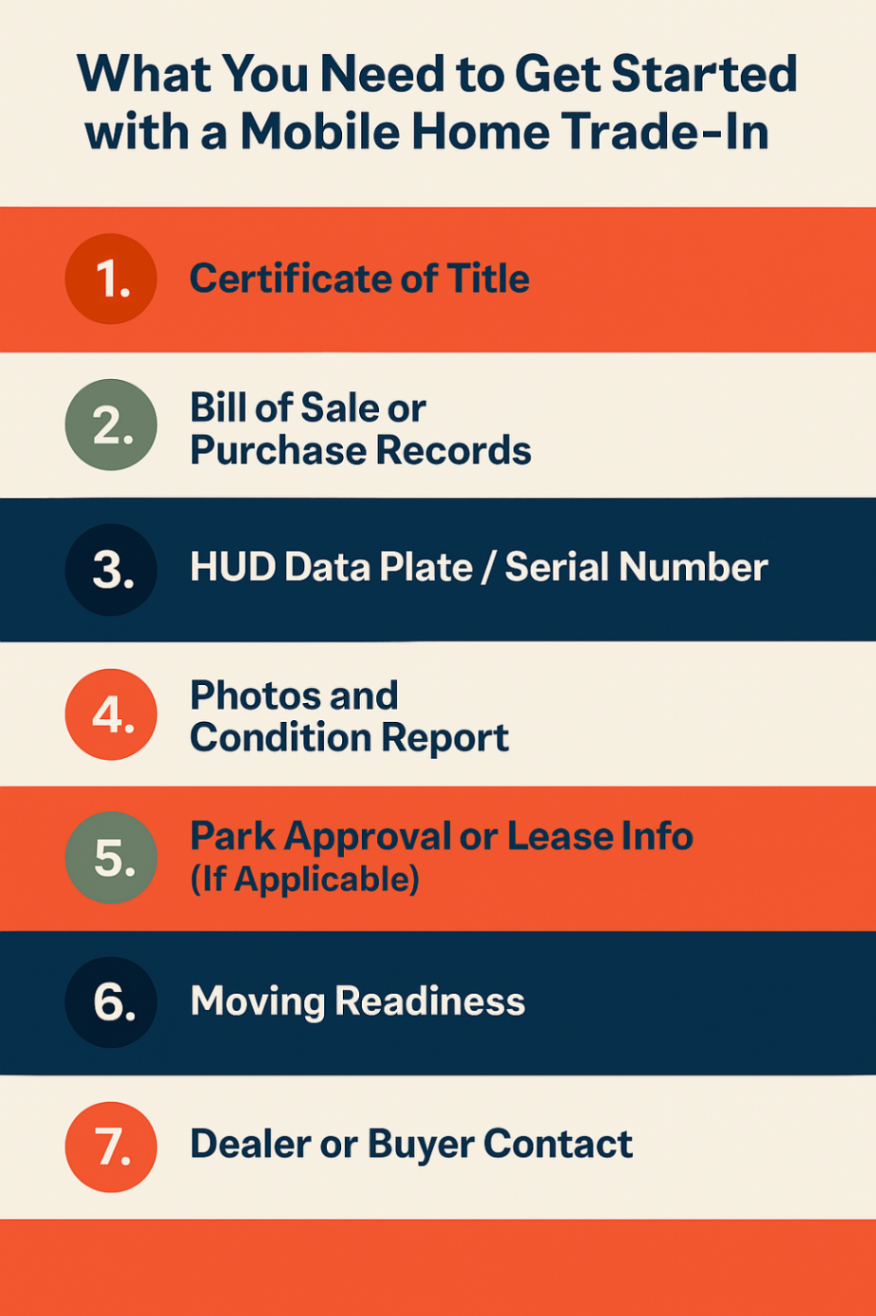
Whether you’re working with a dealer or exploring cash alternatives, preparation is key. Here’s what you’ll need to get started with your mobile home trade in:
1. Certificate of Title
To legally trade in a mobile home, you must be the registered owner on the title. If the home has a lienholder (e.g., a lender), you’ll need to settle the balance or get written payoff details. If the title is lost or damaged, request a replacement from your local DMV or Housing and Community Development (HCD) office.
2. Bill of Sale or Purchase Records
Even if it’s not required during the trade-in, having your original bill of sale or proof of purchase can help establish ownership history, sale price, and home specs. This is useful when negotiating trade-in value.
3. HUD Data Plate / Serial Number
Dealers will check for the HUD label or data plate, typically found inside a kitchen cabinet or utility area. This proves that your home was built to federal standards after 1976. It’s a crucial aspect of how mobile home trade ins work, especially when trading in an older model.
4. Photos and Condition Report
Take clear, recent photos of both the interior and exterior of the property. Create a summary of the home’s condition, listing any upgrades (e.g., roofing, siding, HVAC, appliances) or known issues. This will help the dealer or buyer make a faster and more accurate offer.
5. Park Approval or Lease Info (If Applicable)
If your mobile home is in a park, you may need to notify management and check if the home can be moved. Some parks require the home to be removed as part of the trade-in. Others may allow the next buyer to stay, provided they are approved.
6. Moving Readiness
Some dealers will handle the removal, but others may require you to coordinate the move. Confirm whether your home is movable (frame intact and wheels accessible) and obtain quotes from mobile home movers if necessary. This is often a hidden cost associated with trading in a mobile home.
7. Dealer or Buyer Contact
Lastly, research local mobile home dealers or cash buyers who accept trade-ins. Not all dealers handle used home trade-ins, so ask upfront if they accept your home’s make, size, and condition.
Pro Tip:
If the paperwork or condition of your home is holding you back, consider skipping the trade-in route. Instead, you can sell directly for cash, even if the home is older, needs repairs, or doesn’t have a title. Learn more about how to sell a mobile home for cash without hassle with California Mobile Home Buyer.
How Does Mobile Home Trade in Work? Step-by-Step Guide
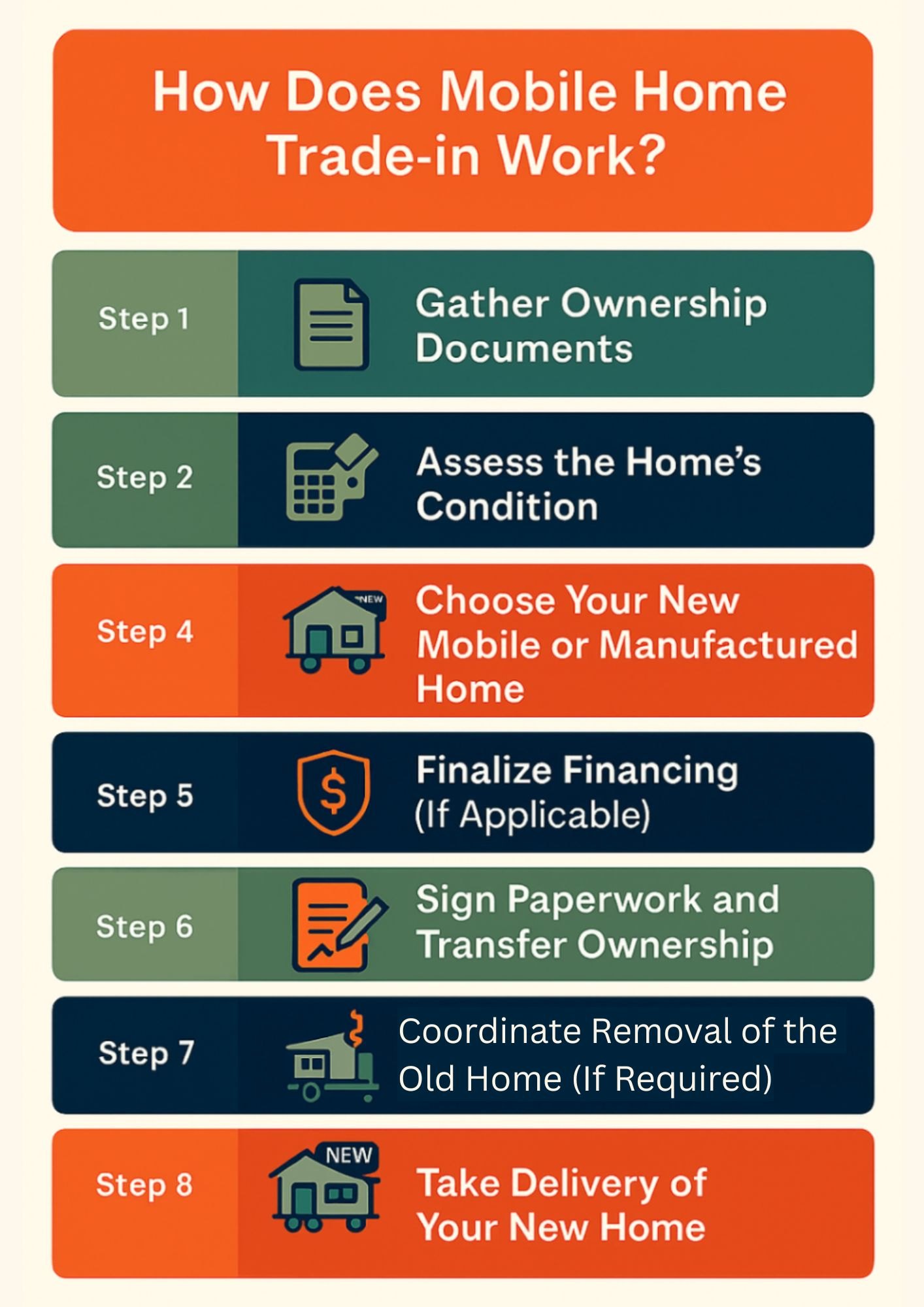
If you’re upgrading your manufactured home, one of the most common questions is: Can you trade in a mobile home? The answer is yes, but it works a bit differently than trading in a car. A mobile home trade in involves using your current home as partial credit toward the purchase of a new mobile or manufactured home, often through a dealership.
Here’s a step-by-step guide to help you understand exactly how a mobile home trade in works, from appraisal to closing the deal.
Step 1: Gather Ownership Documents
Before anything else, ensure you have a clear title to the mobile home. You must be the legal owner or have a payoff letter if there’s still a lien. Also, locate your HUD data plate, serial number, and any prior bill of sale paperwork, as these documents are essential for appraisal and legal transfer.
Step 2: Assess the Home’s Condition
Dealers will evaluate your mobile home based on its age, model, size, condition, and location. Take photos and create a condition report listing upgrades (roof, windows, HVAC) or needed repairs. Homes in good condition may receive higher trade-in credit, while older homes might still qualify, just with lower value.
Step 3: Request a Trade-In Appraisal
Contact a mobile home dealer and ask if they accept trade-ins. Not all do. If they do, they’ll schedule an in-person or remote inspection. Based on their evaluation, they’ll provide an estimated trade-in value, which can be applied to reduce the cost of your new home.
Step 4: Choose Your New Mobile or Manufactured Home
Once the trade-in value is confirmed, you’ll select a new home from the dealer’s inventory. The trade-in credit is applied directly to the purchase price, just like a down payment. Please note that the final sale price will also include any applicable delivery, installation, and setup fees.
Step 5: Finalize Financing (If Applicable)
If you’re financing the new home, the lender will factor in the mobile home trade in value when determining your loan terms. Ensure your credit, income verification, and documentation are all ready for a smooth approval process.
Step 6: Sign Paperwork and Transfer Ownership
Once everything is agreed upon, you’ll sign documents for:
- The purchase of your new home
- The transfer of your old home’s title
- Any moving or setup arrangements
In many cases, the dealer will handle DMV or HCD paperwork for both your trade-in and new purchase.
Step 7: Coordinate Removal of the Old Home (If Required)
Some mobile home parks or local codes require that your old home be moved off the lot. Dealers often assist with the logistics or include removal costs in the final deal. Please confirm this before signing, as it may impact your overall cost.
Step 8: Take Delivery of Your New Home
Once your old home is removed and the site is prepped, your new mobile home will be delivered and installed. You’ll typically receive a walkthrough or inspection to confirm everything is in order before move-in.
Still considering your options? Read more about how manufactured homes are moved and sold and what that means for value.
Skip the Trade-In Hassle; Sell Your Mobile Home for Fast Cash in California
Thinking twice about trading in your mobile home? You’re not alone. At California Mobile Home Buyer, we offer a faster, more straightforward, and more flexible alternative. Whether your home is older, needs repairs, or doesn’t have a title, we buy it as-is, no inspections, no delays, and absolutely no dealer hoops to jump through.
- Get a fair cash offer in 24 hours
- No upgrades or cleanup required
- We handle all paperwork and park coordination
- Close on your schedule; fast or flexible, your choice
Why wait weeks for trade-in appraisals or dealer back-and-forth when you can sell your mobile home in just days?
Request your no-obligation cash offer now and move forward with confidence.
Conclusion
Navigating the mobile home trade in process may seem daunting at first, but with the proper assistance, it becomes much easier. It’s essential to understand the distinction between trading in your mobile home and selling it for cash. Keep in mind the factors that can impact the value of your home. Use a clear, step-by-step plan to make informed choices for yourself and your family. It’s a good idea to assess your own needs to determine if a mobile home trade is the best move for you. If you stay organized and learn as much as possible, this will enhance the process and help you maximize its benefits. When you’re ready to take the next step in your mobile home journey, feel free to ask for help that’s just right for you!
Frequently Asked Questions
How do I know if trading in my mobile home is the right decision?
Trading in your mobile home can be a good way to avoid the work of selling it by yourself. You can use the value from your mobile home to help pay for a new one. Before taking any action, consult with an appraisal expert and review your financing options. This way, you will know if trading in your mobile home is a good fit for your needs and budget.
Can I trade in an older mobile home?
Yes, you can trade in an older mobile home. The condition of the mobile home will significantly impact its value. Dealers consider the market value through appraisals, even for older units. If you speak with a lender, they can help you determine if trading in your manufactured home is a viable option for you.
What happens to my existing mortgage when I trade it in?
Your mortgage will still be in place when you trade in. Your lender will check the amount you still owe. They will take this from the trade-in offer. The remaining amount affects your financing when you buy a new mobile home. This way, you always know what you still need to pay and what your other costs will be.
How long does the mobile home trade-in process usually take?
The time it takes to trade in a mobile home can vary depending on several factors. These things include your mobile home appraisal, the dealer’s assessment, and obtaining financing approval. When you work with a home center, the whole thing can go more quickly. Most of the time, it takes anywhere from a few weeks to a couple of months.