
| TL;DR Mobile homes are the actual structures you live in, while trailer parks are the land or communities where those homes are placed, typically with shared amenities and lot rent. Mobile homes on private land offer full ownership, more privacy, and better long-term investment potential, but come with higher upfront costs and full maintenance responsibilities. Living in a trailer park is more affordable initially, offers a community feel, and requires less land management, but comes with rules, ongoing rent, and limited property rights. Financing a mobile home on land is easier through traditional mortgages, while homes in parks often require high-interest chattel loans due to land rental. Despite the name, most mobile homes aren’t easily movable, and once set, they tend to stay in place, whether on private property or in a trailer park. |
|---|
When it comes to affordable housing, mobile homes and trailer parks often pop up as popular choices, but they’re not the same thing. While the terms are sometimes used interchangeably, one refers to the home itself, and the other to the land it sits on. Confused? You’re not alone. Whether you’re downsizing, looking for your first home, or exploring low-cost living options, understanding the unique characteristics of the two can help you make a smarter decision. In this guide, we’ll break down the key differences between mobile homes and trailer parks, including areas like costs, lifestyle, ownership, and more, so you can choose what truly suits your needs.
What is a Mobile Home?
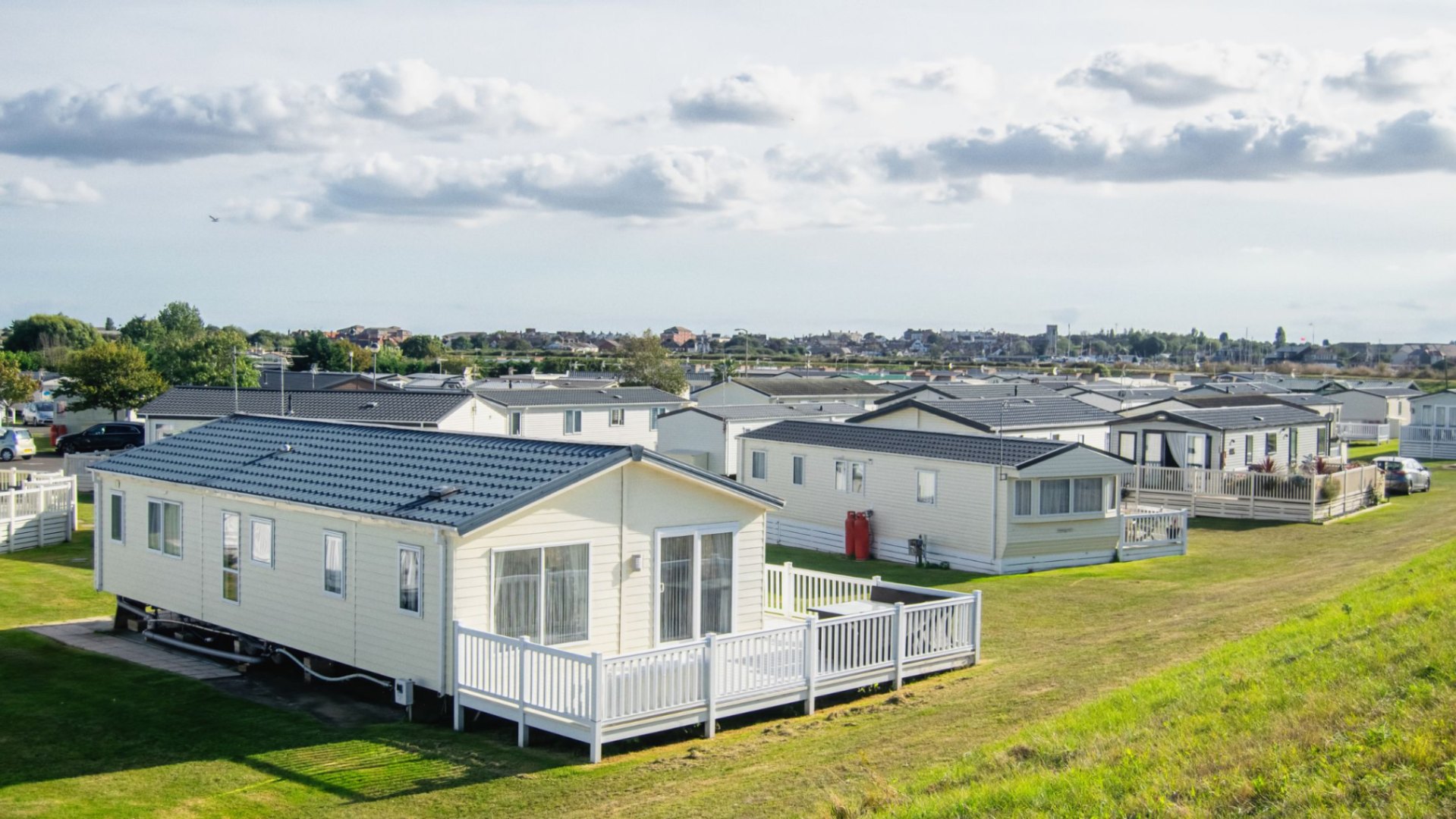
A mobile home is a prefabricated structure built in a factory and transported to its final location for residential use. Despite the name, mobile homes aren’t easily movable once installed. It is typically a building placed on a permanent foundation or blocks and connected to utilities like water, electricity, and sewage.
This type of housing can be installed on private land, in mobile home communities, or within trailer parks, and ownership models vary accordingly. Depending on size, mobile or modular homes come in single-wide, double-wide, or triple-wide formats and can include all the amenities of a traditional house, just at a more affordable price point.
What is a Trailer Park?
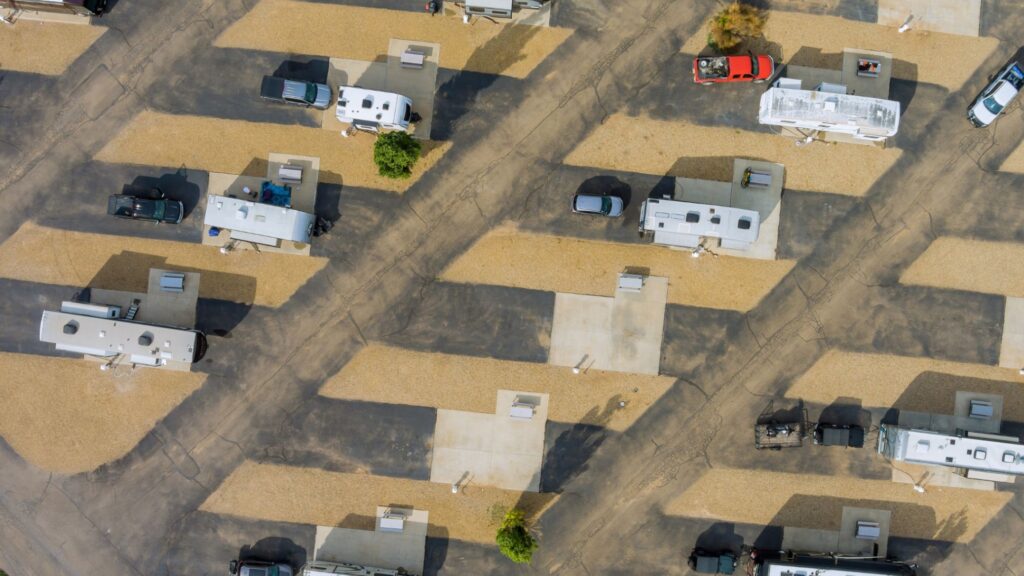
A trailer park, also known as a mobile home park or manufactured home community, is a designated area of land where multiple mobile homes or travel trailers, or campers, are placed, usually side by side, with shared access to utilities, roads, and sometimes community amenities.
In most trailer parks, the inhabitants own the mobile home but rent the lot it sits on from the park owner. This means you may have control over your home but not the land underneath it. Some parks are age-restricted (like 55+ retirement communities), while others are open to all.
What is the Difference Between Mobile Home and Trailer Park?
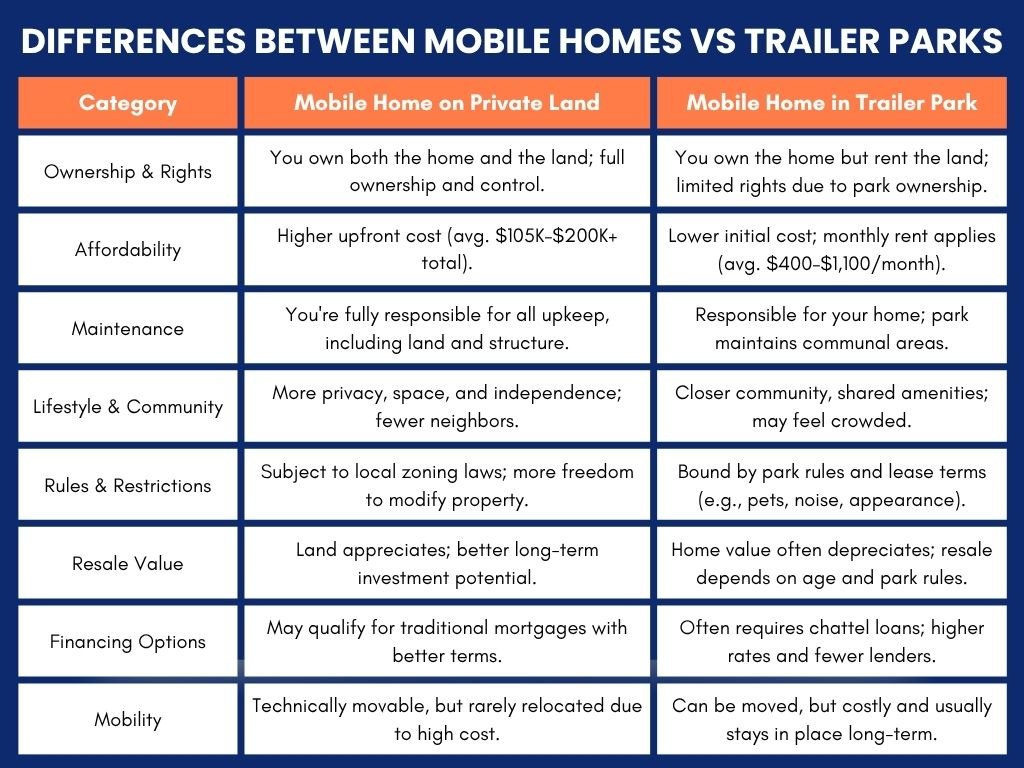
While the terms “mobile home” and “trailer park” are often used interchangeably, they refer to very different things. Here’s the main difference between trailer park and mobile home under various categories:
1. Ownership & Rights: Who Owns What?
A mobile home is the physical structure, essentially, the house itself. When placed on private land, the owner typically owns both the home and the land beneath it. This setup gives you full ownership rights, including the freedom to sell or modify your property without needing landlord approval. You can even sell an old mobile home for a good resale value.
In a trailer park, you usually own the mobile home but rent the lot it sits on. That means you don’t own the land; you’re leasing space from the park owner. This limits your rights, especially when it comes to land use or long-term stability, as rent increases or park closures can affect you.
2. Affordability: How Much Do They Cost?
Buying a mobile home on private land requires a larger upfront investment, as you’re paying for both the structure and the real estate. However, you avoid monthly lot rent and may see better long-term value, depending on location and upkeep. The average cost of a mobile home on private land in the United States is:
- Average Home Cost: $80,000 – $120,000 (for a new single- or double-wide unit)
- Land Cost: $15,000 – $50,000+ (varies widely by location)
- Setup Costs (foundation, utilities, permits, etc.): $10,000 – $30,000
- Total Average Cost: $105,000 – $200,000+
Living in a trailer park tends to be more budget-friendly in the short term. The initial cost of the home is lower, and while you do pay monthly lot rent, it can still be more affordable than buying land, making it a popular choice for those seeking low-cost housing. The average cost of a mobile home on a trailer park in the United States is:
- Average Home Cost: $40,000 – $80,000 (for a new or well-maintained used unit)
- Lot Rent: $300 – $800/month (depending on location and amenities)
- Additional Costs (utilities, park fees, etc.): $100 – $300/month
- Total Monthly Living Cost: $400 – $1,100/month
3. Maintenance Responsibilities: Who Handles Maintenance?
When you own both the mobile home and the land, all maintenance, interior, exterior, yard, and utility connections are your responsibility. You have full control, but also full accountability for upkeep, repairs, and landscaping.
In trailer parks, you’re responsible for maintaining your home, but the park usually handles communal areas like roads, lighting, and shared utilities. That said, some parks impose rules requiring you to keep your lot clean and your home in good condition.
4. Lifestyle and Community: How Different Are the Living Experiences?
Living in a mobile home on private land often means more privacy and independence. You can enjoy larger yards, fewer neighbors, and fewer restrictions, especially in suburban or rural areas. The lifestyle is quieter but may lack social interaction.
Trailer parks offer a more community-oriented environment, with neighbors in close proximity and shared amenities like clubhouses, playgrounds, or pools. It’s a more social lifestyle, though it can feel crowded or less private depending on the park.
5. Rules and Restrictions: What Rules Apply?
If placed on private property, your mobile home is primarily subject to local zoning laws and housing codes. You’re free to make changes, add structures, or even rent it out, within legal limits and adhering to safety standards.
Trailer parks come with a set of community rules set by park management. These can cover anything from pet policies and noise levels to home appearance and yard maintenance. You’re bound by lease terms and park regulations.
6. Value and Investment: Which Has Better Resale Value?
The value or worth of mobile homes placed on owned land is generally high, especially if the property is well-maintained and in a desirable location. The land appreciates, making it a better long-term investment.
Mobile homes in trailer parks tend to depreciate, much like vehicles. Since you don’t own the land, the home’s value is tied to its age and condition. Additionally, park restrictions can make it harder to resell.
7. Financing and Loans: Which Is Easier to Finance?
Mobile homes on land can often qualify for traditional mortgages, making financing more accessible and affordable. You’ll have more lenders and loan options to choose from. Because the lenders know that you can sell your mobile home for cash anytime without any hassles, as you own the land.
Financing a home in a trailer park is trickier. Since you don’t own the land, these homes typically require chattel loans, which come with higher interest rates and shorter terms. Fewer lenders are willing to finance homes in parks.
8. Mobility and Flexibility: How “Mobile” Are They Really?
Despite the name, mobile homes aren’t easily moved once installed. Relocating one is expensive and logistically complex. Most owners treat them as permanent residences once set up on land.
Mobile homes in trailer parks are technically movable, but in practice, they rarely are. The cost to move one, often thousands of dollars, combined with legal and physical barriers, means most stay put for decades.
Also Read: For Fastest Cash Sale: Best Mobile Home Buyers, Wildomar, CA
Sell your Mobile Home to California Mobile Home Buyer
At California Mobile Home Buyer, we make selling your mobile home fast, simple, and stress-free. Whether your home is in a trailer park or on private land, we buy directly from owners across California in any condition; no repairs, no agents, and no hidden fees. We offer fair cash deals, handle all the paperwork, and close on your timeline, often in as little as 5 to 7 days. From helping with park approvals to managing title transfers with HCD, our experienced team takes care of everything so you can move on with confidence and cash in hand. So, what are you waiting for? Grab a cash offer now.
Conclusion
Choosing between a mobile home and a home on a trailer park ultimately comes down to your lifestyle preferences, financial situation, and long-term goals. If you value full ownership, privacy, and long-term investment potential, owning a mobile home on private land may be the better fit. On the other hand, if affordability, convenience, and a sense of community are more important to you, living in a trailer park could offer the flexibility and support you’re looking for. By understanding the key differences, ownership, costs, maintenance, rules, and resale value, you’ll be better equipped to make a decision that aligns with your needs and future plans.
Frequently Asked Questions
Are mobile homes and trailer homes the same thing?
No, a mobile home means a type of manufactured housing. The Department of Housing and Urban Development, or HUD, sets strong rules for how these homes must be built. These rules help make sure the home is sturdy. The words “trailer home” are often used for older, more movable places to live, like static caravans. These days, the Department of Housing and Urban Development says modern mobile homes are made to stay in one spot.
Can you own the land in a trailer park?
Ownership of land in trailer parks is not common. The people who live there are called tenants, and most of them rent the land where their homes or Recreational Vehicles like RVs sit. Most of the time, the land is owned by the people or group who run the park. The tenants keep living there based on rental agreements.
How safe are mobile homes compared to traditional houses?
Modern manufactured homes follow strict HUD building codes. This helps them stand up well to high winds and other threats in the area. When you set them up on a concrete foundation, they become very steady and safe. Their safety is like what you get from regular homes.
Do mobile homes appreciate or depreciate in value?
Older models used to lose value over time. But now, modern manufactured homes can go up in value. This is because they now use new energy efficiency features and better designs inside mobile home inside trailer park. If you take good care of your home, it will help when you want to sell it later. This can make the home a good investment for you. You can approach California Mobile Home Buyer for the best deal.