

TL;DR
- Mobile homes and trailers are not the same; mobile homes are built to HUD housing standards, while trailers are classified as vehicles.
- Mobile homes work best as permanent, affordable housing, whereas trailers are designed for travel or temporary living.
- Financing differs: mobile homes may qualify for mortgages or chattel loans, while trailers are financed like RVs.
- Resale potential is stronger for mobile homes on owned land, while trailers typically depreciate quickly.
- Choosing between them depends on whether you want long-term stability or short-term flexibility.
When it comes to affordable housing, the terms “mobile home” and “trailer” are often used interchangeably, but they carry different meanings. This can create confusion for buyers, sellers, and anyone exploring alternative living options.
The versatility of trailers has inspired creative DIY projects, highlighting just how differently people interpret the terms. In this guide, we’ll clarify what each option entails so you can make informed decisions for your lifestyle, budget, and long-term goals.
What Is the Difference Between a Mobile Home and a Trailer?
Understanding the distinction is important if you’re researching housing options, resale value, or even the rules of a community setting, such as a mobile home vs trailer park.
In the housing world, mobile homes are factory-built houses constructed after 1976 under federal HUD standards, designed for permanent living. Trailers, on the other hand, began as transportable travel units or temporary accommodations and usually don’t meet the same regulatory or structural requirements.
Mobile Home vs Trailer: Key Differences You Need to Know
When deciding between a mobile home and a trailer, understanding the differences in construction, size, and purpose can make all the difference in making the best decision. This table breaks down the difference between trailer and mobile home which will help you choose the right option for your lifestyle, budget, and long-term goals.
| Feature | Mobile Home | Trailer (Travel Trailer) |
|---|---|---|
| Definition | A permanent, factory-built home constructed after 1976, regulated by HUD standards, designed for long-term living. | A towable, compact unit originally designed for temporary or recreational use. |
| Regulations | Built under strict federal HUD codes covering safety, durability, plumbing, electrical systems, and energy efficiency. | Constructed to lighter RV standards, fewer regulations, and not meant for permanent residence. |
| Purpose | Intended for permanent or semi-permanent housing, either on private land or in mobile home communities. | Primarily for travel, camping, or short-term stays; not designed for long-term living. |
| Construction | Durable, well-insulated, and designed like small traditional homes, transported in sections and assembled on-site. | Lightweight with thinner walls and minimal insulation; easy to tow and relocate, but less durable. |
| Size & Layout | Larger and more spacious: single-wide (14–18 ft), double/triple-wide (36–54 ft); full kitchens, multiple bedrooms, and bathrooms. | Smaller and compact: typically 8–12 ft wide; efficient interiors with basic amenities suitable for temporary stays. |
| Financing & Resale | Eligible for mortgages or chattel loans; stronger resale potential when well-maintained. | Rarely financed like traditional housing, considered personal property like an RV; limited resale value. |
| Placement & Community | Found in mobile home parks or on privately owned lots; integrated into residential areas. | Usually located in trailer parks, campgrounds, or stored when not in use. |
| Long-Term Value | Can appreciate in value if located on owned land and maintained properly. | Typically depreciates over time; resale value is limited. |
What are the Laws and Regulations for Mobile Homes vs Trailers?
Understanding construction and size is just the start; legal rules can also affect your choice. Therefore, before making a purchase, it’s important to explore the regulations that differentiate mobile homes from trailers.
1. Mobile Homes and HUD Standards
Mobile homes built after June 15, 1976, must meet HUD Code standards for construction, safety, and efficiency. This makes them legally recognized as housing and may qualify them as real property if affixed to owned land. In addition, many states require proof of title transfer and compliance with HUD data plates when selling an older mobile home.
2. Financing and Zoning Rules for Mobile Homes
Because of their HUD classification, mobile homes can qualify for mortgage-style financing and are subject to state zoning, taxation, and resale regulations. Proof of title and HUD data plates are often required during sales.
3. Trailers and Vehicle Codes
Trailers, including RVs and travel trailers, follow Department of Transportation (DOT) and National Highway Traffic Safety Administration (NHTSA) rules. These focus on road safety, like weight, braking, and lighting, rather than long-term livability.
4. Trailer Titles and Registration
Since trailers are considered personal property, they are titled and registered through the Department of Motor Vehicles (DMV), just like a car. They don’t qualify under HUD housing codes and aren’t eligible for mortgage financing.
Also, check out our latest blog that answers the question: Do you have to pay property taxes on mobile homes in California?
How Do Financing and Ownership Work for Mobile Homes vs Trailers?
While both provide affordable housing or travel options, the way you buy, insure, and legally own them varies greatly. These differences can impact long-term affordability, resale value, and even where you can live.
What Loan Options Are Available for Mobile Homes vs Trailers?
Mobile homes are eligible for financing under two main models:
- Real Property Loans: These are traditional mortgages used when the mobile home is permanently affixed to owned land. They function like standard home loans, often offering lower interest rates and longer repayment terms.
- Chattel Loans: These loans are designed for mobile homes on leased land or without a permanent foundation. Interest rates may be higher, and terms shorter, since the home is considered personal property rather than real estate.
If a mobile home is permanently affixed to land owned by the homeowner, it can be classified as real estate and financed with a traditional mortgage. However, when placed in mobile home parks or leased land, they usually require a chattel loan, which carries higher interest rates and shorter terms.
Trailers, by contrast, are not financed as real estate at all. Since they are classified as vehicles, financing options are typically personal loans, RV loans, or dealership installment plans. This limits loan amounts and often leads to higher interest rates compared to mortgages for mobile homes.
How Does Insurance and Ownership Differ Between Mobile Homes and Trailers?
Mobile homes, depending on classification, can be insured much like site-built houses. Policies typically cover structural damage, personal belongings, and liability, especially if the home is considered real property. Ownership is transferred through deeds and titles, similar to a traditional house, though HUD certification tags are also important during resale.
Trailers are typically insured under auto-style policies, which cover collision, liability, and contents. Since they are legally vehicles, ownership is transferred through a bill of sale and DMV title, much like a car.
Learn more about how to sell a mobile home without a title in California if you’re unsure about your current paperwork.
Are Mobile Homes or Trailers More Sustainable Choices?
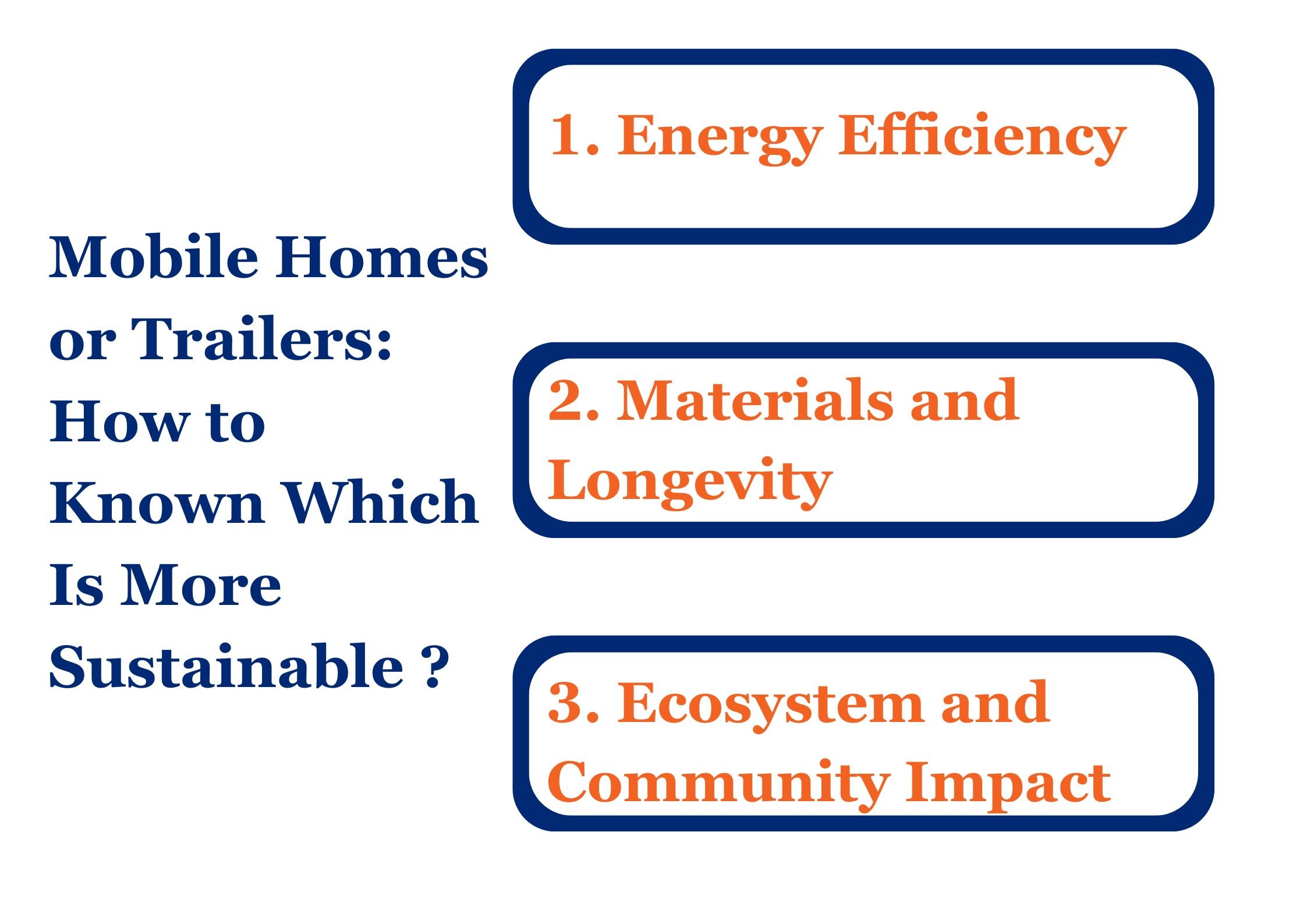
When comparing mobile home vs trailer, environmental impact is an important factor. Energy efficiency in modern manufactured homes, material longevity, and community impact can make a big difference in long-term sustainability.
Let’s explore how mobile home vs trailer park setups, construction materials, and energy efficiency affect both your wallet and the planet.
1. Energy Efficiency
Modern mobile homes, built under HUD standards, often include insulation, double-pane windows, and Energy Star appliances, making them energy efficient, while trailers are designed for portability with thinner walls and lighter insulation, causing higher energy loss.
2. Materials and Longevity
Mobile homes use durable steel frames, treated wood, and long-lasting roofing that reduce replacements over decades, whereas trailers rely on lightweight materials that wear down faster, creating more waste over time.
3. Ecosystem and Community Impact
Mobile homes placed on owned land or in regulated parks connect to proper utilities, minimizing ecosystem disruption, but trailers in temporary parks or campgrounds may strain local resources when hookups are inadequate.
What Should You Know Before Buying a Mobile Home vs Trailer?
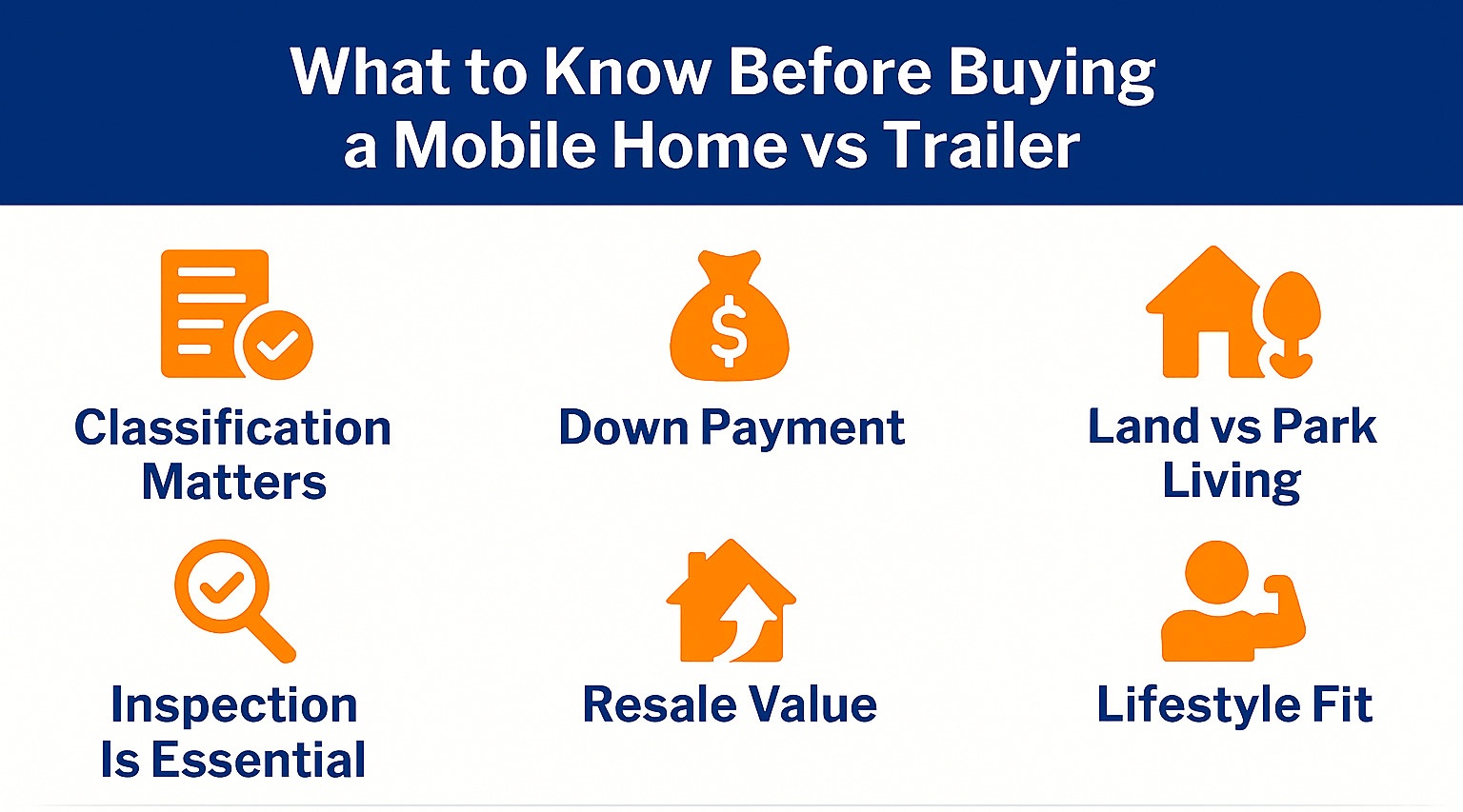
When it comes to mobile home vs trailer, buying decisions go far beyond the initial price tag. , especially when considering aspects like moving a mobile home a short distance. From financing to lifestyle needs, every detail impacts whether your investment makes sense in the long run. Here’s what you need to take care of before signing on the dotted line.
1. The Importance of Classification When Buying a Mobile Home or Trailer
First, clarify whether the unit is legally considered a manufactured home or a trailer. Mobile homes built after 1976 must comply with HUD Code standards, while trailers are treated as vehicles. This classification determines financing, insurance, and resale potential.
2. Down Payment Requirements for Mobile Homes vs Trailers
Manufactured homes typically require 5%–10% down for government-backed loans, though some lenders may ask for more. Chattel loans often come with higher interest rates and larger down payments. For trailers, down payments are smaller, but loan terms are shorter, affecting affordability.
3. Land Ownership vs Park Living in Mobile Homes and Trailers
Decide whether the home will be placed on privately owned land or in a mobile home park. Owning land generally increases long-term value and financing options, while living in a park adds monthly lot rent and community rules.
4. Inspection Essential Before Purchase
Always request a full inspection. For mobile homes, verify the HUD data plate and construction quality. For trailers, check roadworthiness, insulation, and structural safety. Skipping this step could mean expensive repairs later.
5. Resale Value Differences Between Mobile Homes and Trailers
Mobile homes placed on owned land may appreciate, especially with upgrades and good maintenance. Trailers, by contrast, depreciate quickly like vehicles. Consider how long you plan to own before buying.
6. Lifestyle Fit of Mobile Homes vs Trailers
Finally, weigh lifestyle needs. Mobile homes are better suited for families or anyone seeking permanent, affordable housing. Trailers are ideal for flexibility, travel, or short-term living. Matching the property to your lifestyle ensures you won’t regret the investment.
Should You Buy a Mobile Home or a Trailer?
Choosing between a mobile home and a trailer comes down to permanence versus flexibility. Mobile homes suit long-term living, while trailers work for travel or short stays. Either way, selling can be stress-free. That’s where California Mobile Home Buyer comes in.
California Mobile Home Buyer specializes in helping homeowners sell quickly and fairly, without the headaches of traditional real estate. From handling title transfers and park approvals to giving you a competitive cash offer, they make every step smooth and hassle-free. Whether your home is brand new, decades old, or somewhere in between, their team knows the ins and outs of the market and delivers results.
Contact us today to get your no-obligation offer and experience a faster, easier way to sell.
Making the Right Choice for Your Needs
The mobile home vs trailer debate goes beyond terminology; it’s about lifestyle, long-term value, and how each option fits your goals. A mobile home vs trailer home comparison shows that mobile homes offer regulated, permanent housing built to HUD standards, while trailers provide short-term flexibility for travel or temporary living.
For buyers and sellers, knowing these differences ensures better decisions and smoother sales. And while creative DIY ideas, like exploring how to convert a bike trailer into a mobile home, show the versatility of trailers, they also highlight the durability, financing, and resale advantages that mobile homes bring.
By understanding the unique strengths of each, you can choose the option that matches your budget, lifestyle, and long-term plans with confidence.
Frequently Asked Questions
Are mobile homes and trailers built to different standards?
Yes, they are built to different standards. The National Mobile Home Construction and Safety Standards Act requires mobile homes built after 1976 to follow strict federal standards, known as the HUD Code. Trailers and RVs adhere to different, often less stringent, building codes.
Which is better for permanent residency: mobile home vs trailer park?
A mobile home is far better for permanent residency. Its home construction must meet high building standards for safety and is typically installed on a concrete foundation, making it a durable and stable choice for long-term living as one of the permanent homes.
Can a mobile home or trailer be moved across provinces in Canada?
Yes, both can be moved, but the process differs. A trailer with a trailer coupler is designed for travel. A mobile home built on a steel frame requires professional movers and permits, and you must comply with the local building codes of the new mobile home park or location.
Is a mobile home and a trailer the same thing?
No, a mobile home and a trailer are not the same thing. Mobile homes, built after 1976, follow federal HUD standards and are designed for permanent housing. Trailers, often called travel trailers, are classified as vehicles, built for mobility and temporary use, with fewer safety and construction requirements.
Are there differences in appearance or size between mobile homes and trailers?
Yes. Mobile homes are larger, often single-, double-, or triple-wide units with full kitchens, bathrooms, and bedrooms. Trailers are smaller, compact, and designed for portability. Their lighter construction makes them easier to tow but less spacious and durable for permanent living.
What are the legal or ownership differences between a mobile home and a trailer?
Mobile homes built after 1976 follow HUD codes, qualifying as permanent housing with financing and property ownership options. Trailers, regulated as recreational vehicles, are treated as personal property. Ownership usually covers only the unit, not the land, limiting financing and long-term residential rights.
Is it better to live in a mobile home park or a trailer park?
Living in a mobile home park often offers higher standards set by the US Department of Housing and Urban Development, with regulated HVAC systems, fire safety, and stronger resilience to natural disasters. According to the Manufactured Housing Institute, these separate units provide a stable, affordable form of housing.