

Key Highlights
- Moving a manufactured home involves strict regulations, and the age of your mobile home is a critical factor.
- Homes built before the 1976 federal HUD codes are often difficult, if not impossible, to relocate.
- You will always need a moving permit, which requires proof of ownership and paid taxes.
- State regulations and local laws in your new location can add further restrictions on age and condition.
- Hiring a professional moving company specializing in manufactured homes is a legal requirement, not a choice.
- Expect costs for permits, transportation, setup, and potential home updates to meet current codes.
Relocating a mobile home sounds simple, after all, it’s designed to move, right? But here’s the truth: moving one is rarely straightforward. Between age limits, state laws, moving permits, and strict HUD codes, even a small oversight can derail your plans.
Many homeowners find out too late that their home is too old to move legally, or that local authorities won’t issue a permit until every tax, inspection, and safety requirement is met. Others hire movers only to learn their manufactured home isn’t structurally sound enough to survive the trip.
If you’re considering a move, understanding these rules upfront can save you from costly surprises, delays, and disappointment. Let’s break down exactly what the age limit on moving a mobile home is, and what steps you’ll need to take to make your relocation legal, safe, and stress-free.
Is There an Age Limit for Moving a Mobile Home?
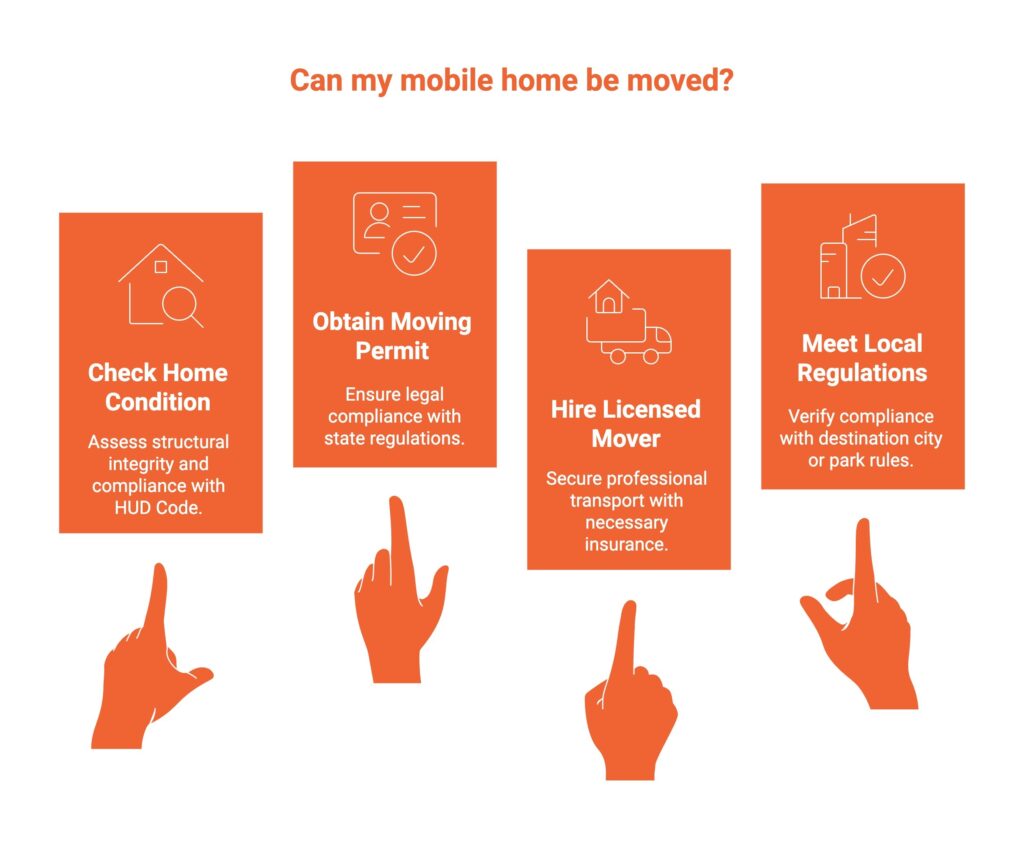
Yes, you can often move a mobile home that’s over 20 years old, but it depends on its condition and local regulations. The main restriction comes from the 1976 HUD Code, which sets federal safety standards for manufactured homes. Homes built after this date are generally eligible for relocation, but they still need to pass inspections and meet the building codes of your new area.
Keep in mind that some professional movers have their own rules about the homes they’ll transport. They’ll inspect your home’s structure before agreeing to move it. If they believe the frame, roof, or walls can’t handle the stress of transport, they may decline the job altogether.
Law #1: You’ll Need a Moving Permit
You can’t just hook your manufactured home to a truck and hit the road. Every state requires a moving permit, which ensures your relocation is safe and legal. This process varies by location but always involves proving that your home meets all legal requirements for transport.
You’ll typically need to visit your local Department of Housing or DMV to apply. Since approvals can take time, start early.
You’ll usually need:
- A certificate from the county treasurer confirming no unpaid property taxes.
- A title certificate (or proof of application for one).
- Inspection documents verifying that the home is safe to move.
Law #2: You’ll Need a Licensed Manufactured Home Mover
Relocating a manufactured home isn’t a DIY project. You must hire a licensed, bonded, and insured mover that specializes in mobile homes. These experts use specialized equipment and follow strict safety and legal protocols.
Not every moving company can handle a manufactured home, so take time to compare quotes and check credentials.
Before hiring, make sure to:
- Confirm they have experience moving your home’s type and size.
- Verify their insurance and license for your protection.
Law #3: Your Manufactured Home Must Be Up to Code
Compliance with building codes is mandatory. The HUD Code (established in 1976) outlines minimum safety standards, and homes built before this year usually can’t be moved.
Even post-HUD homes might need updates or reinforcements to meet current regulations in your new area. An inspection will reveal if upgrades are needed, especially for homes built in the 1980s or 1990s.
Common updates include:
- Reinforcing the structure for safer transport.
- Upgrading electrical and plumbing systems to meet modern standards.
- Adapting for local weather, such as wind or snow load requirements.
Law #4: Check Local Regulations in Your New City or Town
Rules don’t stop once you leave your current site. Your destination city or county might have stricter laws about where and how you can place your manufactured home.
Older homes (10–15 years or more) usually face closer inspections to confirm structural safety. If you’re moving into a mobile home park, remember that parks can enforce their own rules. They can refuse homes based on age, appearance, or size, even if they meet legal requirements.
Before making any commitments:
- Contact local zoning or building departments for detailed relocation rules.
- Check park policies to ensure your home meets community standards before scheduling the move.
How To Relocate a Manufactured Home?
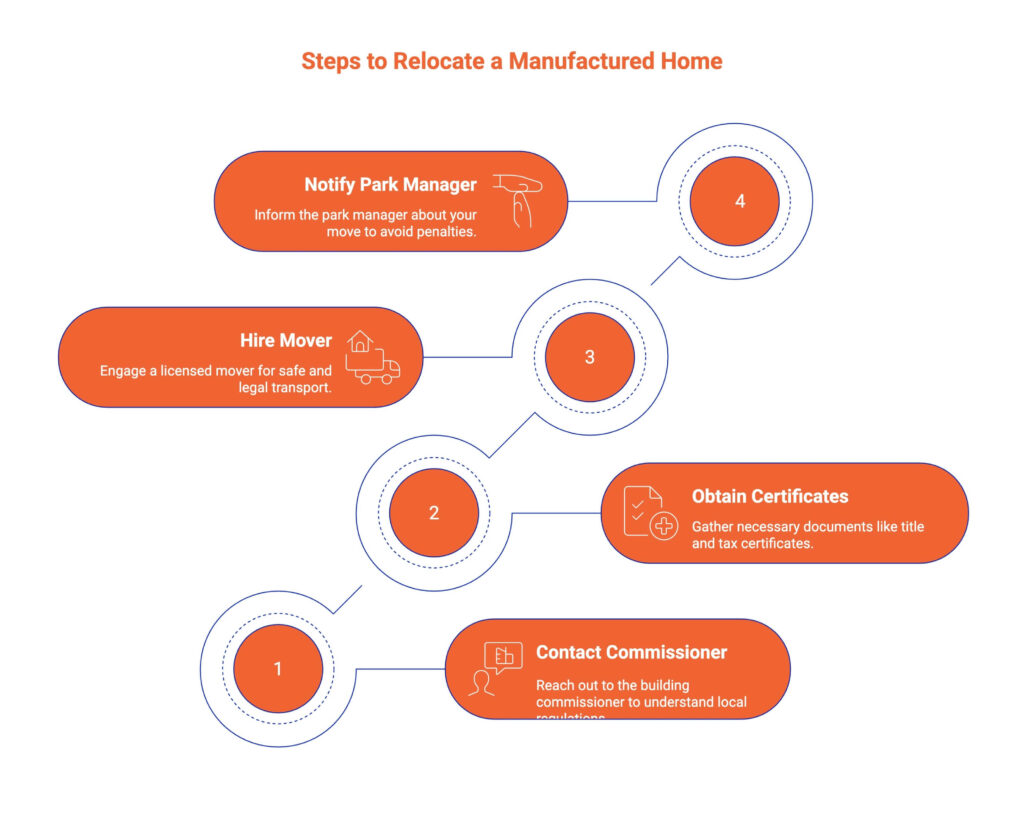
Relocating a manufactured home can feel overwhelming at first, but with the right plan, it’s a straightforward process. The key is to start early, stay organized, and work closely with the right professionals. From permits to movers, every detail matters in ensuring a smooth and legal move.
Step 1: Contact the Building Commissioner in Your New Town
Before you move, reach out to the building commissioner or zoning department in your new area. They’ll explain local regulations, including age limits, code requirements, and zoning restrictions that could affect your relocation.
This step is crucial; it determines whether your home can legally be placed in that area. They’ll also outline the required inspections after arrival, covering your home’s foundation, utility hookups, and structural safety.
By gathering this information early, you’ll avoid costly surprises and wasted effort. A quick call now can save weeks of delays later.
Step 2: Get Your Title and County Treasurer Certificates
You’ll need two key documents before applying for a moving permit:
- Title Certificate: Proof that you legally own your manufactured home, issued by your state’s DMV.
- County Treasurer Certificate: Proof that all property taxes have been paid in full.
Without these, you won’t get a permit or be allowed to move your home at all. Make sure to clear any tax dues and store your paperwork safely. Having everything ready upfront helps speed up approvals.
Step 3: Hire a Licensed Manufactured Home Mover
Moving a manufactured home isn’t something you can DIY; it’s the law. You must hire a licensed, bonded, and insured mover who specializes in these types of relocations.
These professionals are registered with the Federal Motor Carrier Safety Administration (FMCSA) and understand the logistics, route planning, and safety standards required. Most will ask to see your moving permit before confirming the job.
When choosing a mover, ask:
- Are you licensed and insured for manufactured home transport?
- Does your quote include services like disconnection, setup, or permits?
Hiring the right mover ensures your home is handled safely and legally from start to finish.
Step 4: Notify Your Current Park Manager
If your home is in a manufactured home park, let the park manager know about your move well in advance. Review your lot rental agreement, which typically requires at least 30 days’ written notice before vacating.
Your lease will also explain how your security deposit works, what repairs are needed for a full refund, and how long the park has to return it.
Following park rules helps you avoid penalties or withheld deposits. A courteous and clear notice also ensures you leave on good terms before the movers arrive.
How Much Does It Cost to Move a Manufactured Home?
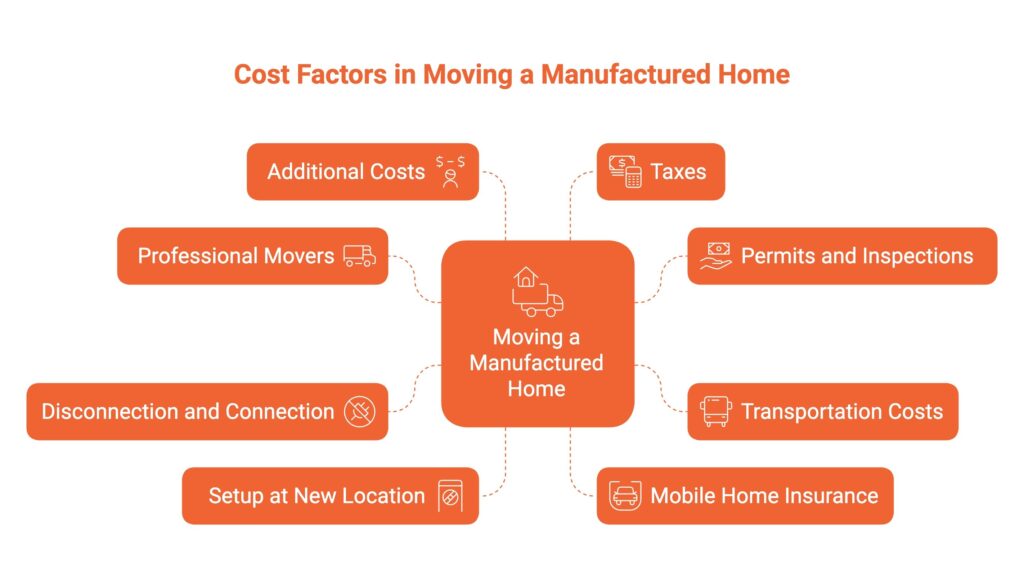
The cost of moving a manufactured home can vary a lot, but it’s still far more affordable than buying a new one. The total expense depends on your home’s size, distance traveled, and the services you need from professional movers.
For a move within 50 miles, you can expect to spend between $5,000 and $13,000. Older homes may cost more due to required repairs or code updates before relocation. Here’s a quick estimate of what you might pay for short-distance moves:
| Home Type | Estimated Cost (Under 50 Miles) |
|---|---|
| Single-Wide | $5,000 – $8,000 |
| Double-Wide | $10,000 – $13,000 |
1. Professional Movers
This will likely be your biggest expense. Costs depend on whether you choose a transport-only service or a full-service move that includes disconnecting, transporting, and reconnecting your home.
- Transport-only: $700 – $3,500
- Full-service: $3,000 – $14,000+
Local moves are cheaper than long-distance ones. For example, a single-wide home moved up to 60 miles might cost $3,000–$5,000, while a double-wide could cost $4,000–$10,000.
To get the best deal, compare quotes from licensed movers and confirm what’s included, so there are no hidden fees later.
2. Permits and Inspections
Permits and inspections are non-negotiable. You’ll need a moving permit from your county and possibly extra permits if crossing state lines. Expect to spend a few hundred dollars here.
Older homes often require structural inspections before the move and utility inspections after setup. These ensure your home is safe for transport and compliant with new local codes.
It’s smart to budget separately for these administrative costs to avoid delays or reapplications.
3. Transportation Costs
Transportation costs depend mainly on distance, home size, and route conditions. A single-wide home travels on one trailer, but a double- or triple-wide must be split into sections, which increases costs and complexity.
Certain routes may require escort vehicles or special permits for oversized loads. Ask your mover to explain how your total transportation cost is calculated; it’s often where surprise fees hide.
4. Disconnection and Connection
Before your move, all utilities, electricity, water, sewer, and gas must be safely disconnected. This must be done by licensed professionals or included in your mover’s full-service package.
You’ll also need experts to reconnect everything at your new location. Always confirm whether these services are part of your quote or require separate arrangements. Improper disconnections can cause safety risks or fines.
5. Setup at the New Location
When your home arrives, it needs to be properly installed, leveled, and secured on its new foundation. Setup typically costs $3,000–$4,000, depending on the site and home size.
If you’re moving into a manufactured home park, check their specific setup requirements; many have rules about foundations, skirting, and exterior appearance. A professional setup ensures your home passes inspection and remains safe long-term.
6. Mobile Home Insurance
Insurance is essential protection during a move. Movers carry basic liability coverage, but it might not cover your entire home value. Consider adding temporary relocation insurance for peace of mind.
Older homes may have higher premiums since insurers view them as higher-risk. Speak with your agent in advance to confirm what’s covered and fill any gaps before moving day.
7. Additional Costs
Don’t forget the extras. You’ll need to move furniture and personal items separately, since homes must be empty for transport.
Other common add-ons include:
- Temporary storage fees if your new site isn’t ready.
- Repair costs before or after transport.
- Removal or transport of additions like decks or sheds.
Set aside a contingency fund to cover these surprises; it’s one of the best ways to prevent budget stress.
8. Taxes
Taxes can’t be overlooked. Before you move, all property taxes must be paid in full to get a moving permit. After relocation, you’ll need to register your home with the new county’s tax office, which may have different rates.
Ignoring these steps can result in legal issues or fines later. Keeping your tax paperwork up to date helps ensure a smooth, stress-free move.
Ready To Finally Let Go of That Old Mobile Home?
We know how stressful it feels when your mobile home becomes more of a burden than a home. Repairs keep piling up, buyers keep backing out, and park rules or moving restrictions make selling seem impossible.
At California Mobile Home Buyer, we make things simple. We buy mobile homes as-is, in any condition, and handle the paperwork, taxes, and title issues so you don’t have to. You get a fast cash offer, no agent fees, and no waiting.
If your mobile home feels like it’s holding you back, we can help you move forward.
Get a fair cash offer today and skip the stress of repairs, listings, or endless delays.
Conclusion
Moving a manufactured home isn’t cheap or simple, but with the right planning, it’s absolutely doable. Understanding every cost, from permits and movers to setup and insurance, helps you budget smartly and avoid unexpected setbacks.
Before you start, get multiple quotes, confirm all paperwork, and make sure your home meets local codes. A little preparation now can save thousands later. When handled correctly, relocating your manufactured home can be a smooth, legal, and cost-efficient way to start your next chapter without giving up the home you love.
Frequently Asked Questions
How do laws about moving older mobile homes vary by state?
Age limit on moving mobile homes laws differ by state and county. Some require inspections, movement permits, and proof of tax payments. Local codes and zoning rules may restrict relocating older or non-HUD homes, especially those built before 1976.
Can a mobile home that is over 20 years old still be moved?
If it’s structurally sound and meets local codes, then yes. Homes built after 1976 are usually eligible, but older ones may face stricter inspection and permit requirements before being approved for relocation.
What are the main restrictions on moving older manufactured homes?
Restrictions include failing to meet HUD standards, poor structural condition, or local zoning bans. Pre-1976 homes are hardest to move since most jurisdictions don’t allow relocation unless major upgrades are made.
What factors determine if my mobile home is too old to relocate?
Condition, build year, and code compliance determine eligibility. If the structure, wiring, or foundation can’t meet modern safety standards, the home may be considered too old to relocate.
Are mobile home parks allowed to refuse older homes when moving them in?
Parks can set their own rules. Many refuse older homes that don’t meet their community’s standards for age, appearance, or construction quality, even if local laws allow relocation.
Do moving companies have their own age rules for transporting mobile homes?
Many movers decline homes they consider too old or unsafe to transport. They may require inspections or refuse moves that risk damaging the structure during relocation.
What inspections are required before moving an older mobile home?
Common inspections include structural, electrical, and plumbing checks. Officials ensure the home can handle transport safely and meets HUD or local building codes before issuing a moving permit.
Does moving a mobile home over a certain age require updates or modifications?
Older homes may need structural reinforcement, electrical or plumbing upgrades, or added wind-load protection to meet current safety and building standards before relocation is approved.
Are there cost differences when moving a newer versus an older mobile home?
Older homes often require repairs, inspections, or updates, increasing costs. Newer homes that already meet HUD standards usually move for less and face fewer compliance expenses.
Has anyone successfully moved a pre-HUD mobile home?
Moving pre-1976 homes is difficult due to outdated construction and noncompliance with HUD codes. Some moves succeed only after extensive reinforcement and approval from local authorities.