

| TL;DR Mobile homes older than 15–20 years face higher maintenance costs and reduced resale value. Homes built before June 15, 1976 (pre-HUD) often lack safety standards and are difficult to insure or finance. Post-1976 HUD-compliant homes typically last 30–55 years with proper upkeep. Pre-1976 homes average 15–30 years and often require costly upgrades to stay livable. Signs of aging include sagging floors, roof leaks, bowing walls, cracks around doors/windows, marriage line separation (in double-wides), and rusted support beams. Old wiring, leaky plumbing, inefficient HVAC units, aging water heaters, and poor insulation/ventilation all signal a mobile home may be past its prime. A 20-year-old home may be worth $15K–$30K, but by 30 years, most drop to $5K–$15K unless significantly updated, sometimes valued only for scrap or the land it’s on. |
|---|
Mobile homes can offer affordable, flexible living, but unlike traditional houses, they do come with a ticking clock. From outdated construction standards to hidden wear-and-tear, there comes a point when repairs just won’t cut it. But how do you know when is a mobile home too old? Whether you’re living in an older unit, considering a purchase, or trying to sell, understanding the red flags of an aging mobile home is crucial. In this blog post, we’ll walk you through the key signs that you need to watch out for.
What Is Considered “Old” for a Mobile Home?
In the mobile home world, age isn’t just a number, it can impact everything from safety and insurance to how fast you can sell the mobile home. But what exactly counts as “old” when it comes to a mobile home? Generally speaking, any mobile home that’s more than 15 to 20 years old is considered “old” by industry standards. However, there are a few key milestones to consider:
- 15+ Years: At this stage, major components like the roof, plumbing, HVAC, and insulation often start to wear out. Maintenance becomes more frequent and more expensive.
- 20+ Years: Many lenders and insurance companies start to back away from homes in this range unless they’ve been significantly updated. Value tends to drop steeply.
- 1976 or Older: This is the big cutoff. Homes built before June 15, 1976, were not required to meet the HUD (U.S. Department of Housing and Urban Development) code for manufactured housing. These pre-HUD homes are not considered compliant with modern safety standards and are often ineligible for financing or relocation.
So while a mobile home may still be standing after 30 or even 40 years, it’s essential to weigh its structural integrity, code compliance, and upgrade history before calling it a long-term asset. Age alone doesn’t always spell the end, but it’s a big part of the story.
What is the Average Life of a Mobile Home?
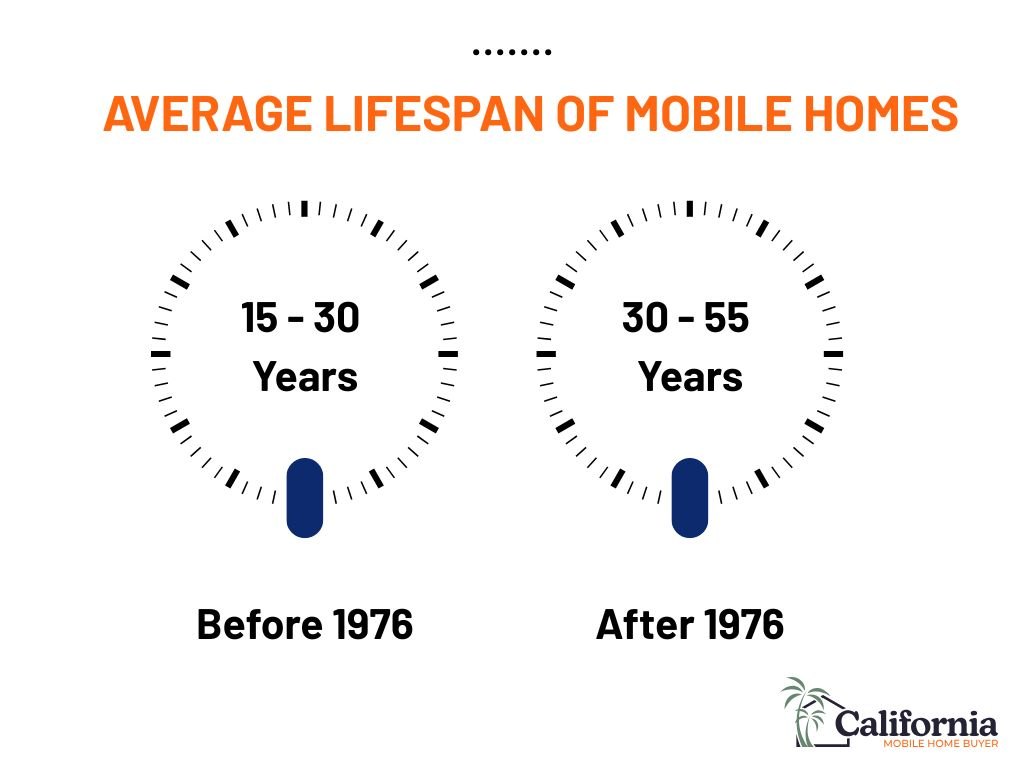
If you are planning to sell an old mobile home, you need to first understand its average lifespan. Traditional site-built homes have an average lifespan of 70 to 100 years or more. The lifespan of a mobile home is lower than this and can vary greatly depending on when it was built, how it was maintained, and how it was installed. Here’s a breakdown based on construction date and how mobile homes compare to traditional site-built homes:
What is the Average Life of Pre-1976 Mobile Homes?
Mobile homes built before June 15, 1976, are considered pre-HUD code homes. This means they were constructed without federal standards for safety, durability, or energy efficiency. As a result:
- Their average lifespan is 15 to 30 years.
- They often lack proper insulation, structural reinforcements, and fire safety features.
- Many are no longer insurable or eligible for financing.
- Repairing or upgrading them can be more costly than their value.
In most cases, these homes are considered at or beyond the end of their usable life unless fully renovated.
What is the Average Life of Post-1976 Mobile Homes (HUD-Compliant)?
Homes built after June 15, 1976, follow the HUD Manufactured Home Construction and Safety Standards, which significantly improved construction quality. These newer models are built for long term use. As a result:
- Their average lifespan is 30 to 55 years.
- Homes that receive regular maintenance, such as roof resealing, moisture control, and HVAC servicing, can remain livable well beyond 40 years.
- Placement on a permanent foundation and protection from extreme climates also extends longevity.
- Manufactured homes built in the 1990s and beyond are often more durable, with modern materials and better insulation.
What are the Structural Warning Signs of an Aging Mobile Home?
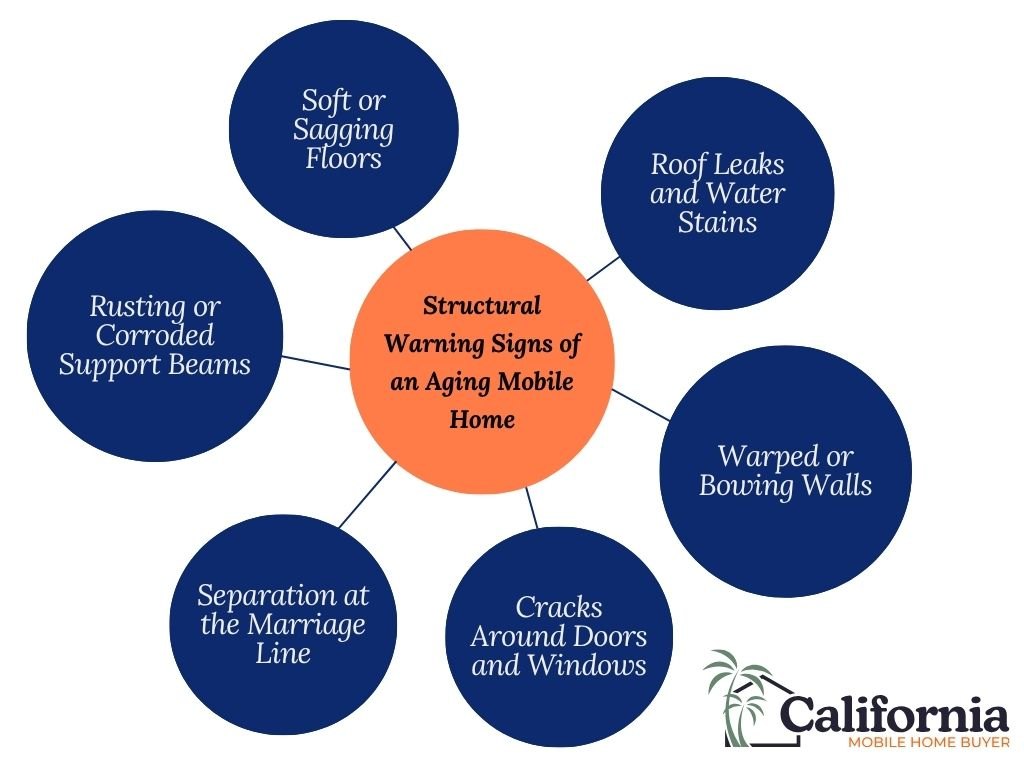
As mobile homes age, their structural integrity can begin to deteriorate, especially if they haven’t been consistently maintained. Spotting the warning signs early can help you avoid costly repairs, safety hazards, or even a complete loss of value when you plan to sell the mobile home. Here are the most common red flags to watch for:
1. Soft or Sagging Floors
One of the most noticeable issues in aging mobile homes is soft spots in the flooring, often near bathrooms, kitchens, or laundry areas, where water damage is likely. This could indicate rot, mold, or subfloor deterioration, and may require major repairs.
2. Roof Leaks and Water Stains
Water stains on ceilings or walls are a clear sign that the roof may be failing. Older mobile homes, especially those with metal or flat roofs, are prone to leaks, rust, and poor drainage. Unaddressed, this can lead to insulation damage and mold growth.
3. Warped or Bowing Walls
Walls that appear uneven, wavy, or bulging could indicate foundation shifting, water infiltration, or deteriorating wall studs. This may also signal deeper issues with the home’s structural frame.
4. Cracks Around Doors and Windows
If doors or windows suddenly stop closing properly or show visible gaps or cracks, it might be more than just normal settling. It could suggest frame warping, shifting piers, or foundational instability, all serious structural concerns.
5. Separation at the Marriage Line
In double-wide homes, the seam where the two halves are joined is called the marriage line. Over time, this line can separate if the foundation shifts or the home’s structure weakens, leading to uneven floors and ceiling cracks.
6. Rusting or Corroded Support Beams
Inspect the underside of your mobile home for rusted metal frames, corroded piers, or weakened support beams. These can compromise the entire home’s stability, especially in humid or coastal areas.
What are the Mechanical and System Red Flags of an Aging Mobile Home?
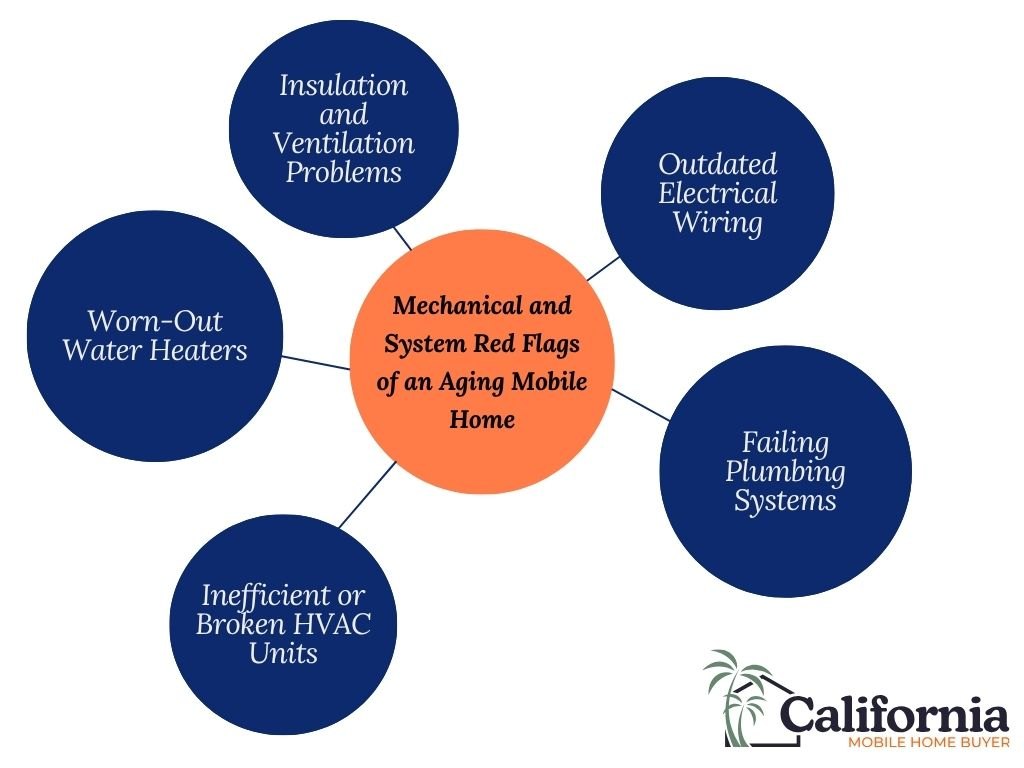
Beyond structural issues, aging mobile homes can also develop serious problems in their plumbing, electrical, HVAC, and insulation systems. These components are vital to safety, comfort, and livability, and when they begin to fail, repairs can be both costly and urgent. Here are the most common mechanical and system red flags to watch for:
1. Outdated Electrical Wiring
Older mobile homes, especially those built before the 1980s, may still use aluminum wiring or older circuit panels, both of which can pose a fire hazard. If you notice flickering lights, outlets that are warm to the touch, buzzing sounds, or frequent tripping of breakers, your electrical system may be overloaded or deteriorating. These signs often indicate that the home’s wiring is no longer safe or up to modern standards.
2. Failing Plumbing Systems
Mobile homes typically use plastic piping, and in older units, polybutylene was a common material, which is now known to crack and leak over time. Signs of plumbing problems include low water pressure, discolored or rusty water, and recurring leaks. You may also notice water damage under sinks or around the base of fixtures. These issues are not just inconvenient; they can lead to mold and structural damage if ignored.
3. Inefficient or Broken HVAC Units
Heating and cooling systems in mobile homes often have a shorter lifespan and may begin to operate inefficiently after 10 to 15 years. Weak airflow, unusual noises, inconsistent temperatures, or a spike in energy bills can all point to an HVAC system that’s on its last legs. In some cases, it’s not just the furnace or AC that’s the issue. Ductwork in mobile homes can separate or degrade, leading to poor airflow and energy waste.
4. Worn-Out Water Heaters
Water heaters in mobile homes are usually smaller and more exposed than those in traditional homes, and they tend to wear out faster. If your hot water is inconsistent or you hear rumbling sounds from the tank, you could be dealing with sediment buildup or corrosion. Leaks around the base are another clear sign that the water heater is close to failing.
5. Insulation and Ventilation Problems
Many older mobile homes were built with minimal insulation and poor ventilation systems. Over time, this leads to uncomfortable indoor temperatures, high utility bills, and moisture issues. You may find the home feels drafty in winter and stifling in summer, with condensation forming on windows or walls. Poor ventilation also increases the risk of mold and mildew, especially in bathrooms and kitchens.
What is the Average Value of an Old Mobile Home?
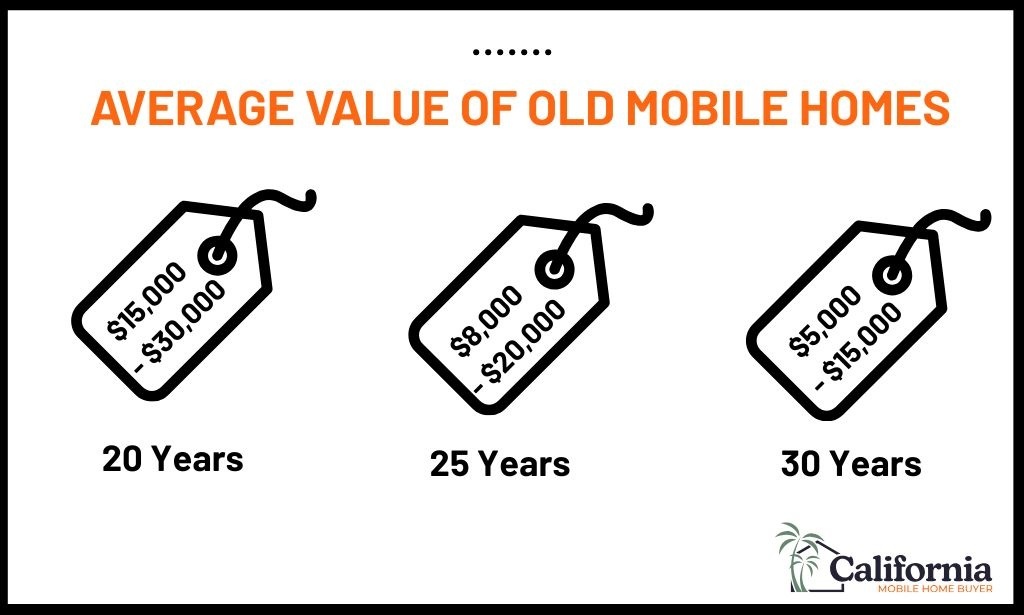
On average, a used or older mobile home in the U.S. may be worth anywhere from $5,000 to $30,000. Homes in poor condition or built before modern HUD standards (pre-1976) can sell for as little as $1,000 to $5,000, sometimes even just for scrap or salvage value. On the other hand, well-maintained homes built after 1976 and upgraded over the years can fetch closer to $25,000–$40,000, especially in high-demand areas. Here is the typical worth of a mobile home after 20,25, and 30 years:
What is the Value of 20 Year Old Mobile Home?
A 20-year-old mobile home, especially one built after 2000 under HUD guidelines, still holds some market value, typically $15,000 to $30,000, depending on size and condition. If it’s been well-maintained, updated, or placed on a permanent foundation, the price may be on the higher end. However, buyers will still factor in depreciation, potential repair costs, and difficulty obtaining financing.
What is the Value of 25 Year Old Mobile Home?
At 25 years old, most mobile homes have experienced noticeable wear and may start to fall below modern expectations for energy efficiency or design. Prices typically drop to around $8,000 to $20,000. The actual value depends heavily on upkeep. A home with original plumbing, HVAC, or roofing may require significant investment to remain livable or insurable, which can further reduce its appeal.
What is the Value of 30 Year Old Mobile Home?
Once a mobile home hits 30 years, its resale value typically falls to $5,000 to $15,000, with many selling closer to the lower end, particularly if updates have not been made. These homes may have outdated wiring, failing insulation, and aging structural components. In some cases, the mobile home itself may hold little value, and the land (if included) becomes the more attractive part of the sale.
How to Sell an Old Mobile Home with California Mobile Home Buyer?
If you’re looking to sell your old mobile home quickly in California, California Mobile Home Buyer is a trusted, hassle-free option. We buy mobile homes in any condition, with no agent fees, no repairs, and no long waits. Whether your home is 20 or 40 years old, we will make a fair cash offer and handle all the paperwork, often closing in as little as 7 days. It’s the fastest way to move on without the headaches of traditional sales. So, if you own an old mobile home in California, what are you waiting for? Grab your cash offer now.
Conclusion
If you own an old mobile home, look out for big warning signs, like the body of your mobile home getting worse or the systems being old. If you see these, you can decide if you need to fix something or get a new one. It is also good to have regular checks and take care of things often. This helps your mobile home last more years. If your mobile home is getting old and there are too many problems, do not wait. Sell it hassle-free to California Mobile Home Buyer.
Frequently Asked Questions
Can you still insure or finance a very old mobile home?
Yes, you can get financing and insurance for an older manufactured home. To have the chance, your home should meet HUD code standards. If the home is in good shape, you may get good interest rates. But older homes may need you to work with lenders or insurers who know how to work with aged homes.
What upgrades can extend the life of an older mobile home?
Upgrading roofing, plumbing, and appliances in a mobile home can help it last much longer. If you add energy-efficient systems, it can lower your bills and be good for the home. When you fix or reinforce old skirting, you add more protection to it. Keeping up with weather-resistant features is another smart move. These steps help slow down depreciation and keep the home working well for many years.
How do I know if my mobile home is safe to live in?
To check safety, do an appraisal that looks at the foundation, the chassis, and if it follows the HUD code. It is good to regularly look for any water damage, electrical issues, or things that show aging. This helps keep the place safe to live in. If there is something you do not know or see a problem, you can talk to home dealers for help.
Are there legal restrictions on living in old mobile homes in the U.S.?
Some towns and cities have rules about where a mobile home can be if it was made before the HUD code started. There are also zoning laws that stop some kinds of homes from being in some mobile home parks.
Is it worth renovating an old mobile home or should I replace it?
The choice to fix or swap your home depends on the cost, how much work is needed, and the resale value. If your house has lost a lot of value, it could be better to put your money into a new manufactured home and sell the old mobile home for a fair value to California Mobile Home Buyer. But, if the fixes and upgrades do not cost a lot, fixing up your old place might make it worth more when you want to sell.