

Key Highlights
- The affordability of mobile homes stems from factory-built construction and mass production, which significantly lower labor and material costs.
- With an average cost of around $120,000, they are a fraction of the price of site-built homes.
- Smaller sizes and efficient designs lead to minimal maintenance and lower utility bills.
- Flexible placement options, such as in a mobile home park, reduce or eliminate high land costs.
- Simplified financing options are available, though they may differ from traditional mortgages.
If you’ve been house hunting lately, you’ve probably felt it, the frustration of seeing home prices climb higher every month while your dream of owning one drifts further away. You scroll through listings that look promising until you see the price tag. Even fixer-uppers cost more than you ever imagined, and saving for a down payment feels like chasing a moving target.
It’s discouraging, especially when all you want is a place to call your own.
Then, you stumble across something different, mobile homes priced at a fraction of what traditional houses cost. You pause and wonder, What’s the catch? How can they be so affordable when everything else seems impossibly expensive?
That’s a fair question, and the truth might surprise you. Mobile homes aren’t “cheap” because they cut corners; they’re affordable because they follow a smarter, more efficient system of design, construction, and ownership.
Let’s dig into the real reasons behind their lower prices, and why this housing option might be one of the most practical paths to homeownership today.
What Factors Contribute To the Low Cost of Mobile Homes?
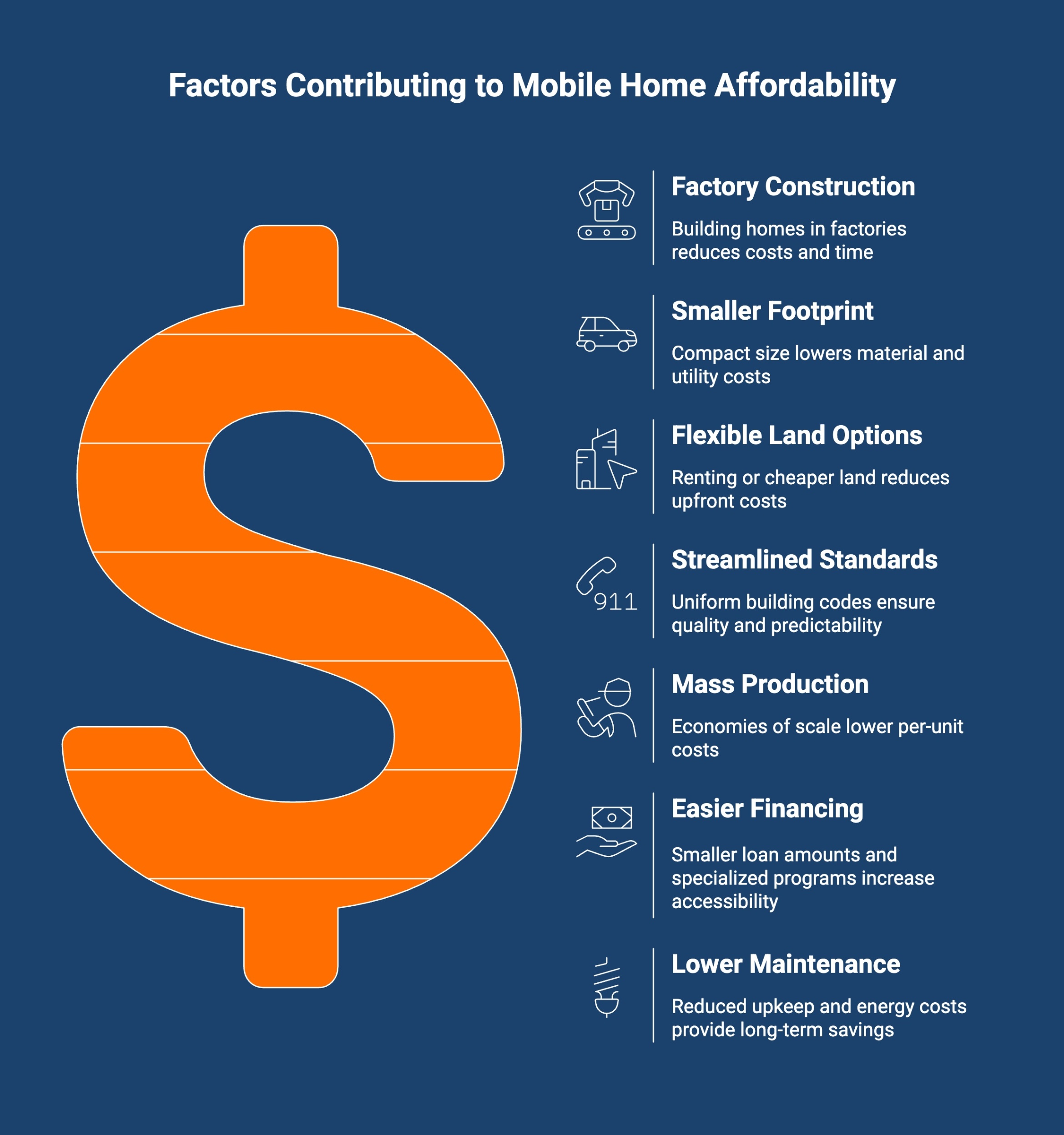
Mobile homes might seem like an unbelievable deal, and in many ways, they are. But there’s solid reasoning behind their lower resale value and price tag. These homes follow a completely different construction and cost model than traditional houses, allowing manufacturers and buyers to save at almost every stage. Let’s break down what makes this housing option one of the most cost-efficient paths to ownership today.
1. Factory Construction = Lower Cost & Faster Build Times
The single biggest reason mobile homes cost less is that they’re built in a factory and then transported to their final location. Instead of being exposed to weather delays and labor inefficiencies on a job site, these homes move through a precise, assembly-line process. This controlled environment keeps materials protected, timelines short, and costs predictable.
A factory-built mobile home can be completed in weeks, not months, and fewer on-site workers mean lower labor costs. Those savings get passed directly to you, turning a costly home build into a far more attainable investment.
2. Smaller Footprint, Smarter Space Design
Mobile homes prove that less can truly be more. Their compact size, often measured in square feet, keeps material costs down, but clever layouts make every inch count. Modern designs include open-concept living areas, built-in storage, and efficient floor plans that feel spacious and practical.
This smaller footprint pays off long after you move in; you’ll spend less on utilities, less on upkeep, and less time cleaning. For buyers on a budget, it’s a win for both your wallet and your lifestyle.
3. Flexible Land Options That Cut Huge Costs
Land is one of the biggest costs in traditional homeownership, and mobile homes give you flexibility that instantly reduces it. Instead of buying expensive land, many homeowners rent a lot in a mobile home community, saving tens of thousands upfront.
Even if you choose to buy land, rural plots or smaller lots typically cost far less than suburban parcels. Add in lower property taxes (or none at all if you lease), and you have one of the most powerful affordability advantages mobile homes offer.
It’s a housing option that adapts to your budget, not the other way around.
4. Streamlined Building Standards That Keep Prices Predictable
All manufactured homes built after 1976 must meet federal HUD Code standards. This means every home across the country follows one consistent set of safety and quality rules, covering everything from structure and wiring to plumbing and fire protection.
This nationwide standard helps manufacturers avoid the maze of local building codes that can slow down construction and raise costs. By streamlining materials, designs, and compliance, builders can produce high-quality homes more efficiently and pass those savings directly to you.
5. Mass Production = Major Savings
Here’s where economics meets efficiency. Mobile home builders produce thousands of units using standardized parts and designs, allowing them to buy materials like lumber, insulation, and fixtures in bulk. That’s the power of economies of scale, and it translates to serious cost savings.
Just like a big-box store can sell at lower prices because it buys in large volumes, manufacturers cut per-unit costs by producing homes at scale. The result? A brand-new home that’s high in value but low in price, especially appealing for first-time buyers.
6. Easier Financing With Smaller Loan Amounts
Mobile homes don’t just cost less; they’re easier to finance, too. Since loan amounts are smaller, many buyers qualify more easily than they would for a traditional mortgage. You’ll find several loan types designed specifically for manufactured homes, including government-backed options like FHA Title I and II loans.
Chattel loans (for homes on leased land) and specialized programs from Fannie Mae or Freddie Mac can also make ownership accessible. While rates may vary, the lower principal and flexible loan terms often keep monthly payments manageable for most buyers.
7. Lower Maintenance, Lower Bills, Lower Stress
The financial benefits of mobile homes don’t stop at the purchase. Because they’re smaller and newly built, these homes require less maintenance and fewer repairs. Think fewer roof leaks, faster cleanups, and a lot less to worry about.
Energy efficiency also comes standard. Modern mobile homes follow strict HUD insulation and construction standards, which means lower energy use and lower utility bills month after month.
It’s a combination of affordability and simplicity that keeps costs down long after you move in.
For anyone feeling stuck between high mortgage rates and rising rents, that kind of freedom can be life-changing. A mobile home isn’t just a cheaper way to live, it’s a smarter way to own.
What Are The Key Differences Between Mobile Homes and Traditional Houses?
If you’ve ever watched a house being built from the ground up, you know how long and expensive the process can be. Months of waiting. Weather delays. Endless crews coming and going. By the time you finally walk through the front door, the stress and costs have often doubled.
Mobile homes, on the other hand, turn that process completely on its head. Instead of being built piece by piece under the open sky, they’re constructed inside a controlled factory environment, where everything runs on precision and efficiency. No weather setbacks. No scattered materials. No guesswork.
That single difference, how and where they’re built, changes everything: the price, the timeline, the upkeep, and even the way they’re financed.
To see just how different they are, here’s a clear comparison of mobile (manufactured) homes vs. traditional site-built houses across key features:
| Feature | Mobile (Manufactured) Home | Traditional Site-Built Home |
|---|---|---|
| Building Location | Constructed entirely in a factory under controlled conditions. | Built directly on the homeowner’s land or lot. |
| Construction Time | Typically completed within a few weeks to a couple of months. | Often takes several months to over a year to finish. |
| Weather Delays | None, an indoor building protects materials and schedule. | Common outdoor buildings are vulnerable to weather disruptions. |
| Construction Process | Streamlined, assembly-line production ensures efficiency and less waste. | Custom-built on-site, often requiring more time and labor. |
| Regulatory Standards | Must meet the national HUD Code for safety, durability, and energy efficiency. | Must comply with local and state building codes, which can vary widely. |
| Material Efficiency | Bulk purchasing and standardization reduce overall material costs. | Custom designs often require varied materials at higher costs. |
| Land Ownership | Can be placed on owned land or leased lots in mobile home communities. | Requires the purchase of land before construction begins. |
| Cost of Ownership | Significantly lower upfront costs and smaller ongoing expenses. | Higher construction, land, and maintenance costs overall. |
| Value Appreciation | May depreciate if not on owned land; appreciation improves on permanent foundations. | Typically appreciates over time, depending on market conditions. |
| Customization Options | Limited to factory models but still offers design flexibility and upgrades. | Fully customizable but more expensive and time-consuming. |
Curious how mobile homes compare to trailer parks? Check out our guide on the key differences between mobile homes and trailer parks and find out which one suits your lifestyle better.
Struggling to Sell Your Mobile Home Quickly and Fairly?
Selling a mobile home can feel overwhelming, with endless listings, repairs, and waiting for buyers who never commit. For many homeowners, time and uncertainty are the biggest hurdles. You want a fair deal, but you don’t have months to wait or extra cash to spend fixing up your home.
That’s where California Mobile Home Buyer makes things simple. We help homeowners across California sell their mobile homes as-is, without hidden fees, realtor commissions, or long delays. Whether your home needs repairs, is in a park, or you just want to move fast, we make the process stress-free and transparent.
Why Homeowners Choose Us:
- Fast Cash Offers: Get a fair, no-obligation offer within 24 hours.
- No Repairs Needed: We buy homes in any condition, no cleanup or remodeling required.
- No Fees or Commissions: What we offer is what you get. No deductions or hidden charges.
- Flexible Closings: Pick a move-out date that works best for you, even in as little as 5 days.
- Statewide Expertise: From San Diego to Sacramento, we handle mobile home sales across California with professionalism and care.
If you’re ready to move forward without the stress of traditional listings, we’re here to help.
Get your free cash offer today at calimobilehomebuyer.com, no pressure, no repairs, just a fast, fair way to sell your mobile home.
Conclusion
Mobile homes prove that owning a home doesn’t have to drain your savings or feel out of reach. Their affordability comes from smart construction, which uses less material, efficient design, and flexible ownership options, not from cutting corners. Whether you’re drawn to the lower price, quicker move-in time, or simpler maintenance, mobile homes offer a practical path to homeownership in today’s tough housing market.
If you’ve been waiting for the right moment to take that first step toward owning your own place, this could be it. Explore your options, compare communities, and find a home that fits your lifestyle and budget.
The dream of homeownership doesn’t have to be distant; with the right approach, it can be your reality sooner than you think.
Frequently Asked Questions
How Is the Affordability of Manufactured Homes Achieved During Construction?
Factory-built efficiency explains why are manufactured homes so cheap. The controlled environment, bulk material purchases, and reduced labor help manufacturers build faster and more affordably than traditional site-built homes.
Do Mobile Homes Have Hidden Costs Despite Their Lower Price?
Yes, even though why are mobile homes so much cheaper upfront, owners may still face lot rent, insurance, and maintenance costs. Factoring in these ongoing expenses helps avoid surprises later.
Is a Mobile Home a Good Alternative to a Regular House for Saving Money?
Definitely. The efficient construction process and smaller size show why mobile manufactured homes so cheap while still offering comfort and savings on utilities, taxes, and upkeep.
Are Mobile Homes a Smart Choice for Affordable Housing?
Yes, flexible placement and energy-efficient designs explain why are double wide mobile homes so cheap yet practical for families looking for budget-friendly, comfortable living.
What Makes Manufactured Homes an Attractive Option for First-Time Buyers?
Low entry costs, quick move-in times, and customization options highlight why are manufactured homes so much cheaper, giving first-time buyers a realistic and stress-free path to homeownership.
What Is Wrong With Buying a Manufactured/Mobile Home?
While affordability is a major plus, these homes may depreciate faster or have limited financing options if not placed on owned land, factors to weigh before buying.
People of LA – What’s Your Take on Owning a Mobile Home?
In high-cost regions like Los Angeles, many see mobile homes as an affordable way to own property without the massive financial strain of traditional real estate.
Why Do Manufactured Homes Depreciate?
They often lose value because they’re treated as personal property instead of real estate, even though why are manufactured homes so much cheaper to buy and maintain than site-built houses.