

Thinking of selling your mobile home in California but unsure what price to expect? You’re not the only one asking, How much can I sell my mobile home for? It’s a big question, and getting the answer right can make all the difference in how fast you sell and how much you walk away with.
Whether you’re planning your next move or just curious about your home’s value, knowing where to start can feel overwhelming. The good news? You’re in the right place.
In this guide, we’ll break it all down in simple, no-fluff terms so you can stop guessing and start planning. Let’s help you feel confident, informed, and ready to sell your mobile home the smart way.
The Price Tag Breakdown: What Affects Your Mobile Home’s Value
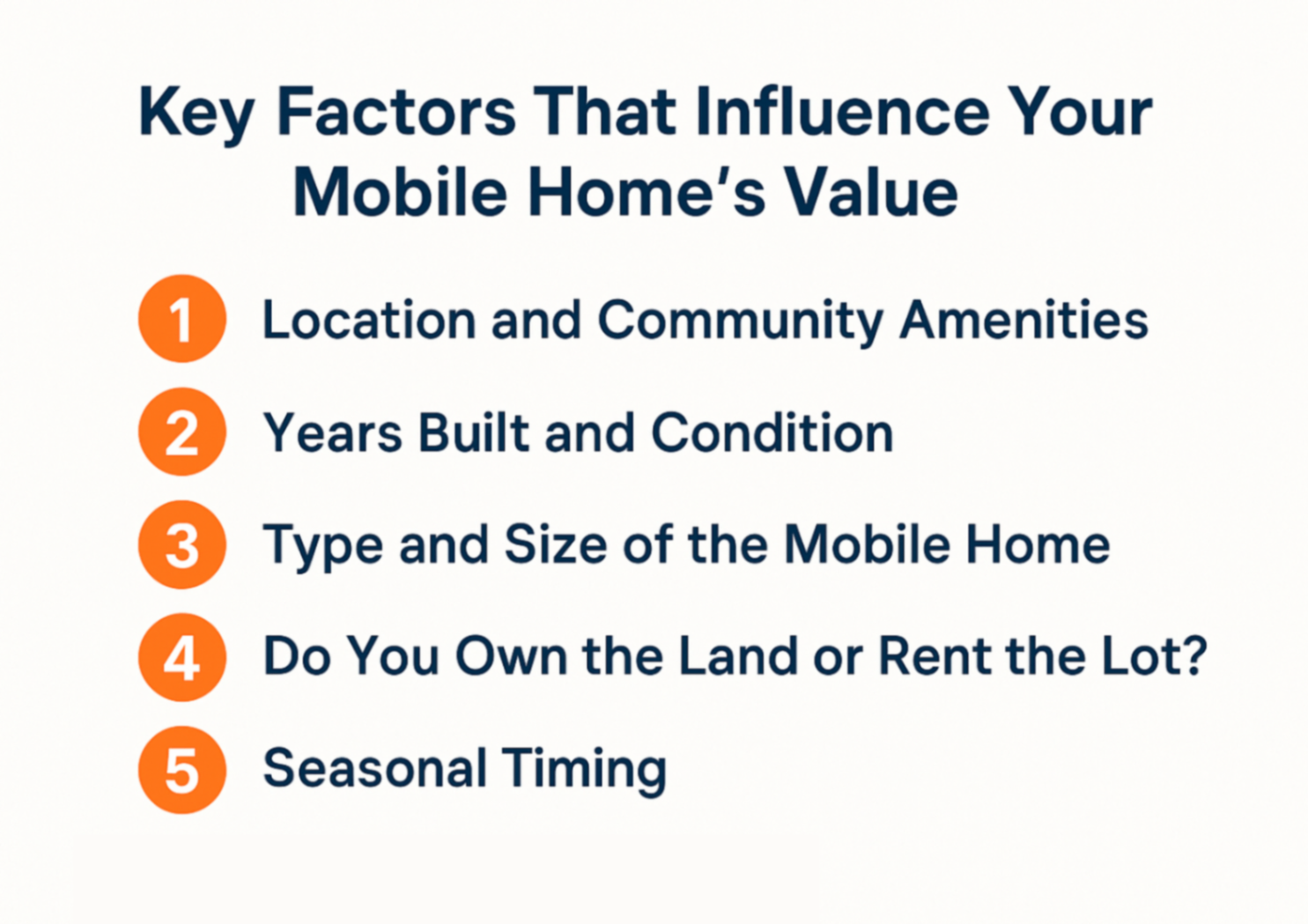
So, how much should I sell my mobile home for? The answer isn’t one-size-fits-all. Your final price tag depends on a mix of key factors that influence what buyers are willing to pay.
From where your home is located to whether you own the land beneath it, each detail plays a role in shaping your home’s market value. Let’s break down the most important ones so you can price your home with confidence.
1. Location and Community Amenities
Where your mobile home sits can make or break its value. Homes in high-demand cities like San Francisco, Los Angeles, or San Diego often sell for far more than those in quieter, rural areas. Everything from local demand and school quality to nearby job opportunities and the overall condition of the mobile home park can significantly influence your home’s value.
Plus, park fees and amenities, like pools or gated access, can either boost appeal or turn buyers away. In real estate, location isn’t just important, it’s everything.
2. Years Built and Condition
Age isn’t just a number when it comes to mobile homes. Homes built after 1976 meet HUD safety standards, making them more desirable and more valuable.
But it’s not just about the year; condition counts, too. Updated interiors, solid roofing, functional plumbing, and a working HVAC system can significantly boost your selling price. A clean, well-maintained, move-in-ready home attracts more serious buyers and faster offers.
3. Type and Size of the Mobile Home
When it comes to how much do mobile homes sell for, size and layout play a major role. In general, the larger the home, the higher the potential selling price. Here’s a quick look at typical California price ranges:
- Single-wide: $35,000 – $55,000
- Double-wide: $60,000 – $90,000
- Triple-wide: $90,000 – $140,000+
Spacious homes with open floor plans and multiple bedrooms are more attractive to buyers, especially families. So if your mobile home offers room to spread out, it could mean more money in your pocket.
4. Do You Own the Land or Rent the Lot?
One of the biggest factors in determining how much can you sell a mobile home for is whether you own the land beneath it. As per studies by The National Association of REALTORS, homes sold with land are considered real property and often sell for a higher price than those in leased-lot communities.
Buyers see land ownership as a long-term investment, with no monthly park fees or management restrictions. But if your mobile home is in a park, the buyer must usually get approved by park management, which can create delays or narrow your pool of interested buyers. While park-based homes can still sell well, owning the land gives you a major edge in both price and flexibility.
5. Seasonal Timing
Believe it or not, when you list your mobile home can impact how much you sell it for. Spring and early summer tend to attract more buyers, thanks to better weather, school breaks, and moving flexibility. Homes listed during these peak seasons often receive more attention and better offers.
On the flip side, winter months typically see slower activity and lower offers. If you’re wondering how much can I sell my mobile home for, timing the market right could mean the difference between a quick sale and months of waiting.
Now that you know what affects your home’s value, let’s look at how you can estimate what it’s actually worth in today’s market.
How to Estimate Your Mobile Home’s Worth?
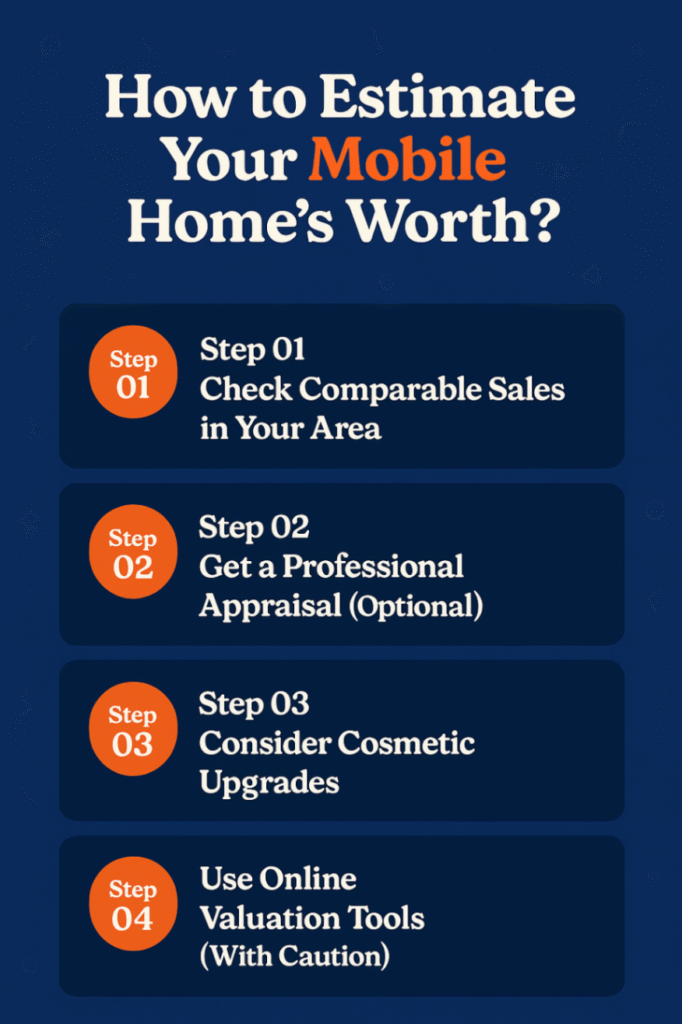
Not sure what your mobile home is really worth? Estimating its value takes more than a guess. From checking local sales to making strategic upgrades, a few smart steps can give you a clearer picture of its true market value, so you can price it confidently and attract serious buyers.
Step 01: Check Comparable Sales in Your Area
Investigating comparable sales is a practical starting point for estimating your mobile home’s value. It involves researching prices of recently sold homes that closely match your mobile home’s characteristics, including size, age, and location. Here’s how:
- Review Local Listings: Browse listings or databases for mobile homes sold in your community or within a five-mile radius to get a sense of recent sale prices.
- Take Note of Key Property Details: Record important information like the year built, layout, square footage, and nearby amenities that could impact value.
- Find Comparable Features: Look for homes with similar specifications, such as number of bedrooms, bathrooms, and upgrades like remodeled kitchens or new flooring.
- Consider Current Market Conditions: Take into account the real estate climate in your area. Are homes selling quickly? Are prices rising or cooling off?
Pay special attention to homes listed as personal property versus those with land, as this crucial distinction can hugely impact pricing outcomes in the mobile home market.
Step 02: Get a Professional Appraisal (Optional)
Even though getting a professional appraisal is optional, it can be a smart move, especially if you’re serious about pricing your mobile home accurately and competitively. Here’s why it might be worth the investment:
- Objective Value Assessment: A licensed appraiser considers your home’s condition, upgrades, and recent comparable sales in the area.
- Stronger Negotiation Power: An official appraisal sets realistic expectations and gives you data to back up your asking price.
- Boosts Credibility: Particularly useful if financing is involved, an appraisal shows buyers you’re serious and transparent.
- Market-Backed Insights: Appraisers factor in current real estate trends, giving you a clear picture of where your home stands.
Step 03: Consider Cosmetic Upgrades
Enhancing your mobile home’s aesthetic appeal can significantly elevate its market value. Simple cosmetic upgrades attract buyers who prioritize homes in good condition. Here are some actionable tips:
- Apply a fresh coat of paint to interior walls for a revitalized look.
- Replace or repair older cabinets and flooring to modernize the space.
- Upgrade lighting fixtures and appliances for added buyer appeal.
- Pressure wash the exterior for improved curb appeal.
- Clean landscaping or add potted plants to elevate the exterior charm.
These adjustments don’t require substantial investment but make a lasting impression on prospective home buyers. By showcasing pristine condition and thoughtful upgrades, you set the stage for commanding top price offers in competitive real estate markets.
Step 04: Use Online Valuation Tools (With Caution)
Online home valuation tools can be a quick starting point. Use them carefully, especially when pricing a mobile home in California. Here’s what to keep in mind:
- Only Ballpark Estimates: These tools often rely on generic data and may not reflect your home’s true condition, upgrades, or location.
- Land vs. No Land: Many tools don’t clarify whether the value includes land ownership, which can dramatically skew the estimate.
- Missing Market Context: They typically overlook real-time local trends, buyer demand, or park-specific factors.
- Use as a Starting Point, Not a Final Answer: Always double-check results with a local expert or real estate agent familiar with manufactured homes.
Bottom line: Use online tools for quick reference, but don’t rely on them to set your final asking price.
Wondering how much you should sell your mobile home for?
Click here to start with a no-pressure consultation. Get a fair, local-market estimate and explore your selling options, fast, simple, and on your terms.
What’s the Best Way to Sell Your Mobile Home?
If speed, simplicity, and certainty top your priority list, selling directly to a cash buyer could be your smartest move. Unlike traditional sales that involve financing delays, buyer approvals, and negotiation headaches, cash sales streamline the entire process, getting you paid fast, with fewer complications.
Here’s why more homeowners are choosing to go the cash route:
- Close Fast: No waiting on mortgage approvals or drawn-out inspections. Cash sales can close in as little as 7 days.
- Sell As-Is: Skip the costly repairs or upgrades. Cash buyers purchase homes in any condition.
- No Agent Commissions: Keep more money in your pocket by avoiding realtor fees and hidden costs.
- No Showings or Open Houses: Enjoy a private, no-hassle sale without staging or walkthroughs.
- Fewer Contingencies: With no financing involved, cash deals are less likely to fall through.
If you’re looking for a reliable, fair, and local solution in California, California Mobile Home Buyer is ready to help. We specialize in fast, no-obligation offers that make selling your mobile home simple, whether it’s in a park or on private land.
Ready to skip the stress? Get your cash offer now and find out what your mobile home is worth today.
Also Read: Fast Cash Offers: Best Mobile Home Buyers San Marcos, CA
6 Tips to Maximize the Sale Price of Your Mobile Home

Looking to boost the value of your home before listing? With rising interest rates and evolving financing options, setting the right home price takes more than guesswork. Here are some expert tips that are a great starting point to help your mobile home stand out, attracting serious buyers and maximizing your final sale price.
1. Market the Land, Not Just the Home: If you own the land beneath your mobile home, make it a headline feature. Land ownership massively boosts value and appeals to buyers seeking long-term investment without park restrictions or monthly fees.
2. Lead with HUD Compliance (Post-1976 Builds): Homes built after 1976 follow federal HUD standards for safety and durability. Highlighting this compliance builds buyer trust and can position your home as a safer, more financeable option.
3. Stage for Success with Targeted Upgrades: You don’t need a full remodel, just smart tweaks. Focus on what buyers notice first: new paint, clean flooring, brighter lighting, and curb appeal. Small updates = big perceived value.
4. Sell the Lifestyle, Not Just the Home: Showcase nearby amenities like great school districts, walkable parks, or low park fees. In your listing, help buyers picture themselves not just in the home, but in the lifestyle it offers.
5. Time It Right for a Hot Market: Monitor local market trends and aim to list when inventory is low but buyer demand is high, typically in spring or early summer. A well-timed listing can attract multiple offers.
6. Let Data Drive Your Price: Don’t guess, use comparable local sales and a professional appraisal to justify your asking price. The more data you present to buyers, the more confident (and competitive) they’ll be.
Thinking About Selling Your Mobile Home in California?
Whether you’re ready to sell now or just exploring your options, working with someone who knows the local market can make all the difference. That’s where a trusted buyer like California Mobile Home Buyer comes in.
We’ve helped countless California homeowners navigate the selling process without the stress, delays, or hidden fees. If you want honest answers, fair offers, and a team that puts your needs first, we’re here to help.
No pressure. No listings. Just real help when you need it. Contact us today to get started.
Conclusion
Selling a mobile home doesn’t have to be a guessing game. Whether you’re looking for a quick sale or top-dollar returns, understanding what drives your home’s value puts the power back in your hands.
From location and lot ownership to upgrades and HUD compliance, every detail counts. Start by estimating your worth, exploring your selling options, and making smart, strategic moves to get the best price possible.
Remember, the right preparation can turn a “For Sale” sign into a done deal faster than you think.
Ready to make your move? Your mobile home’s next chapter starts now.
Frequently Asked Questions
How do upgrades and renovations affect my mobile home’s value?
Upgrades and renovations boost your mobile home’s value by showcasing pristine condition. Cosmetic improvements like a fresh coat of paint or updated cabinets add appeal, while fixing core components like plumbing enhances functionality. Appraisals capture these changes, helping you secure the best price and attract buyers.
Can I sell my mobile home if it’s in a park or on leased land?
Yes, mobile homes in parks or on leased land can be sold as personal property. Seamless sale often requires disclosure of lot rent agreements and coordination with park management. Buyers must understand their fee responsibilities, so list detailed terms clearly to ease the transition for the new owner.
What documents are required when selling a mobile home?
Key documents include a bill of sale, title transfer paperwork, and proof of ownership. You may also need state-specific forms from the Department of Motor Vehicles. Proper disclosures, including the home’s condition and any repairs, ensure transparency for transferring ownership to the new buyer.
How long does it typically take to sell a mobile home in California?
The average selling duration in the state of California is about 68 days, subject to real estate market conditions. Pricing competitively or opting for a fast cash offer can speed the process. Factors like appraisal, buyer interest, and market trends also play a decisive role.
Are there tax implications when selling my mobile home?
Yes, selling a mobile home may involve tax considerations in California. Consult with professionals regarding potential capital gains tax. Accurate documentation ensures compliance with state regulations, helping the new owner transition smoothly. Factor taxes into your pricing strategy for clarity during the sale.