

TL;DR
- You must have a clear, transferable title to sell a mobile home in California.
- All taxes and registration fees must be paid in full.
- Park management approval is required if the home is in a park.
- A written sales contract is legally required for the sale.
- The transfer must be filed with the California HCD to finalize ownership.
- Working with a cash buyer like California Mobile Home Buyer can make the process faster and stress-free.
Selling a manufactured or mobile home in California isn’t as straightforward as listing a traditional house. The process comes with its own rules, paperwork, and legal obligations that every seller must follow.
From ensuring the title is properly transferred to clearing any park-related approvals, the requirements for selling a mobile home in California are designed to protect both the buyer and seller. Missing a step can delay the sale or even put the deal at risk.
In this guide, we’ll break down the five key requirements you need to know before putting your mobile home on the market.
What are the Requirements For Selling a Mobile Home in California?
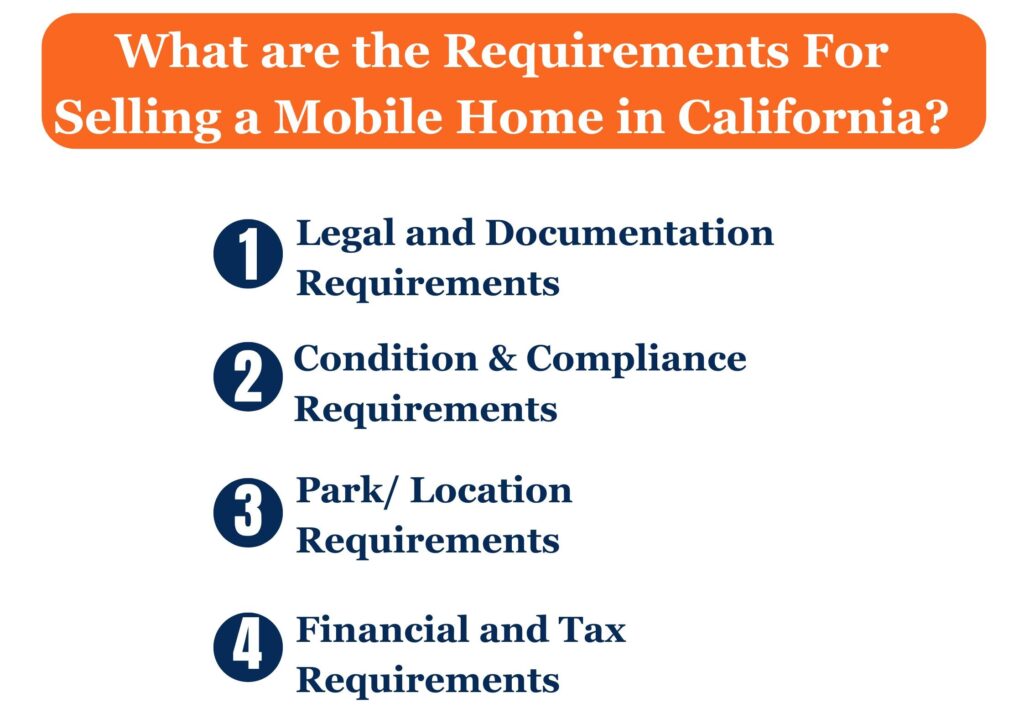
Selling a mobile home in California isn’t quite the same as selling a traditional house. The process involves state-level oversight, specific paperwork, and park-related approvals. Missing even one step can delay your sale or block the title transfer.
Here’s a breakdown of the requirements every seller must know before listing their mobile home.
1. Legal and Documentation Requirements
The first step in selling your mobile home in California is making sure your documents are in order. Without these, the transfer cannot be processed.
- Mobile Home Title (Certificate of Title): Must be issued by HCD, with the seller’s name matching the title. Any liens must be cleared before the sale.
- Bill of Sale: Acts as proof of the transfer of ownership and must outline the agreed price and terms.
- Certificate of Occupancy (if applicable): Required if your home was newly installed or altered.
- HCD Transfer Form (Form 415): Must be submitted within 10 business days of the sale.
- Registration Renewal: All past-due registration fees and taxes must be paid before the transfer.
Tip: Many sellers ask, Does mobile homes require a contract to sell? Yes, California law requires a written contract as part of the paperwork you file with HCD.
2. Condition & Compliance Requirements
Even if your paperwork is ready, your home itself must meet certain compliance requirements before it can be sold.
- Disclosure Statement: California law requires you to disclose known defects, such as plumbing leaks, electrical issues, or structural concerns.
- Smoke and Carbon Monoxide Detectors: Must be installed and fully functional before the sale.
- Water Heater Bracing: All mobile homes must have water heaters braced to meet earthquake safety standards.
3. Park/ Location Requirements (if inside a mobile home park)
If your home is located in a mobile home park, you can’t finalize the sale without park involvement.
- Park Management Approval: Buyers typically need to be approved by park management before moving in. This often includes credit checks and verifying income or background.
- Park Rules Compliance: The home must comply with all park regulations. Unapproved structures or violations may need to be corrected before the park allows the sale.
4. What Financial and Tax Requirements Apply?
Finally, no sale can move forward until all financial and tax requirements are cleared.
- Property Taxes: A common question is do you pay taxes when you sell a mobile home? Yes. All property taxes and registration fees must be paid before HCD will process the transfer. Depending on whether the home is classified as personal property or real property, capital gains tax may also apply.
- Escrow (sometimes required): If the home is sold through a broker or in certain parks, an escrow account may be required to hold funds and documents until all conditions are met.
Also Read: Work with the Best Mobile Home Buyers Lake Elsinore Today
How Do You Sell a Mobile Home in California?
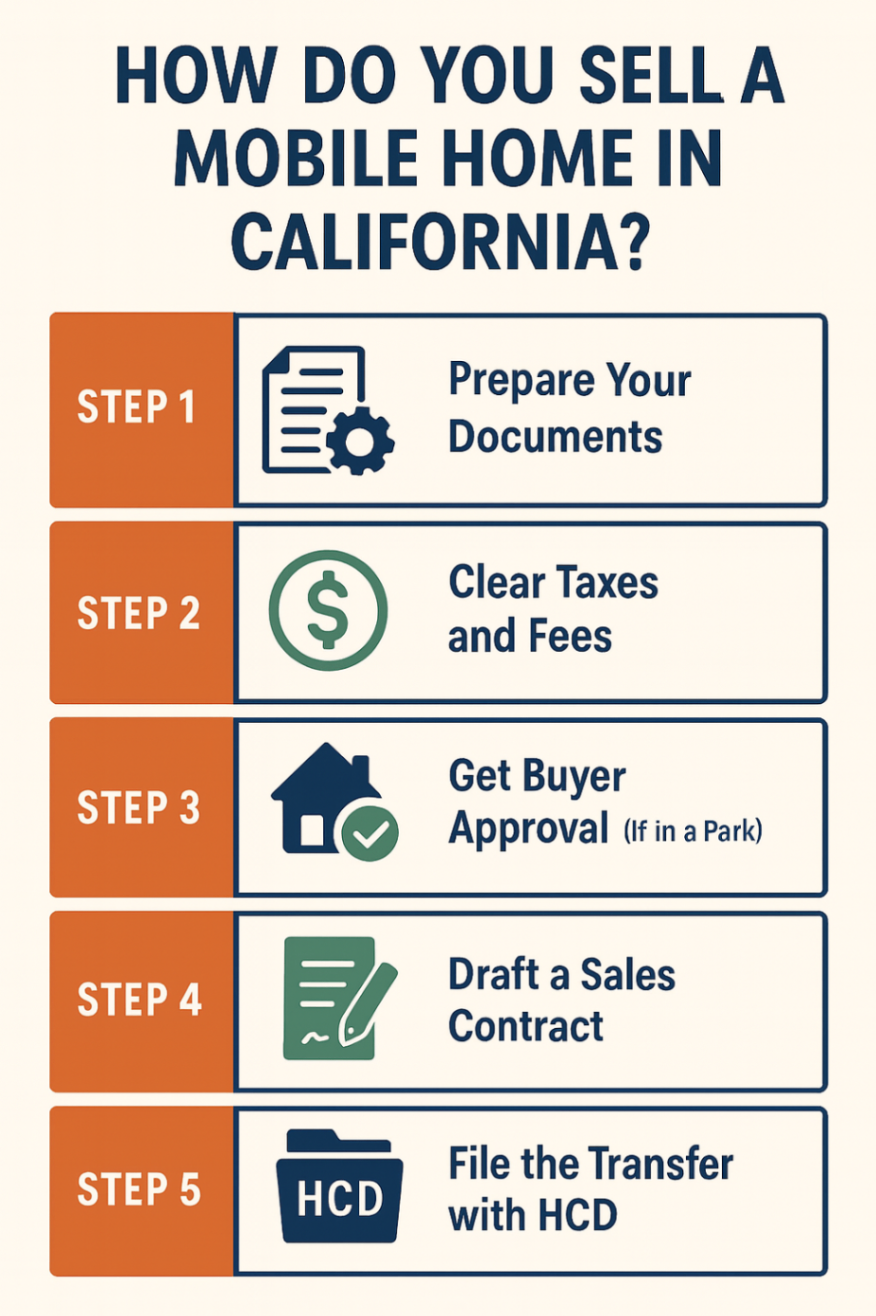
If you’ve ever wondered how do you sell a mobile home in California, the answer lies in following a clear, structured process. Unlike a traditional home sale, mobile homes come with their own set of rules and paperwork requirements. To meet the requirements for selling a mobile home in California, here are the essential steps you need to take.
Step 1. Prepare Your Documents
The first step is gathering all the necessary documents for selling a mobile home. This includes the title, registration, and any paperwork required by the California Department of Housing and Community Development (HCD). Having these ready in advance prevents delays and gives buyers confidence in the legitimacy of the sale.
Step 2. Clear Taxes and Fees
Before ownership can be transferred, all outstanding property taxes and registration fees must be paid in full. Sellers often ask: “Do you pay taxes when you sell a mobile home?” The answer is yes, unpaid taxes will block the transfer. Obtaining a Tax Clearance Certificate is the safest way to confirm you’re up to date.
Step 3. Get Buyer Approval (If in a Park)
If the mobile home is located in a park, the buyer must typically be approved by park management. This approval process can include background checks or financial verification. Without it, even a legitimate sale may not allow the buyer to move in, making this a critical step in meeting the requirements for selling a mobile home in California.
Step 4. Draft a Sales Contract
A written sales contract is required in California. It should include the purchase price, payment terms, and details about any fixtures or appliances included. This contract forms part of the official selling a mobile home paperwork filed with HCD, and it protects both parties by making the terms legally binding.
Step 5. File the Transfer with HCD
The final step is filing the transfer with the HCD. This involves submitting the signed contract, title, tax clearance, and any required forms, along with a transfer fee. Once HCD approves the paperwork, the buyer is officially recorded as the new owner.
If you’re unsure how much can I sell my mobile home for, start by comparing sales in your area and factoring in age, condition, and location.
What Are 5 Tips to Sell Your Mobile Home Fast?
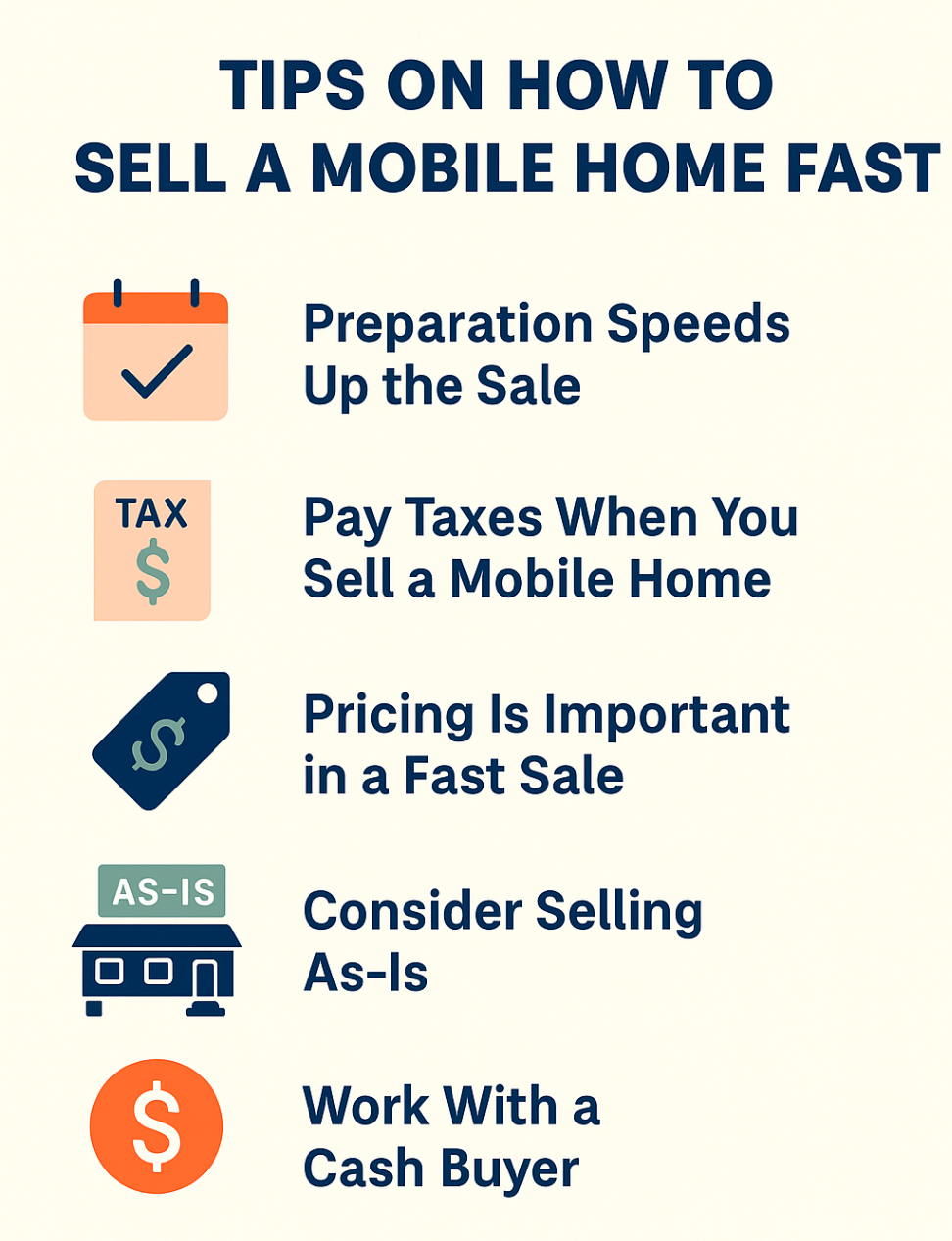
Selling a mobile home doesn’t have to be a drawn-out process. By preparing correctly and addressing key steps early, you can speed up the sale while still meeting all the requirements for selling a mobile home in California. Here are the most effective ways to close a deal quickly.
1. Preparation Speeds Up the Sale
One of the biggest time-savers is getting your paperwork in order before listing the home. A clear title, proof of paid taxes, and the right documents for selling a mobile home make buyers more confident and prevent delays with the California Department of Housing and Community Development (HCD).
2. Taxes Must Be Paid Before Selling
Yes. Ensuring your property taxes and registration fees are fully paid is critical if you want a fast sale. Buyers and HCD will require proof, often in the form of a Tax Clearance Certificate. If taxes aren’t current, the sale will stall, no matter how motivated the buyer is.
3. Pricing Determines How Fast You Sell
Overpricing can keep a mobile home on the market for months. If your goal is how to sell a mobile home fast, pricing it realistically is essential. Research comparable sales in your area and consider offering incentives, such as covering transfer fees, to attract buyers quickly.
4. Selling As-Is Can Save Time
Selling the home as-is can cut weeks off the process. While you might net slightly less, it appeals to investors and cash buyers ready to close fast. With California Mobile Home Buyer, you can skip repairs and still secure a fair, competitive cash offer—often finalized in days, not weeks.
5. Cash Buyers Offer the Fastest Option
For sellers who want to avoid agent commissions, financing delays, and repairs, cash buyers are often the fastest solution. They specialize in mobile homes, understand the requirements for selling a mobile home in California, and can often close in less than a week.
Need a Fast, Hassle-Free Way to Sell Your Mobile Home?
Meeting all the requirements for selling a mobile home in California can feel overwhelming; titles, taxes, contracts, and HCD paperwork all add layers of complexity. That’s why many homeowners choose California Mobile Home Buyer, the state’s trusted mobile home dealer, to make the process quick and stress-free.
With over 350 happy sellers and cash offers delivered within 24 hours, we specialize in helping homeowners who want to avoid repairs, agent fees, and endless waiting. Whether your home is on private land or in a park, we’ll buy it as-is and close on your schedule.
- No repairs or upgrades needed
- No commissions or hidden fees
- Flexible closing dates
- Cash offers anywhere in California
Ready to sell without the stress? Get your fair cash offer today from California Mobile Home Buyer and turn your mobile home into cash in just days.
Your Guide to a Hassle-Free Mobile Home Sale in California
Selling a mobile home in California involves more than just finding a buyer, it requires meeting specific legal steps to ensure a smooth transfer. From securing a clear title to paying taxes, drafting a written contract, and filing with HCD, each stage plays a vital role in compliance.
Understanding the requirements for selling a mobile home in California helps prevent delays and protects both parties. Whether you’re looking to handle the selling process yourself or work with a cash buyer to speed things up, being prepared is the key to a successful, hassle-free sale.
Related Articles
How much can I sell my mobile home for?
How much is my mobile home worth?
Frequently Asked Questions
Can I sell my mobile home without owning the land?
In most parks, a manufactured home is treated as personal property. The California Department of Housing manages the title transfer, similar to a vehicle. Always confirm serial number and legal requirements on the community development website.
Do I need an escrow service when selling my mobile home in California?
While not always required, escrow adds legal effect. A neutral party holds funds and documents until all conditions are met, ensuring California residents a secure manufactured home transfer with accurate source paperwork and enforcement purposes.
Should I work with a real estate agent or sell by owner?
A real estate agent simplifies the process but includes agent fees. Selling by owner saves money but requires you to handle all marketing, paperwork, and negotiations. Your choice depends on your comfort level with managing a complex transaction for a successful sale.
How do I transfer the title when selling a mobile home in California?
The transfer of title is handled by the California Department of Housing, not the Department of Motor Vehicles. You’ll need a signed bill of sale, the original certificate of title, and the required paperwork along with specific state forms to complete the transaction for the new owner legally.
Does a Mobile Home Sale Require a Contract in California?
Yes. California law requires a written sales contract to transfer ownership. It must include price, buyer and seller details, property information, and terms. Without it, HCD will not process or approve the sale.
Is a Real Estate License Required to Sell Mobile Home in California?
No license is required if you’re selling your own home. However, agents, brokers, or dealers representing others must hold a valid license. Park rules or combined land-home sales may also trigger licensing requirements.
Should I sell my mobile home without a realtor? (California)
Yes, you can sell your mobile home without a realtor in California. Many owners handle the process directly, saving commission costs. However, you must manage title transfers, taxes, park approvals, and HCD filings yourself.
Where can I find a template for a mobile home purchase agreement?
You can find a mobile home purchase agreement template on the California Department of Housing and Community Development website, legal document services, or through escrow companies. Always review for legal requirements, accurate source details, and add buyer-seller contact information.